Do You Need a Bookkeeper Yet? What to Hire For and What to Put in Slack First
Hire the bookkeeper when your books are behind or your reports stop matching reality, and keep the reminders out of the job description. A role that mixes ledger work, which needs a trained person, with coordination, which only needs someone to look things up and ask on time, pays bookkeeping rates for chasing. Run the coordination in Slack, keep the books in a file your business owns, and price any backlog separately from the monthly work, because a retainer sized for steady state either underpays the cleanup or overpays every month after it.
Most founders start looking on a bad week: receipts are piled up, two invoices went out late, and nobody can say what customers owe without opening QuickBooks or Xero. Hiring is often the right answer. The question is what shape of help to hire.
Signs it is time, and why the thresholds are rules of thumb
You probably need a bookkeeper if any of these is true for more than a month or two:
- Bookkeeping takes you more than about five hours a week.
- You are behind on recording transactions, or the reports do not match what you expected.
- Invoices or bills are going out or getting paid late because nobody tracks them.
- Tax season means weeks of back and forth with your accountant.
Xero's guide to hiring a bookkeeper, written by a CPA, says to hire when you spend more than five to ten hours a week on financial tasks, make frequent errors, or process more than 50 transactions a month, and its list of errors is specific: duplicate payments to vendors, missed or late invoices, and reconciliation discrepancies. BILL's guide adds being behind, because stale data gives you no accurate picture of revenue or future cash flow, and painful tax seasons.
Treat the numbers as vendor rules of thumb, not standards. Fifty transactions a month is easy for a simple service firm and hard for a firm with inventory, several revenue streams and staff. The more useful test is what the hours are spent on. Xero's own description of the problem mixes recording transactions and reconciling accounts, which are the ledger, with chasing receipts, which is coordination.
Owners can end up hiring the wrong shape of help here. Much of what makes the books feel out of control happens outside the ledger. Nobody asks for the missing receipt, nobody posts who has not paid, and nobody notices a bill until it is late. A bookkeeper can do that work too, but you will pay bookkeeping rates for reminders.
What a bookkeeper does, and what an accountant does
The U.S. Bureau of Labor Statistics describes bookkeeping clerks as people who compute, classify, and record financial data. Their listed duties include posting transactions in accounting software, assigning costs and income to the right accounts, producing balance sheets and income statements, checking figures, and reconciling or reporting any differences in the records. The same page adds that bookkeepers may handle payroll, make purchases, prepare invoices, and keep track of overdue accounts.
Overdue accounts are where small-business roles blur. Recording and reconciling are skilled work. Keeping track of overdue accounts is partly skilled (knowing what is really overdue) and partly coordination (reminding people, asking customers, posting a list every Monday).
The accountant is a different role. Xero's guide says bookkeepers record daily transactions, maintain accurate ledgers, and flag near-term issues like cash flow problems or late payments, while accountants review accounts quarterly, file tax returns, prepare official reports, and provide high-level business advice. A practitioner on Hacker News made the same split from the customer side, saying that accountant and bookkeeper are separate disciplines, with the accountant handling tax filings and the bookkeeper making sure all the ledgers balance out.
So the bookkeeper vs accountant question has a plain answer for most firms of 5 to 100 people: you need both, at different frequencies. Paying an accountant to do the books is the expensive version. Bench, a bookkeeping service, lists an accountant doing your bookkeeping as a sign to hire a bookkeeper, because CPAs generally charge more per hour.
What a bookkeeper costs
Pay depends on whether you hire an employee, a freelancer or a service.
- Employee. The BLS median pay for bookkeeping, accounting and auditing clerks was $50,670 a year, or $24.36 an hour, in May 2025. That figure covers employees; the BLS wage survey excludes self-employed workers.
- Freelance or service. Xero says bookkeeper costs typically range from $20 to $50 per hour or $200 to $2,000 a month, depending on transaction volume, business complexity, and services needed. BILL says bookkeepers typically charge $30 to $50 an hour with a monthly minimum retainer. One commenter on Hacker News reported local rates of $20 to $30 an hour for bookkeepers against about $200 an hour for a CPA; that is one person's market, not a national figure.
A made-up example to show the arithmetic: a 12-person agency with about 80 transactions a month books a freelancer for 10 hours a month at $40 an hour, so $400 a month. If three of those hours go to asking the founder about receipts and reminding customers about invoices, roughly a third of the spend is coordination. That is the part worth moving first.
The BLS also projects employment in the occupation to decline 6 percent from 2025 to 2035, because software has automated many of the tasks, and expects the people who remain to take on a more analytical and advisory role. For a small firm, that means paying for review and judgment, plus the conversations with you.
Split the job before you post it
Before you write a bookkeeper job description, split it into ledger work that needs accounting judgment and coordination work that only needs someone to look up, ask and remind, because the second list is often the part that made the books feel out of control. This is a recommendation, built from the BLS duty list and Xero's description of where owners' hours go. It matches what owners write when they hire help for Slack teams: they ask for someone who keeps it moving without being chased and for nothing to fall through the cracks (Kipwise: before you hire a virtual assistant), which describes coordination, not accounting.
Use three columns:
| Work | Who should own it | Why |
|---|---|---|
| Categorising transactions, reconciling the bank, adjusting entries, monthly statements | Bookkeeper | Needs accounting judgment and someone accountable for the ledger |
| Payroll, sales tax, year-end, estimated taxes, tax returns | Bookkeeper and accountant, as agreed | Compliance and advice; the accountant signs off |
| "Who owes us this week?", "Did the Acme invoice go out?", the Monday receivables and cash summary, nudging the team for receipts | A Slack routine, with a named person on your side | Lookups and reminders; no judgment needed to ask the question |
The third row is easy to hand to the bookkeeper by default. It is also the part you can set up this week, before any hire.
Put the weekly money questions in Slack first
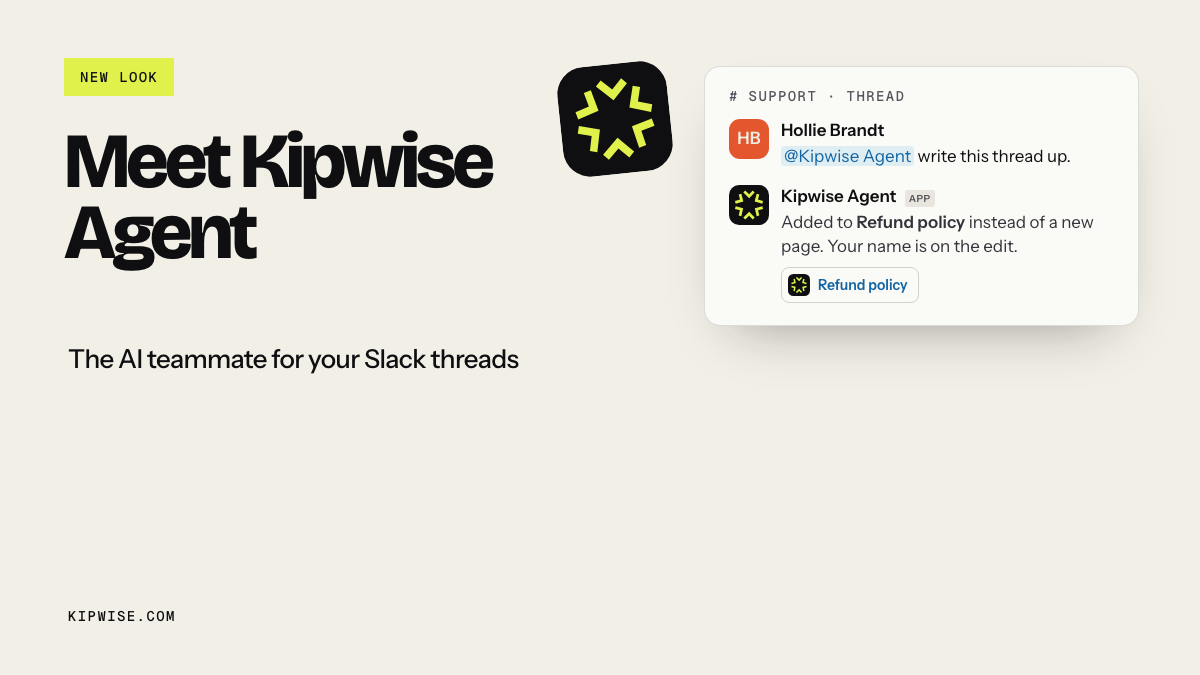
If your team already works in Slack, the coordination row can live there. With the Kipwise Agent, a person connects their own QuickBooks or Xero access and then asks in a thread. The agent looks up a contact, reads their outstanding balances, opens an invoice or bill, or runs a report: profit and loss, balance sheet, aged receivables, aged payables or bank summary, for the one organisation or company that person connected. It says which organisation or company it acted in.
Three routines cover most of the coordination row:
- A Monday summary. Ask the agent to post the aged receivables and the bank summary to your finance channel every Monday morning. Creating a scheduled request needs approval once; later runs do not ask again.
- Payment news. Ask it to act "whenever an invoice is created or paid" in Xero or QuickBooks, so the channel sees a payment land without anyone checking. It reads the record back with your access before it posts.
- Thread questions. When someone asks "did Acme pay?", anyone with a connection can ask the agent in the thread instead of opening the accounting app.
It does not categorise transactions, reconcile the bank or file anything. When you explicitly ask, it can create a contact or invoice, record a payment, add a note to an invoice, or update, approve or void an invoice, and each of those writes shows an Approve or Deny card that only the person who asked can press. Those writes help with small fixes. The bookkeeping itself stays with the bookkeeper. If you want the full chasing loop, the overdue invoice guide covers it step by step, and the month-end close checklist shows how the close fits around a bookkeeper's work.
After a month of these routines, look again at the signs list. You may find the hire can be smaller than planned, for example a monthly close instead of a weekly retainer. Or the books really are behind, and you now know exactly what to hire for.
Hire for the backlog separately
When you do hire, the guides give sensible steps. BILL suggests assessing your accounts and monthly transaction count, deciding which extras you need (payroll, credit management, tax categorisation), and choosing a schedule of key dates and reporting cadence. Xero recommends asking your accountant for referrals, confirming the bookkeeper uses software compatible with your accountant's, checking references, and having your accountant meet candidates.
Xero also says most bookkeepers get up to speed within one to two weeks if your records are organised, and that a backlog means extra catch-up time before regular bookkeeping begins. Treat that catch-up as a separate job. If you are behind, ask for a fixed price or a capped number of hours for the cleanup, and set the monthly retainer for the steady state afterwards. A retainer sized to include the backlog overpays every month after it, and one sized without it leaves the cleanup undone or the bookkeeper short of hours. This is our recommendation, based on Xero's onboarding note.
Who owns the books, and how you will work together
Keep the books in an accounting file your business owns and give the bookkeeper their own user access, so you can still read receivables and reports yourself if the relationship ends. Switching bookkeepers is easier, and checking their work is possible, when the file and the logins are yours. This is a recommendation drawn from owner reports.
One Hacker News commenter passed on the advice not to hire an external bookkeeper who keeps the books in their own systems, and recalled a three-employee business, about 30 years ago, that lost track of its cash for about three months after its accountant moved it to another system. Another owner left a bookkeeping service, tried doing the books alone, then hired bookkeepers on Upwork to fix them. A customer of a tech-enabled service says they find errors in its books at a staggering rate. These are individual reports, not evidence about any provider in general.
Agree a weekly handoff with the bookkeeper before the first month starts, because a bookkeeper can only close the books as fast as someone on your side answers the questions about receipts and transactions. Bench's advice on what to expect from a good bookkeeper starts with availability and clear, easy communication, and communication runs both ways. Decide where questions go (one Slack channel is easier than a mixed inbox), who on your team answers, and by when. A list of unknown transactions that waits two weeks for the founder delays the close just as much as a slow bookkeeper.
What can go wrong
- You hire for everything. The bookkeeper spends paid hours chasing receipts and customers. Fix: move the coordination row to a routine first, and give the bookkeeper a shorter list.
- You hire for nothing. You set up a Monday summary and decide the problem is solved, while the books stay unreconciled. A receivables report from an unreconciled ledger can be wrong. Fix: if you are behind on recording transactions, hire anyway; the Slack routine supports a bookkeeper, it does not replace one.
- Records are kept loosely. The IRS lets you choose any recordkeeping system suited to your business that clearly shows your income and expenses, and says to keep all records of employment taxes for at least four years. Make sure the bookkeeper's process meets that, and that the records stay in your system.
- Nobody owns the questions. The weekly summary posts, everyone reads it, and nothing happens. Fix: name one person who answers the bookkeeper's questions and one who follows up on each overdue customer.
- Access is too broad. Give the bookkeeper the role they need in your accounting software, and remove it when the engagement ends.
After the first full month with a bookkeeper, or with the Slack routine on its own, check that the bank accounts are reconciled to month end and the profit and loss looks like what you expected, that every customer past 30 days in the aged receivables report has a named owner and a next step, that the bookkeeper's open questions are answered within the week you agreed, and that you spend fewer hours a week on finance than the five-hour threshold you started with. Your accountant should also receive clean records without a long email chain at year end, which is the payoff Bench describes for tax season. If two of these keep failing, the hire was the wrong shape. Change the scope before you change the person.
Write your bookkeeper job description today and split every line into the three columns above. For the third column, set up one weekly request in Slack: connect QuickBooks or Xero, and ask the agent to post the aged receivables and bank summary every Monday. The Kipwise pricing page has the current trial, and the Agent is $10 per user a month with a three-user minimum. Then post the bookkeeper role for the ledger work that is left.