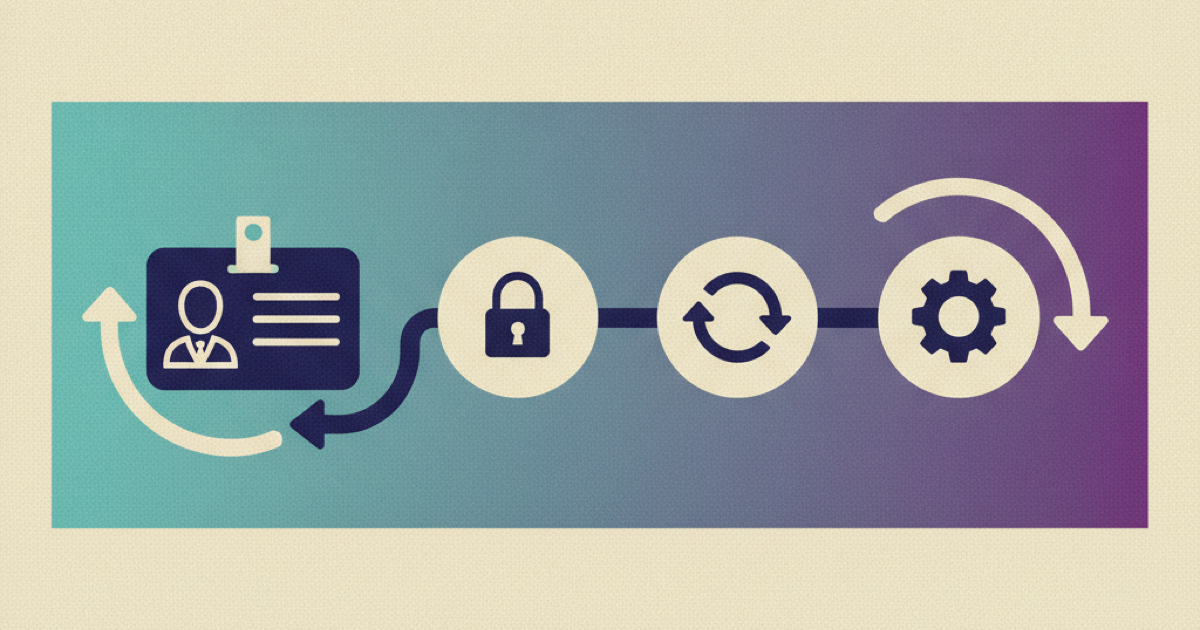
How to Re-Onboard Returning Employees with an AI Company Brain
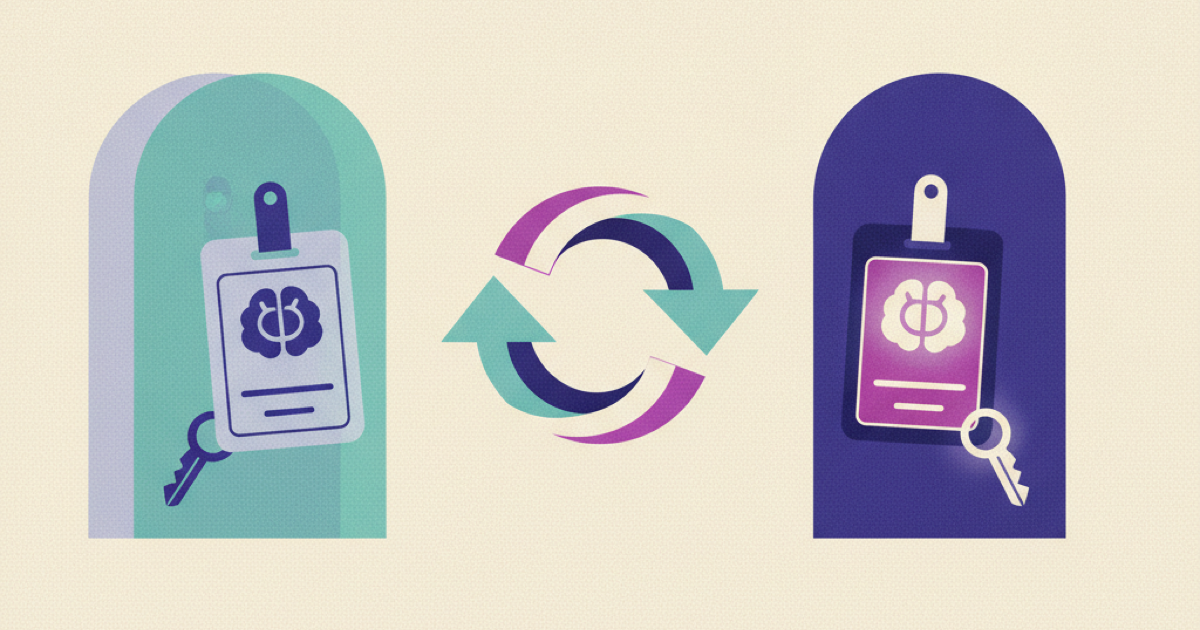
Boomerang employee onboarding fails when a returning employee is treated as either a stranger or someone who can resume work from memory. Their old account may be disabled, their role may have changed, and the process they remember may now be wrong. A useful AI company brain should not repeat the entire new-hire program. It should identify what changed, restore only current access, assign the relevant knowledge delta, and verify understanding before normal work resumes. This guide gives People Operations, IT, and knowledge managers an implementation sequence for doing that safely.
Why ordinary onboarding does not fit a returning employee
A first-time hire starts without company context. A returning employee brings context, relationships, habits, and assumptions from an earlier period. That history can shorten re-entry, but it also creates a specific failure mode: confidence based on obsolete knowledge.
Consider an employee who returns to the finance team after eighteen months. They may remember an approval threshold, expense tool, and escalation route that no longer apply. A generic new-hire checklist wastes time by reteaching stable material. A short welcome message is worse because it leaves the old process unchallenged. The correct unit of work is the difference between the employee's former operating context and the current one.
Identity must also be rebuilt from current facts. Microsoft Entra lifecycle workflows models joiner, mover, and leaver tasks around employee attributes and lifecycle events. A rehire should therefore enter through a new joiner event or an explicitly governed rehire event, not through the casual reactivation of an old account. Prior membership can inform the workflow, but it should not decide present access.
The knowledge layer needs the same reset. The company brain should use current role, location, manager, employment type, and start date when selecting sources. It should not rely on remembered permissions, previous chat history, or the employee's old team membership.
Define the re-entry boundary before assigning content
Start by recording the boundary between the prior employment period and the new one. The minimum record should include the previous end date, new start date, current role and location, authoritative worker identifier, and the owner who approved the rehire workflow. Do not merge two employment periods into an undifferentiated profile.
That boundary serves three purposes. First, it gives knowledge managers a date from which to calculate changed material. Second, it prevents old entitlements and acknowledgments from silently satisfying current requirements. Third, it lets the system explain why a page or task was assigned.
Use four categories when comparing the old and current context:
- Identity changes: manager, department, employment type, location, or legal entity.
- Access changes: applications, groups, repositories, and approval scopes.
- Knowledge changes: policies, procedures, product details, and named owners updated since departure.
- Evidence changes: acknowledgments, training, or approvals that must be completed again.
A changed item does not always require a course. A renamed team might need only a short notice. A revised security procedure may need a source-linked explanation and an explicit acknowledgment. A new production permission may require training, manager approval, and a successful practice task.
Rebuild access from current attributes
Do not unlock the previous account and assume its permissions remain valid. Treat re-entry as a current access decision. NIST SP 800-207 describes zero trust as removing implicit trust based on network location or ownership and evaluating access against current identity and resource context. For a returning employee, previous access is historical evidence, not authorization.
Build the current entitlement set from the authoritative HR record and approved role rules. Compare it with the old set for review, but provision from the current set. The comparison should produce explicit outcomes:
- grant because the current role requires it;
- deny because the old entitlement is no longer relevant;
- hold for named approval;
- expire automatically after a bounded task or transition period.
Apply the same rule to retrieval. Microsoft's document-level access guidance describes patterns for filtering search results with user or group access. Enforce that filter before passages reach the model. Hiding a citation after generation does not prevent restricted content from influencing the answer.
Run a negative test before launch. Ask the company brain questions that the employee's former role could answer but the current role cannot. The test should return no restricted passage and no revealing summary. Then ask for material required by the new role and confirm that the correct current source appears.
Calculate a useful knowledge delta
A knowledge delta is not every page edited since the employee left. That would replace one generic checklist with a noisy change log. Filter changes through the employee's current responsibilities and through the effect of each change.
For each role-critical source, capture:
- canonical source identifier;
- current owner and effective date;
- version or last material review date;
- intended role, location, and employment scope;
- whether the source existed before the prior end date;
- whether the change affects a decision, task, access request, or escalation route.
Classify the result as new, materially changed, unchanged, retired, or unverified. Retired sources deserve attention because a returning employee may still search for an old title or use a saved bookmark. Create a redirect or a clear retirement notice when possible, and teach the company brain to point to the replacement rather than simply returning no result.
Use this decision rule for assignments:
if source is outside current role or location:
 do not assign
elif source is new or materially changed since departure:
 assign with the exact changed section and required action
elif evidence must be renewed:
 assign the current source and collect fresh evidence
elif source status is unverified:
 route to the source owner before giving guidance
else:
 leave available in search without mandatory reassignment
This logic keeps the re-onboarding plan short without trusting memory. It also makes each assignment explainable. The employee should see what changed, when it changed, who owns the source, and what action is required now.
Turn the delta into a staged re-onboarding plan
Organize the plan around work readiness rather than calendar filler. The GitLab onboarding handbook provides a practitioner example of explicit onboarding tasks, access requests, role details, buddies, and named support. A returning employee still needs those owners and support paths, but the task set can be narrowed to current gaps.
A practical sequence has four stages.
Restore a safe baseline
Before the start date, establish the new identity record, approve minimum communication and onboarding access, and remove links to the previous employment profile from authorization logic. Give the employee a named IT contact for access failures and a People Operations contact for employment questions.
Review high-impact changes
On the first day, present changes that affect safety, security, payroll, benefits, required conduct, customer commitments, or production work. Show the governing source next to each summary. Do not let the AI paraphrase a consequential change without a citation and effective date.
Restore role capability
After required changes are understood, provision current role access and assign task-specific updates. A returning engineer may need a new deployment process and repository structure. A returning customer success manager may need current escalation rules, product limits, and account ownership conventions. Use the employee's current role, not the role held at departure.
Verify and release
Close the plan with short scenario checks, access probes, and an owner review. Verification should test application, not page views. Ask the employee to choose the current approval route for a realistic case, retrieve the governing source, or complete a safe practice task. Failed checks should return the person to the exact source or owner rather than restarting the entire program.
Design the company brain response contract
The assistant should make its treatment of prior knowledge visible. When a returning employee asks a process question, the answer should include the current instruction, canonical source, effective date or current review state, role and location scope, and a note when the process changed after the prior end date.
A useful response might say: "The expense approval threshold changed after your previous employment ended. The current finance policy requires manager approval at this amount. Review section 4 and confirm the new workflow before submitting."
That is more useful than either "welcome back" or a generic policy summary. It identifies the difference that matters and gives the employee a next action.
The response contract should also define refusal and handoff conditions. Withhold a definitive instruction when the applicable source is unverified, two current sources conflict, the employee lacks permission to inspect the evidence, or the request would change access without approval. Route the question to the named source or process owner with the relevant context attached.
The Kipwise employee onboarding workflow separates assigned reading from searchable company knowledge. Use that distinction here. Put mandatory, changed material into the re-onboarding plan. Keep stable background material searchable instead of forcing the employee to repeat it.
Handle common re-onboarding failures
The first common failure is restoring the old account with all previous groups. This is fast but carries obsolete access into a new employment period. Provision from current attributes and require approval for exceptions.
The second is calculating the delta from file modification timestamps alone. Formatting edits and automated migrations can create noise, while a materially changed instruction may keep the same page. Use source ownership, effective dates, version notes, and a material-change flag.
The third is assuming that a returning employee remembers stable material correctly. The delta limits mandatory review, but role-critical knowledge still needs a lightweight check when a wrong memory could cause harm.
The fourth is assigning every change since departure. Filter by current role, location, and task. Explain why each mandatory item matters.
The fifth is keeping previous conversations active. Old chat context can contain outdated instructions and permissions. Start a new employment-period context. Preserve only approved evidence that has a continuing purpose.
The sixth is measuring success by checklist completion. A checked page does not prove current access or understanding. Verify with source retrieval, negative permission tests, realistic scenarios, and owner sign-off for consequential work.
Verify the workflow before using it
Create a synthetic returning employee with a former role, departure date, and new role. Seed the test with one unchanged source, one materially changed policy, one retired procedure, one newly required page, one old entitlement that must not return, and one current entitlement that should be granted.
Run these checks:
- The old restricted source cannot be retrieved.
- The current role source can be retrieved and cited.
- The changed policy appears as a mandatory delta item.
- The unchanged source stays searchable but is not assigned.
- The retired procedure points to its replacement.
- A renewed acknowledgment records the current source version.
- A failed scenario routes to the exact source or owner.
- Completion removes temporary access and leaves approved current access intact.
Repeat the test when role rules, identity integrations, or retrieval filters change. Re-onboarding is an identity and knowledge workflow, so a passing content check cannot compensate for a failed permission check.
Start with one returning employee path
Choose one role with a recent rehire or a realistic test profile. Record the previous end date, rebuild current access, classify five role-critical sources, and produce the knowledge delta. Ask the role owner to review every mandatory assignment and every excluded old entitlement. Then run the negative retrieval and scenario tests before giving the employee normal access.
The result should be a short, defensible re-entry plan: current identity, current permissions, changed knowledge, renewed evidence, and verified readiness. If the team cannot explain why an item appears in that plan, remove it or send it to the source owner for clarification.
References
- Microsoft Entra lifecycle workflows supports the use of current employee attributes and lifecycle events for joiner, mover, and leaver tasks.
- Microsoft document-level access control supports retrieval-time filtering by current user or group access.
- NIST SP 800-207 supports current, contextual access decisions instead of implicit trust based on prior access.
- GitLab onboarding handbook supports the practitioner model of explicit tasks, access requests, role details, buddies, and support owners.
- Kipwise employee onboarding supports the product context of assigned onboarding reading and searchable company knowledge.