How to Give New Hires a Living Employee Org Chart with an AI Company Brain
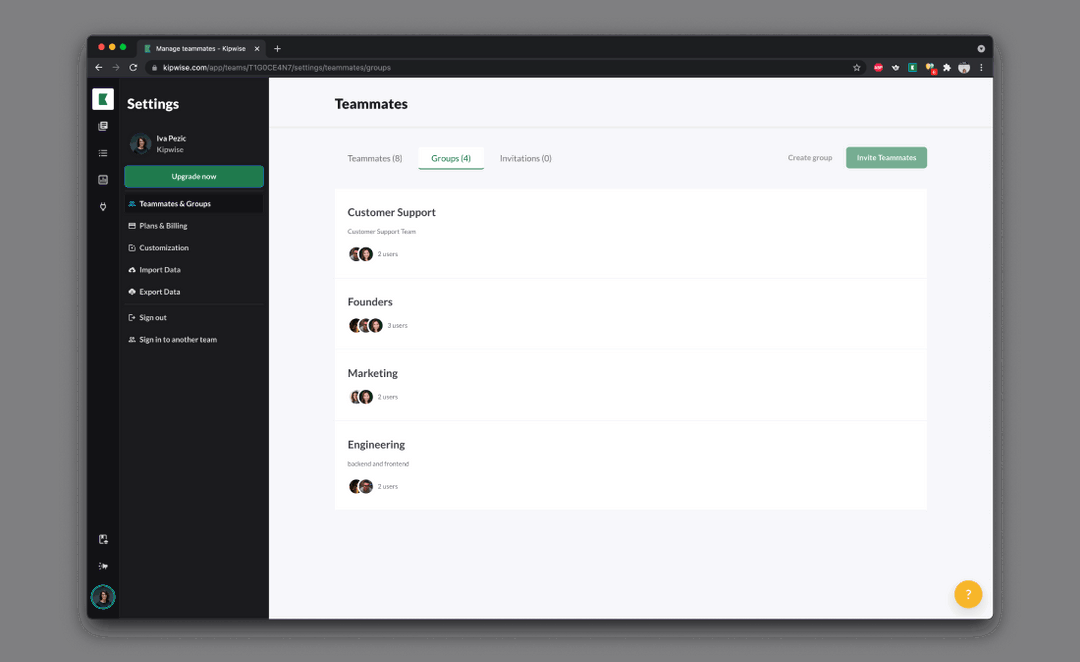
A static employee org chart tells a new hire who reports to whom. It rarely answers the question blocking real work: who can approve this decision right now? Old manager links, missing delegates, vague team labels, and overexposed profile data turn a simple directory lookup into delays or privacy mistakes. A living org chart fixes that by joining authoritative reporting relationships with source-owned responsibilities, effective dates, permissions, and escalation routes. This guide shows how to build that layer into an AI company brain, test it with realistic onboarding questions, and prevent the assistant from inventing ownership when the directory is incomplete.
Why a reporting tree is not enough
A reporting relationship and a responsibility relationship answer different questions. A manager may approve time off but not production access. A department head may own a function but delegate a regional process. A subject expert can explain a policy without having authority to approve an exception. If the company brain treats every question as “find the manager,” it sends new hires to people who cannot complete the task.
Freshness creates a second problem. Reorganizations, leave, open roles, and internal transfers change the route while screenshots and onboarding decks remain unchanged. The Microsoft Graph manager endpoint can return the current manager relationship from the directory, but that relationship alone does not identify a process owner or temporary delegate. The workflow needs both authoritative identity data and maintained responsibility records.
Privacy is the third constraint. An employee directory can contain personal phone numbers, locations, assistant relationships, management levels, or profile notes that a new hire does not need. The NIST Privacy Framework treats data processing as a risk that must be governed and controlled. Search convenience is not a reason to expose every available profile field.
Build the company brain to route a permitted question to a current person or team, explain why that route applies, show the evidence and effective date, and admit when no reliable route exists. Copying the org chart into AI does not meet that standard.
Define the living responsibility map
Keep identity facts separate from responsibility facts. Identity data should come from the HR system or directory. Responsibility records should come from the team that owns the process. The company brain indexes a safe projection of both, not an unrestricted copy of either system.
A minimal route record can look like this:
route_id: expense-approval-us
question_class: employee_expense_exception
scope:
 legal_entity: kipwise_us
 worker_type: employee
 region: us
accountable_team: finance_operations
primary_owner: user_1842
delegate: user_2910
effective_from: 2026-08-15
effective_until: null
knowledge_source_id: finance-expense-ownership
review_owner: finance_ops_lead
review_due_at: 2026-11-15
visible_profile_fields:
 - display_name
 - team
 - work_contact
escalation_team: people_operations
question_class prevents a broad title match from deciding ownership. “Finance” is not a useful route if the new hire needs an expense exception, payroll correction, procurement review, or revenue-recognition answer.
scope captures the attributes that change the answer. Use only attributes that the routing decision needs. Do not pass medical information, compensation, performance data, or full HR records into the retrieval layer.
primary_owner points to a directory identity, while delegate handles leave and temporary coverage. Both references must resolve to active identities before the route is eligible.
source_url, review_owner, and dates make the answer verifiable. A route without an owner or review date becomes another static org chart after the next reorganization.
Build the employee org chart workflow
1. Choose authoritative sources
Declare one system of record for each field. The HR system may own employment status and manager ID. The identity directory may own work email and account status. A maintained knowledge page or service catalog may own process responsibility and escalation policy.
The Microsoft Graph organization resource illustrates the organization-level directory boundary. The company brain should consume a documented subset instead of deciding that any connected profile attribute is fair to index.
Write the ownership contract down before connecting data. If two systems both claim the manager field, define precedence and alert on disagreement. Never select whichever value was indexed most recently without explaining why it is authoritative.
2. Project only safe directory fields
Create an allowlist for the onboarding use case. A practical projection often includes display name, team, work contact, manager reference, supported region, and active status. It should exclude home contact details, birthdays, private notes, compensation, and other fields that do not help the new hire route work.
Apply access control before retrieval, not after the model writes an answer. The new hire's identity and group membership should determine which route records and profile fields enter the context. If a route points to a restricted team, return the approved contact channel rather than hidden names or structure.
3. Link people to maintained responsibilities
Ask each operating team to maintain route records for the questions it actually owns. Start with high-frequency onboarding tasks: payroll problems, expense exceptions, workplace access, application access, benefits questions, security incidents, and policy interpretation.
Public handbooks show why team context matters. The GitLab organizational structure connects groups, functions, and stable counterparts instead of presenting only a management tree. Its onboarding handbook also assigns managers, buddies, tasks, access requests, and support paths. Use that as a process example, not as a claim that one public structure fits every company.
Require a named review owner for every route. The review owner is accountable for the record's accuracy, even when the primary contact belongs to another team.
4. Resolve the route with explicit rules
Use deterministic filters before semantic retrieval. Match active employment state, legal entity, region, worker type, question class, and effective date. Then use semantic retrieval to find the most relevant approved route within that eligible set.
A simple resolver can enforce the boundary:
def resolve_route(question, employee, now):
 candidates = routes.where(
 question_class=classify(question),
 legal_entity=employee.legal_entity,
 region=employee.region,
 worker_type=employee.worker_type,
 effective_from__lte=now,
 ).where_not_expired(now)

 candidates = enforce_permissions(employee, candidates)
 candidates = [r for r in candidates if identities.active(r.primary_owner)]

 if len(candidates) != 1:
 return escalate_with_reason(candidates)

 route = candidates[0]
 contact = route.delegate if identities.available(route.delegate) else route.primary_owner
 return answer_with_source(route, contact)
Do not let the language model choose between conflicting eligible owners. A zero-result or multi-result state is an exception that needs a named team, not a prompt asking the model to make its best guess.
5. Present evidence with the answer
The answer should state the contact or team, the responsibility being routed, the scope that matched, the source, and the last review or effective date. It should also distinguish advice from approval authority.
For example: “Finance Operations owns US employee expense exceptions. Contact Jordan through the Finance Help channel. This route applies to US employees and was reviewed on August 15. The linked policy explains required evidence. Jordan can route the exception, but the designated approver makes the final decision.”
This answer gives the new hire a usable route without exposing the full finance reporting tree.
6. Attach routing tests to onboarding
A directory page view does not prove that a new hire can find help. Give the employee two or three realistic scenarios and ask them to locate the route through the company brain. Keep the scenarios low risk and synthetic.
One scenario might ask where to report a missing application entitlement. Another might ask who handles an expense outside the standard policy. The test passes when the answer identifies the current route, shows the source, respects permissions, and offers a valid escalation path.
Kipwise's new-hire onboarding workflow provides product context for assigning reading and tracking progress. Treat route verification as its own result. Do not infer it from a generic onboarding completion percentage.
Handle changes and failures
A living map needs event-driven updates and periodic reconciliation. Microsoft Entra lifecycle workflows documents joiner, mover, and leaver automation driven by employee attributes and lifecycle events. Use the same principle for route eligibility: a manager change, transfer, leave, deactivation, or effective-date transition should trigger recomputation.
Plan for these failure states:
- The owner is inactive. Suppress the route, try an active approved delegate, and alert the review owner.
- Two routes match. Show neither as authoritative. Send the question class and scope to the escalation team for correction.
- No route matches. State which scope lacks coverage and open a gap record. Do not fall back to the nearest job title.
- The source is overdue for review. Label it stale, restrict consequential instructions, and require owner confirmation.
- Directory and HR data disagree. Freeze manager-dependent routing until the source precedence rule resolves the conflict.
- The employee cannot view the source. Return a safe contact channel and report the permission mismatch to the content owner.
- A delegate period expires. Restore the primary owner only after both identity availability and route dates pass validation.
Track these failures as route-quality data, not employee-performance data. The useful metric is the percentage of approved question classes with exactly one current route, not which new hire asked for help most often.
Verify the gap is closed
The original gap is the distance between a reporting chart and a usable route to the accountable person. Verify the completed system against that gap.
Build a test matrix with employees from different regions, entities, roles, and permission groups. For each profile, submit approved synthetic questions and confirm the expected route, visible fields, source, effective date, and escalation behavior. Add negative tests for restricted teams, inactive owners, expired delegates, duplicate records, and missing routes.
Run a nightly reconciliation that checks every route reference against the identity directory. Report inactive identities, unresolved manager links, expired records, missing review owners, and sources past their review date. Separately sample answers after reorganizations to confirm that the company brain no longer retrieves the old route.
A launch gate should require:
- one authoritative source per identity and responsibility field;
- an allowlist of profile fields for onboarding retrieval;
- exactly one eligible route for every covered question and employee scope;
- an active primary owner or approved delegate;
- a source URL, effective date, and review owner;
- a safe response for zero, duplicate, stale, and forbidden results;
- successful positive and negative routing tests;
- a reconciliation job with an accountable incident owner.
Do not call the system a living employee org chart until it passes those checks after a simulated manager change and owner deactivation. A diagram that updates visually but keeps routing questions to stale owners has not solved the onboarding problem.
Start with ten questions
List the ten questions new hires most often route through a manager today. Assign each one a specific question class, authoritative owner, delegate, source, scope, and review date. Connect only the safe directory fields required to resolve those routes. Then test the flow with two synthetic new-hire profiles and deliberately deactivate one owner. If the system returns a sourced route for valid cases and a clear escalation for the failure, expand the map one operating team at a time.
References
- Microsoft Graph organization resource supports the organization-level directory boundary.
- Microsoft Graph: List manager supports current manager relationship lookup.
- Microsoft Entra lifecycle workflows supports event-driven joiner, mover, and leaver processing.
- NIST Privacy Framework supports privacy-risk governance and data-control decisions.
- GitLab organizational structure provides a practitioner example of team and functional context.
- GitLab onboarding handbook provides a practitioner example of owned onboarding tasks and support paths.
- Kipwise employee onboarding provides product context for assigned knowledge and tracked onboarding progress.