How Employee Knowledge Transfer Turns Offboarding into AI Onboarding for a Replacement

Employee knowledge transfer often breaks down just when the role changes hands. A departing employee uploads documents and records a few calls, yet their replacement still cannot tell which process is current, why exceptions exist, or who owns unfinished decisions. An AI company brain can make the handover searchable. That does not make it reliable. The transfer must capture work before access ends, put important claims through owner review, revoke the departing identity, and give the successor only the knowledge needed for the role. The final test is whether the replacement can use that material to do the work.
Why ordinary offboarding loses operational context
Most offboarding checklists focus on payroll, equipment, account closure, and administrative records. Those tasks are necessary, but they do not preserve how work gets done. A folder of files rarely explains which customer promise is still open. It also fails to explain why a process has an approved exception or which dashboard should be trusted when two reports disagree.
The departing employee has little time to document everything at once. Their final weeks are usually split among active work, handover meetings, and departure tasks. Asking them to "document your role" produces a broad summary rather than a usable operating record.
A replacement needs a different output. They need current responsibilities, active commitments, decision rules, exceptions, source links, owners, and unresolved risks. They also need a clear boundary between verified company knowledge and one person's recollection.
The public GitLab offboarding handbook demonstrates that departures involve several accountable parties and coordinated access removal. It tells team members to discuss the handover with their manager and gives system owners explicit deprovisioning tasks. Use the same ownership discipline for knowledge transfer. Do not leave the handover as a private exchange between the departing employee and their successor.
Define employee knowledge transfer before collecting content
Start with the role, not the person's files. The receiving manager should list the outcomes the role owns and the decisions the replacement must make in the first 30 days. This keeps the exercise focused on operational readiness rather than indiscriminate archiving.
Create a handover register with one record for each critical responsibility:
responsibility: approve-enterprise-refunds
business_owner: support-director
current_operator: departing-employee-id
successor_role: support-operations-manager
systems:
 - billing-console
 - support-desk
sources:
 - refund-policy-v4
 - enterprise-exception-register
active_commitments:
 - case-4821
known_exceptions:
 - strategic-account-approval
verification_owner: finance-controller
review_by: 2026-08-20
state: awaiting-owner-review
The register should cover these types of knowledge:
- recurring responsibilities and their expected outcomes;
- decision rules, approval thresholds, and escalation routes;
- active projects, customer commitments, and deadlines;
- approved exceptions and the reason each one exists;
- source records, system locations, and accountable owners.
Do not copy credentials, personal notes, private messages, or an entire mailbox into the company brain. The goal is to preserve business knowledge, not the departing employee's digital identity.
Capture evidence while the employee still has context
Use short, responsibility-specific sessions instead of one long exit interview. Ask the departing employee to walk through a recent real example for each critical responsibility. Record the decision inputs, the source consulted, the action taken, and the person who approved an exception.
A useful prompt sequence is:
- What starts this work?
- Which source tells you what to do?
- What conditions change the normal path?
- Which decision requires approval?
- What is currently unfinished?
- What would a new person most likely misunderstand?
- Who can verify this after you leave?
Turn each answer into a candidate knowledge record. Link it to the governing policy, runbook, ticket, or system record. If the departing employee cannot provide a source, label the statement as unverified. The AI assistant may help structure notes or identify missing fields, but it should not turn a confident explanation into approved policy.
Undocumented practice will sometimes conflict with written procedure. That may mean the documentation is stale, or it may expose an unauthorized shortcut. Route the conflict to the named owner before putting either version into replacement onboarding.
Make owner review a release gate
Every critical record needs a reviewer who will remain after the employee leaves. The reviewer checks four things:
- the procedure is still current;
- the source supports the instruction;
- the stated owner and escalation route are correct;
- the successor may access the cited material.
Records that pass move to verified. Records with open questions stay blocked or provisional and carry a resolution owner and date. A polished AI summary must not hide that uncertainty.
A single source of truth reduces duplicate and inconsistent information only when ownership, access, review, and maintenance are defined. The handover register needs the same controls. If three documents describe the same task, choose the governing source and link supporting examples instead of placing all three in the replacement's required reading.
Set a cutoff before the employee's final day. For example, require owner review of high-risk responsibilities five business days before departure. This leaves time to resolve conflicts while the incumbent can still explain the history.
Separate knowledge continuity from identity continuity
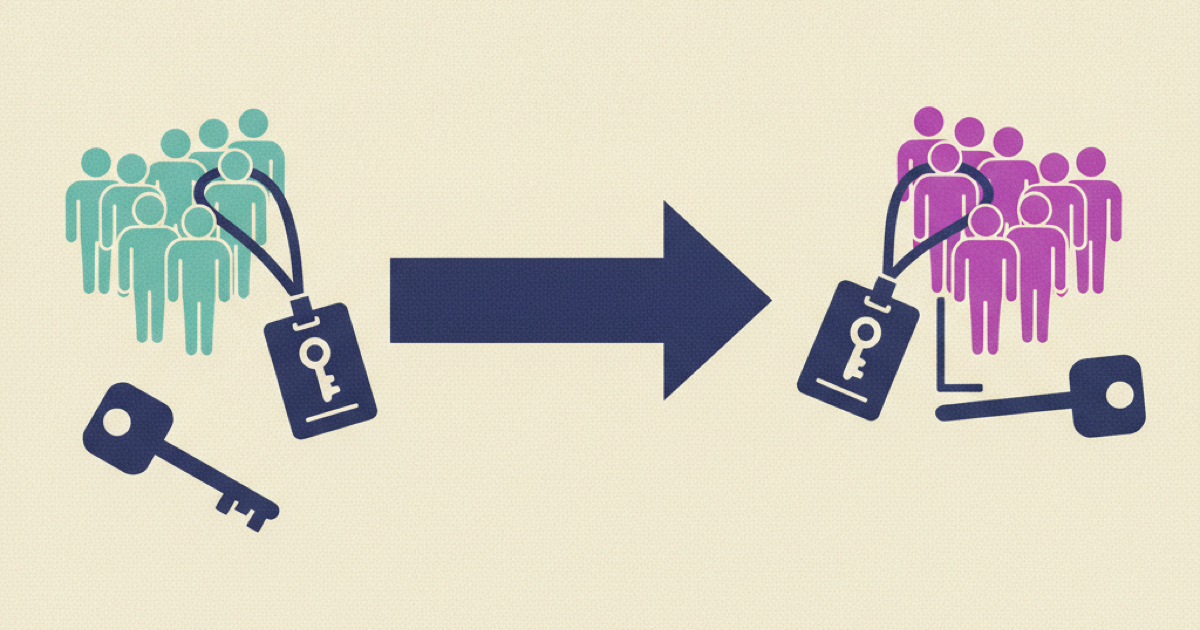
The replacement may take over a role, but they must not inherit the departing employee's account, sessions, group memberships, or broad access. Preserving the knowledge does not require preserving the identity.
Microsoft describes lifecycle workflows across joiner, mover, and leaver phases, including account provisioning, access assignment, and timely revocation. Trigger the knowledge handover from the same authoritative departure event, but track it separately from deprovisioning. A missing document must never delay urgent access removal.
The access sequence should be explicit:
- identify the incumbent's final working time;
- freeze new handover submissions before that cutoff;
- transfer ownership of approved records to persistent roles or teams;
- revoke the departing identity and active sessions on schedule;
- provision the successor from current role and employment attributes;
- test the successor's account against required and forbidden sources.
NIST Zero Trust Architecture states that access should not be implicitly trusted because of network location or asset ownership. Apply that principle here. A shared job title or predecessor relationship is not authorization. The successor receives access through current policy, not through a copy of the former employee's entitlements.
If no successor has been hired, assign the knowledge records to an interim owner. Never preserve access by leaving the former account active for convenience.
Build replacement onboarding from the verified delta
A replacement does not need every document the previous employee ever opened. Build an onboarding path from the verified responsibilities in the register.
For each responsibility, create one assignment with:
- the outcome to produce;
- the governing source;
- required tools and approved access;
- one normal example;
- one exception or escalation case;
- the owner who can answer questions;
- the evidence needed to mark the assignment complete.
Kipwise employee onboarding provides product context for assigned reading, searchable company knowledge, and progress tracking. Use assigned reading for governing sources, but do not treat opening a page as proof of readiness. Pair each source with a realistic task.
The public GitLab onboarding handbook uses explicit tasks, role-specific material, access requests, owners, buddies, and support channels. That pattern fits successor onboarding well. The replacement should know both what to learn and where to go when the captured handover does not cover a situation.
Sequence assignments by operational dependency. Start with identity, required systems, safety boundaries, and urgent commitments. Then add recurring decisions and less time-sensitive context. Avoid a chronological dump of the departing employee's final weeks.
Give the company brain a strict evidence contract
The AI layer should retrieve only verified records that the current user may read. Each answer about transferred work should include the source, owner, review date, and status. If the only relevant record is provisional, the assistant should say so and route the question to its resolution owner.
The answer policy can be simple:
if user_has_access(source) and record.state == "verified":
 answer_with_source_owner_and_review_date()
elif record.state in {"blocked", "provisional"}:
 show_known_boundary_and_route_to_owner()
else:
 refuse_to_infer_and_create_knowledge_gap()
Do not let the model merge verified policy with unreviewed exit notes. Store those evidence classes separately and filter before generation. A generated caveat at the end cannot undo a wrong instruction already presented as fact.
Also preserve the original source location. An AI summary helps the replacement navigate, but the employee should be able to inspect the governing record before making a consequential decision.
Handle predictable failure modes
The employee may leave sooner than planned. Prioritize active commitments, access-sensitive duties, and high-impact decisions. Assign owners for every missing area. Do not fabricate completeness from chat history.
The manager may be unable to verify technical details. Route review to a persistent subject matter expert or process owner. The manager can confirm responsibility boundaries without approving claims outside their expertise.
If the handover contains personal or customer data, link to the controlled system of record rather than copying sensitive content into onboarding notes. Preserve its access controls and retention rules.
When the incumbent and owner disagree, keep both statements out of the verified answer path until the accountable owner resolves the conflict. Record the decision and why it changed.
The successor will often start after the former employee's access has been removed. The verified knowledge belongs to the organization, while the new account receives only current entitlements.
If no replacement exists yet, build an interim operating pack for the manager or team. Generate successor assignments once the role and person are known.
Verify readiness with work, not page views
Test the workflow from both sides of the role boundary. First confirm that the former employee can no longer access company systems or retrieve handover records. Then use the successor's real account to test required access and negative boundaries.
Give the replacement three scenarios:
- complete a normal recurring task using the governing source;
- identify and route an approved exception;
- respond to an unfamiliar case that the handover does not answer.
The third scenario is essential. A reliable successor knows when the company brain lacks evidence and who owns the decision. Confident guessing is not readiness.
Before closing the transfer, verify:
- every critical responsibility has a persistent owner;
- every required instruction links to a reviewed source;
- active commitments have new accountable people;
- the departing identity and sessions are disabled;
- the successor can retrieve required records;
- restricted and irrelevant records remain hidden;
- provisional records trigger escalation instead of advice;
- scenario results demonstrate correct decisions;
- the receiving manager approves a bounded scope of independent work.
Track missing owners, unresolved records, failed access checks, overdue commitments, and scenario failures. Chat volume and page views may help diagnose friction, but they do not prove that operational responsibility transferred safely.
Start with one critical responsibility
Choose one role transition and one responsibility where lost context would cause a visible operational failure. Build the handover register, capture a real example, obtain owner approval, revoke the former identity, and test the successor with a normal case and an exception.
Expand only after the evidence, access, and readiness checks agree. Offboarding should leave behind governed company knowledge, and replacement onboarding should turn it into verifiable decisions. Before the next departure meeting, name the responsibility, its source owner, and the final review date.
References
- GitLab's offboarding handbook provides a practitioner example of coordinated departure responsibilities, handover planning, and system deprovisioning.
- Kipwise's single source of truth guide supports governed consolidation, ownership, access control, and review of shared operational information.
- Microsoft Entra lifecycle workflows supports identity tasks tied to joiner, mover, and leaver events.
- NIST SP 800-207: Zero Trust Architecture supports access decisions based on current identity, assets, resources, and policy rather than inherited trust.
- Kipwise employee onboarding provides product context for assigned reading, searchable knowledge, and onboarding progress.
- GitLab's onboarding handbook provides a practitioner example of explicit tasks, role material, access requests, owners, buddies, and support paths.