How to Re-Onboard Employees After an Internal Transfer with AI
Internal employee transfer onboarding often fails because everyone assumes the employee already knows the company. They do, but they may not know the new team's decision rules, systems, vocabulary, risks, or escalation paths. Their old access can remain active while the permissions and knowledge needed for the destination role arrive late. An AI company brain can coordinate this transition, but only if it treats the move as a controlled role change rather than a shorter version of new-hire orientation. This guide shows how to remove obsolete access, calculate the knowledge gap, assign useful work, and verify readiness before the employee acts independently in the new role.
Why internal transfers create hidden onboarding gaps
A new hire starts with an obvious knowledge deficit. An internal transfer does not. Familiarity with the company can conceal a more dangerous mix of correct, incomplete, and obsolete assumptions.
Consider a customer support specialist moving into product operations. The employee knows the product and many colleagues. That does not mean they understand release authority, incident severity, analytics definitions, vendor permissions, or which product records are confidential. A generic orientation checklist would waste time on company basics. Giving immediate broad access would create avoidable risk.
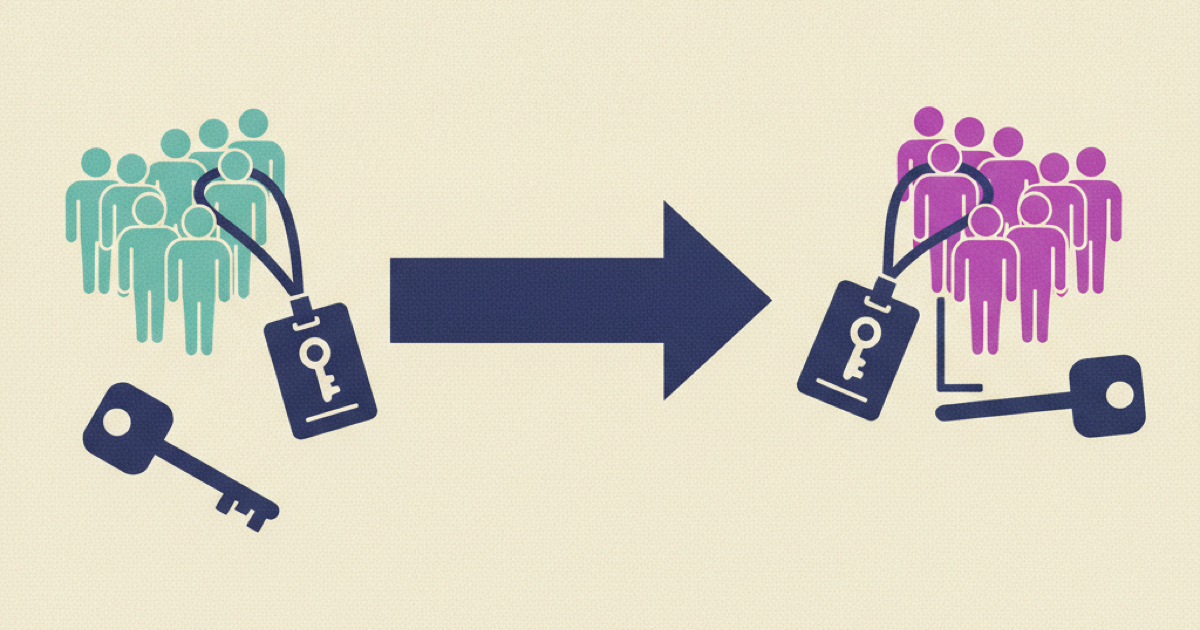
The transfer also has two sides. The source team must close or hand off responsibilities, while the destination team must grant access and teach new operating context. If those activities run as separate checklists, gaps appear between them. An old shared folder may stay visible. A recurring approval may still route to the employee. A new dashboard may remain inaccessible. The company brain may retrieve documents for both roles and present a technically relevant but unauthorized answer.
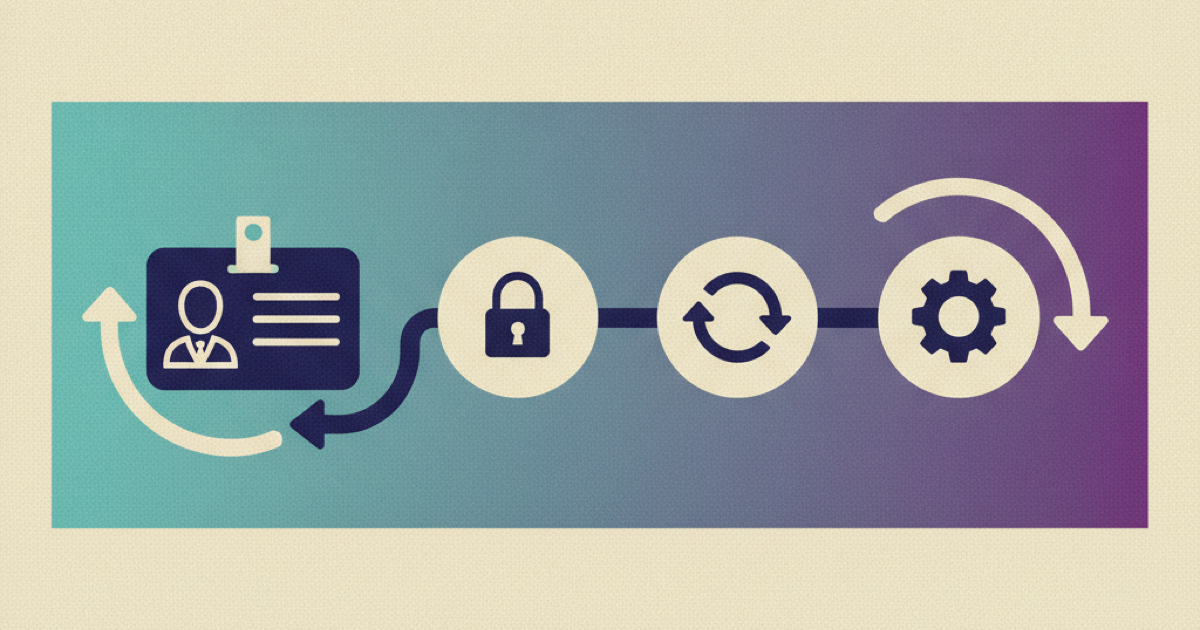
This is why the transfer needs an explicit boundary. Microsoft's description of lifecycle workflows includes mover scenarios alongside joiner and leaver events. The useful principle is that a role change is an identity lifecycle event with its own trigger, tasks, owners, and completion evidence.
Define the transfer contract before assigning content
Start with a small transfer contract. It should be a structured record, not a paragraph in an HR ticket. At minimum, record:
- the employee identifier and destination role;
- the source and destination teams;
- the effective date and any overlap period;
- the destination manager and source manager;
- responsibilities to transfer or close;
- source-team access to remove or review;
- destination access to request;
- critical knowledge domains for the new role;
- the person who can approve independent work.
The effective date matters. It gives every downstream system one shared boundary for assignments, retrieval filters, approvals, and reminders. If an overlap period is required, define its purpose and end date. Do not represent overlap as permanent membership in both teams.
A practical transfer record can look like this:
transfer_id: tr_1042
employee_id: emp_287
source_role: customer_support_specialist
destination_role: product_operations_analyst
effective_at: 2026-09-01T09:00:00Z
overlap_ends_at: 2026-09-05T17:00:00Z
source_manager: mgr_14
destination_manager: mgr_31
readiness_owner: mgr_31
critical_domains:
 - release-governance
 - incident-triage
 - product-analytics
Keep this record separate from generated prose. The AI system may explain the plan, but an authoritative HR or identity system should own role and date fields. The company brain should consume those fields and report conflicts rather than silently choosing between them.
Calculate the knowledge delta instead of replaying orientation
The core crossboarding task is to identify what the employee must stop relying on, what remains valid, and what is new. A useful knowledge delta has four buckets:
- Retained knowledge: company-wide policies, security basics, and tools that still apply.
- Changed knowledge: processes with the same name but different owners, thresholds, or approval rules.
- New knowledge: destination systems, decisions, terminology, and role-specific procedures.
- Deprecated knowledge: source-team instructions that should no longer influence work in the new role.
Build the delta from role requirements and source metadata, not from chat history alone. Each required item should have an owner, audience, effective date, and review date. The onboarding plan can then skip retained material, highlight changed material, assign new material, and warn when a formerly valid procedure no longer applies.
Kipwise's employee onboarding workflow provides the product context for assigned reading, searchable company knowledge, and progress tracking. For an internal transfer, use those capabilities selectively. The goal is not to maximize completed pages. It is to give the employee the smallest evidence-backed set needed to perform the destination role safely.
The company brain should also explain why each item was assigned. "Read the incident guide" is weak. "You will become the initial incident coordinator on September 8, and this guide defines severity and escalation authority" connects knowledge to work.
Change access and retrieval together
Application access and AI retrieval access must move as one transaction. Removing a folder from a user interface does not help if the retrieval index can still return its contents. Updating an HR profile does not help if the search layer uses a stale group cache.
Use the transfer's effective date to trigger four actions:
- Revoke source-role entitlements that no longer have a business purpose.
- Grant destination entitlements through the normal approval path.
- Refresh identity claims and document filters used during retrieval.
- Test both negative and positive access before declaring the move complete.
Microsoft's guidance on document-level access control describes retrieval patterns that apply user or group access to searchable documents. The implementation detail varies, but the rule is stable: filtering must happen during retrieval, not after the model has already received restricted text.
Apply the same discipline to temporary overlap. If the employee needs five days of source-team access for handoff, represent that as a time-bound exception with an owner and expiry. Do not preserve the old role because removal feels inconvenient.
The NIST Zero Trust Architecture supports evaluating access from current identity, resource, and policy context rather than assuming trust from network location or previous access. In crossboarding terms, yesterday's legitimate access is not proof of today's need.
Turn the delta into staged work
Reading is useful, but role readiness depends on application. Organize the transfer plan around destination tasks rather than a library tour.
For the product operations example, a staged sequence might be:
- Observe: review one completed release decision and identify its source evidence.
- Practice: classify a synthetic incident and choose the escalation route.
- Perform with review: prepare a real release checklist for manager approval.
- Perform independently: own a bounded release step after the manager confirms readiness.
Each task should link to the exact policy or procedure that governs it. The AI assistant can answer questions and surface evidence, but it should not invent approval authority. If a source is missing, contradictory, expired, or outside the employee's permissions, the assistant should stop and route the issue to a named owner.
The public GitLab onboarding handbook is a practitioner example of explicit tasks, owners, role details, access requests, buddies, and support paths. The lesson is not to copy its checklist. It is to make responsibility visible. Every transfer task needs someone who can resolve a blocker and someone who can confirm completion.
Avoid asking the employee to prove readiness through trivia. A multiple-choice question about a policy title says little about practical judgment. Use realistic scenarios tied to the destination role. Ask which source applies, what action is allowed, when approval is required, and where uncertainty should be escalated.
Add failure handling before launch
Crossboarding automation needs defined failure states. Otherwise a partial update looks like success.
The HR event arrives late. Keep the previous state until the effective change is verified, alert the transfer owner, and avoid assigning destination-only work that requires unavailable access.
Old access cannot be removed. Treat this as a blocker or an approved time-bound exception. Record the owner, reason, compensating control, and expiry.
New access is incomplete. Do not let the company brain claim that the employee can complete a task. Show the missing entitlement and route the request through the normal approval process.
Sources conflict. Withhold the instruction and ask the accountable content owners to resolve precedence. A fluent summary of two contradictory procedures is still unsafe.
The employee already knows the material. Allow evidence-based skipping. A correct scenario response or manager-confirmed prior experience can satisfy an item, while preserving the completion record.
The destination role changes again. Recalculate from the newest authoritative role state. Do not stack another static checklist on top of the first one.
These rules should be deterministic where possible. The language model can summarize a failure, but workflow code should decide whether a missing entitlement blocks a task, whether an exception has expired, and whether all required checks passed.
Verify the transfer end to end
Do not measure success by article views or chat volume. Verify the state the employee needs to do the new job.
Run this checklist before independent work begins:
- The HR role, manager, team, and effective date match the transfer contract.
- Source-role access was removed or has an approved, expiring exception.
- Destination access works for the employee's real identity.
- A negative retrieval test cannot return selected source-team documents.
- A positive retrieval test returns required destination knowledge with accessible source links.
- Changed and deprecated procedures are clearly identified.
- Critical staged tasks have named owners and escalation routes.
- The employee completed realistic destination-role scenarios.
- The destination manager reviewed evidence and approved the defined scope of independent work.
- Any remaining blocker has an owner, due date, and safe interim procedure.
Keep the decision evidence compact. Record the transfer version, tested identity, required controls, results, exceptions, and approver. Do not retain every private question merely to prove the workflow ran.
A transfer is complete when identity, access, knowledge, and practical authority agree. If one layer lags behind, the employee is still crossboarding even if the HR system says the move finished.
Start with one transfer path
Choose one common role move with clear source and destination managers. Write the transfer contract, define five to ten critical knowledge items, map the access changes, and design two realistic readiness scenarios. Run the workflow manually once before automating it. That first test will expose ownership conflicts and stale permissions faster than a broad rollout.
Then connect the company brain to the verified role event, apply retrieval filters at query time, and make partial failure visible. Internal employee transfer onboarding works when the system removes old assumptions as deliberately as it teaches new ones.
References
- Microsoft Entra lifecycle workflows supports event-driven joiner, mover, and leaver identity tasks.
- Microsoft document-level access control supports retrieval-time filtering by current user or group access.
- NIST SP 800-207: Zero Trust Architecture supports access decisions based on current identity, resource, and policy context.
- GitLab's onboarding handbook provides a practitioner example of explicit onboarding tasks, owners, access requests, and support paths.
- Kipwise employee onboarding provides product context for assigned reading, searchable knowledge, and onboarding progress.