How to Onboard Software Engineers with an AI Company Brain
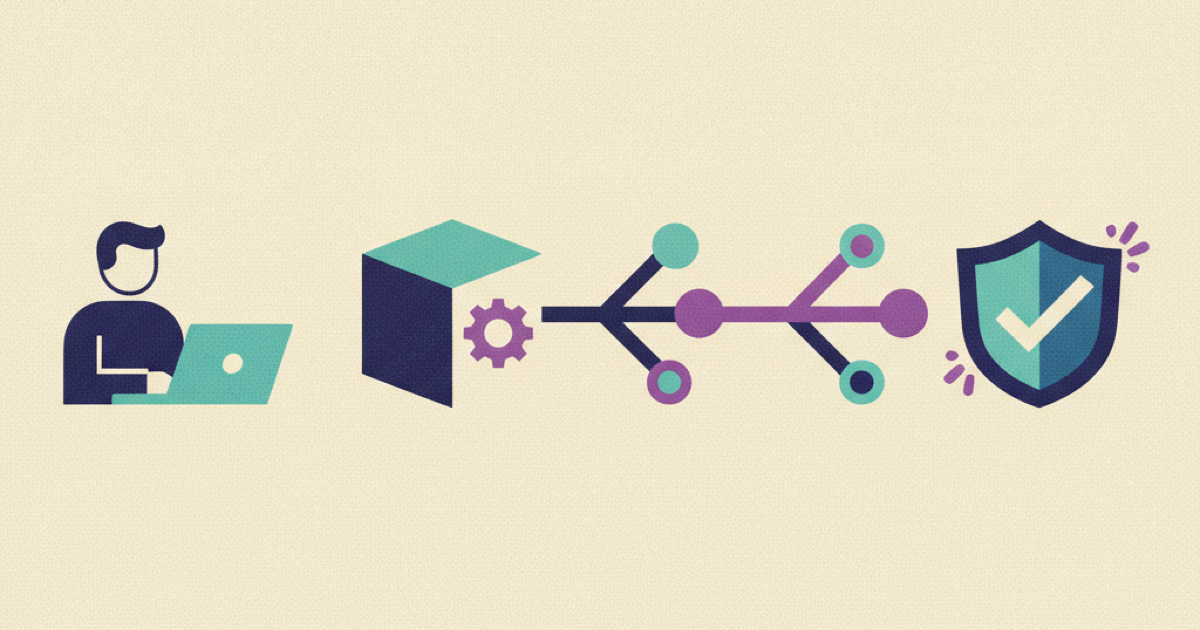
Software engineer onboarding fails when a new hire gets repository access, a folder of architecture documents, and no reliable route from reading to a safe change. A chatbot can speed up the wrong process. It may combine an obsolete design note with a current runbook, summarize a restricted incident, or answer confidently without identifying the service owner. An AI company brain needs stricter boundaries: a repeatable development environment, permission-aware evidence, a reviewed first change, and a clear release decision for operational responsibility.
This guide connects those pieces. The engineer should finish the process able to understand one service, change it safely, explain the evidence behind the change, and recognize when a maintainer needs to step in.
Why a document dump does not produce readiness
Engineering knowledge lives in code, build configuration, architecture decisions, runbooks, postmortems, dashboards, issue trackers, and people's memory. These sources change at different speeds. They also carry different authority. A merged configuration file describes current behavior more reliably than a two-year-old diagram, while a current security standard may govern a change even when the code does not enforce it yet.
A generic onboarding checklist hides those distinctions. It records that the engineer opened a page. It does not show whether they can trace a request, identify a dependency, find the owner, or roll back a change. Search has the same limitation when the first result is historical, out of scope, or inaccessible to the employee's assigned team.
Google's SRE onboarding guidance describes the practical failure as trial by fire: assigning reactive work before a new engineer has a structured understanding of the system. Its alternative combines sequential learning, concrete project work, postmortems, realistic exercises, staged access, shadowing, and readiness checks. That model gives an AI company brain a useful job. The system should assemble and verify the evidence for a learning path, not replace the maintainers who decide whether the engineer is ready.
Define engineering readiness before configuring AI
Start with the responsibilities the new hire will receive. For one service, define what the engineer must be able to explain, do, and recover before access expands.
A practical readiness contract might require the engineer to:
- Start a development environment from repository-controlled configuration.
- Trace one representative request across the service boundary.
- Identify the current owner, upstream dependencies, and downstream consumers.
- Find the secure-development rules that apply to the planned change.
- Make a bounded change and pass the required automated checks.
- Explain the rollout, monitoring, and rollback plan in review.
- Diagnose a realistic failure in a safe environment.
- Name the escalation path when evidence conflicts or access is missing.
Each item needs observable evidence. "Read the architecture guide" is not evidence. "Draw the request path, cite the current sources, and have the service maintainer correct it" is.
The company brain supports this contract by retrieving the right material for the current employee and task. Engineering leadership still owns the standard and the release decision.
Build the company brain around source authority
Retrieval-augmented generation lets a model answer from selected external knowledge rather than relying only on its training data. The AWS explanation of RAG also notes the importance of current sources, attribution, and authorization-aware retrieval. Those controls matter more than conversational polish in engineering onboarding.
Give every indexed source enough metadata to support a decision. One service might use this record:
source_id: checkout-service-rollback
source_type: runbook
repository: commerce-platform
service: checkout
owner: checkout-maintainers
status: approved
effective_from: 2026-08-01
review_by: 2026-11-01
audiences:
 - checkout-engineer
allowed_uses:
 - explain
 - practice
 - operate-with-supervision
supersedes: checkout-rollback-v2
This metadata lets retrieval reject a draft, historical note, wrong service, expired runbook, or source outside the employee's permissions.
Microsoft documents document-level access control for AI search, including query-time checks against user or group permission metadata. Apply that principle before generation. Authenticate the engineer, authorize the source set, retrieve permitted passages, then ask the model to answer. Do not retrieve broadly and ask the model to conceal restricted text afterward.
Use a simple authority order for conflicts:
- Enforced repository configuration and approved security policy.
- Current owner-approved runbooks and architecture decisions.
- Maintained service documentation.
- Reviewed postmortems and issue history for context.
- Chat discussions and personal notes as discovery leads only.
When two authoritative sources disagree, withhold the instruction and route the conflict to the named owners. The AI should not invent a compromise between incompatible deployment procedures.
Implement software engineer onboarding in seven steps
1. Choose one service and one first change
Limit the first release to a service with clear ownership, a working test path, and a small change that reaches the normal review and release process. Indexing the entire engineering estate first adds sources without proving that the workflow works.
The first change should be useful but reversible. Good examples include improving an error message, adding an observable metric, tightening an input check, or correcting a maintained runbook alongside code. Avoid menial work that teaches nothing about the system boundary.
2. Make the environment repeatable
If a new engineer spends the first week reconstructing a senior developer's laptop, the environment is part of the onboarding failure. Commit the toolchain, dependencies, startup commands, and safe sample data to versioned configuration where possible.
GitHub describes Codespaces as cloud development environments that can be defined with repository configuration so users receive a repeatable setup. The GitHub Codespaces overview is one implementation option, not a requirement. A local container or another managed environment can satisfy the same contract if a fresh engineer can create it predictably.
Verify the environment with a real task: clone or open the repository, build it, run tests, start the service, and make one request. A green setup script that leaves the service unusable is not success.
3. Curate a service context pack
Create a small source set for the selected service:
- a current system map;
- the repository and build entry points;
- ownership and escalation records;
- current coding and security requirements;
- deployment, monitoring, and rollback runbooks;
- two or three teachable postmortems;
- known local-development differences;
- the review checklist for the first change.
Assign an owner and review date to each item. Kipwise's employee onboarding workflow connects assigned reading with searchable company knowledge. For engineering, extend that pattern by tying each assigned source to a task and a maintainer who can verify understanding.
4. Add permission-aware retrieval
Map the employee's current team, repository access, service role, environment, and training stage to retrieval filters. The company brain should return only evidence the engineer can open directly.
Keep production secrets, customer data, restricted incident details, and unrelated repositories out of the onboarding index unless the employee has a current business need. A denied result should reveal neither the restricted passage nor a sensitive summary. It should return the access process or the responsible owner.
Test negative cases. Ask about another team's private incident, a production credential, and a service outside the employee's role. Confirm that semantic similarity cannot bypass source permissions.
5. Turn the first change into a source-linked path
Break the change into decisions rather than pages to read. For each decision, attach the governing evidence and expected reviewer.
A change path for input validation could ask the engineer to identify the API contract, find the validation boundary, inspect related tests, check the secure-development requirement, propose the smallest change, and write a rollback note. NIST's Secure Software Development Framework recommends integrating secure practices into the software development lifecycle. Treat security as part of the first-change path, not as a separate orientation video.
The AI can explain source passages, compare current files, and identify missing evidence. The assigned reviewer still approves the design and decides whether to merge the code.
6. Rehearse failure before expanding access
Use a staging system, local fault injection, or a tabletop scenario. Give the new engineer a realistic symptom and let them use the same runbooks, dashboards, and escalation map they will use later.
Ask them to state a hypothesis, choose evidence, describe a safe diagnostic step, and name the rollback or handoff point. The SRE guide recommends contained realistic breakages, postmortem study, and shadowing before primary on-call responsibility. Those activities reveal whether the engineer can reason beyond a checklist.
Completing the exercise does not grant production mutation access. A maintainer reviews the reasoning and decides what capability comes next.
7. Use a maintainer release gate
Collect a concise review pack:
- environment verification result;
- corrected system map;
- first change and code review;
- sources used for material decisions;
- failed or unanswered company-brain queries;
- failure exercise notes;
- requested next access level;
- maintainer decision and conditions.
The maintainer can approve a limited next step, request remediation, or hold access. For example, the engineer may be cleared to deploy under supervision while on-call remains out of scope.
Work through a realistic first-change example
Suppose a new engineer is asked to add a metric for checkout timeouts.
A weak AI assistant finds an old dashboard note and tells the engineer to modify a retired monitoring library. A safer workflow proceeds differently:
- Authenticate the engineer and filter retrieval to the checkout service and approved shared platform sources.
- Retrieve the current observability standard, service ownership record, build configuration, and relevant postmortem passages.
- Show that the old dashboard note is superseded and exclude it from instructions.
- Ask the engineer to trace where the timeout is created and how existing metrics are named.
- Link the proposed metric to a small test and a review owner.
- Require the pull request to explain rollout, expected signal, and rollback.
- Run a staging timeout scenario and confirm the metric appears without exposing sensitive labels.
- Have the maintainer review the change and decide whether supervised deployment is appropriate.
One bounded change now tests several parts of the job together. The engineer has demonstrated environment use, source judgment, service tracing, secure implementation, observability, and escalation.
Handle predictable failures
The AI cites a stale architecture page
Display the source owner and review state with every material answer. If a source is expired or contradicted by current configuration, suppress its instructions and create an owner task. Semantic similarity cannot resolve a disagreement about authority.
The engineer cannot open the cited source
Treat that as a failed answer. Either the retrieval filter is wrong or the source is inappropriate for the employee's role. Return an accessible alternative or a named access route without leaking restricted details.
The development environment works only for maintainers
Test from a clean identity with no cached packages, private dotfiles, or inherited credentials. Record each manual fix. Move repeatable fixes into versioned environment configuration and route genuine access dependencies to their owners.
The first change becomes busywork
Check whether it teaches a service boundary, toolchain step, review rule, or operational responsibility. If none applies, choose a different task. The change should provide partial ownership without creating production risk.
The model explains beyond its evidence
Compare every material instruction with the retrieved passages. When the sources do not support a claim, return the evidence that exists and ask the maintainer. The answer should stop where its evidence stops.
Readiness becomes a completion percentage
A page-open event and an AI conversation count do not prove engineering judgment. Base the release decision on the system map, reviewed change, failure exercise, source use, and maintainer assessment.
Verify the complete path
Run a fixed acceptance set before using the workflow with a new hire. Include a valid architecture question, a superseded runbook, a restricted incident, an unknown owner, a clean environment build, a failing test, and an ambiguous operational decision.
For each case, verify that:
- identity and source filters run before retrieval;
- the engineer can open every cited passage;
- current sources outrank historical context;
- unsupported instructions are withheld;
- the clean environment completes a real service request;
- the first change follows normal security and review controls;
- the failure exercise has a safe reset path;
- missing evidence reaches a named owner;
- a corrected source changes the next answer;
- access expands only after a recorded maintainer decision.
Keep a small regression set for every source, permission, environment, or model change. A company brain that passed last month can fail after an index update or group change.
Start software engineer onboarding with one service
Choose one incoming engineer, one maintained service, and one bounded first change. Build the repeatable environment, approve the context pack, apply source permissions, and run the change through review and a safe failure exercise. Ask the maintainer to record a specific release decision.
Expand the AI engineering onboarding program only after the engineer can inspect the evidence behind every material instruction, restricted sources stay hidden, stale guidance is rejected, and the maintainer can explain why the next access level is justified. Run that test on one service first. If it fails, fix the source, permission, environment, or review step before adding another team.
References
- Google SRE onboarding guidance: structured learning paths, starter projects, postmortems, realistic exercises, staged access, shadowing, and readiness checks.
- GitHub Codespaces overview: repository-defined, repeatable cloud development environments.
- NIST Secure Software Development Framework: high-level secure practices integrated into the software development lifecycle.
- Microsoft document-level access control: retrieval-time authorization using user, group, and document permission metadata.
- AWS explanation of retrieval-augmented generation: grounding model output in current external sources with attribution and retrieval controls.
- Kipwise employee onboarding: assigned reading, searchable company knowledge, and onboarding workflows.