How to Keep a Collaborative Knowledge Base Up to Date
Keep the review process small enough that you will actually follow it: a named reviewer on every page, review intervals only on the pages people rely on, and a standing slot to clear whatever is waiting. A knowledge base goes stale when nobody owns a page, and a wrong page does more harm than a missing one: teammates act on it, then stop trusting the knowledge base. Pages are written at different times, so nobody can track by memory which are due, and Kipwise has built-in review workflows for that.
Assign reviewers to each folder so every page has a clear reviewer
With our content review flow, the first step is to make sure every article has one clear reviewer who is responsible for it. Whenever you create a new top-level folder on Kipwise, you can select which teammates or user groups get review rights (read more about how to set folder permissions).

When an author publishes a new page and has review rights for that folder, they are pre-selected as the reviewer, and you can change it to anyone with review rights for that folder.
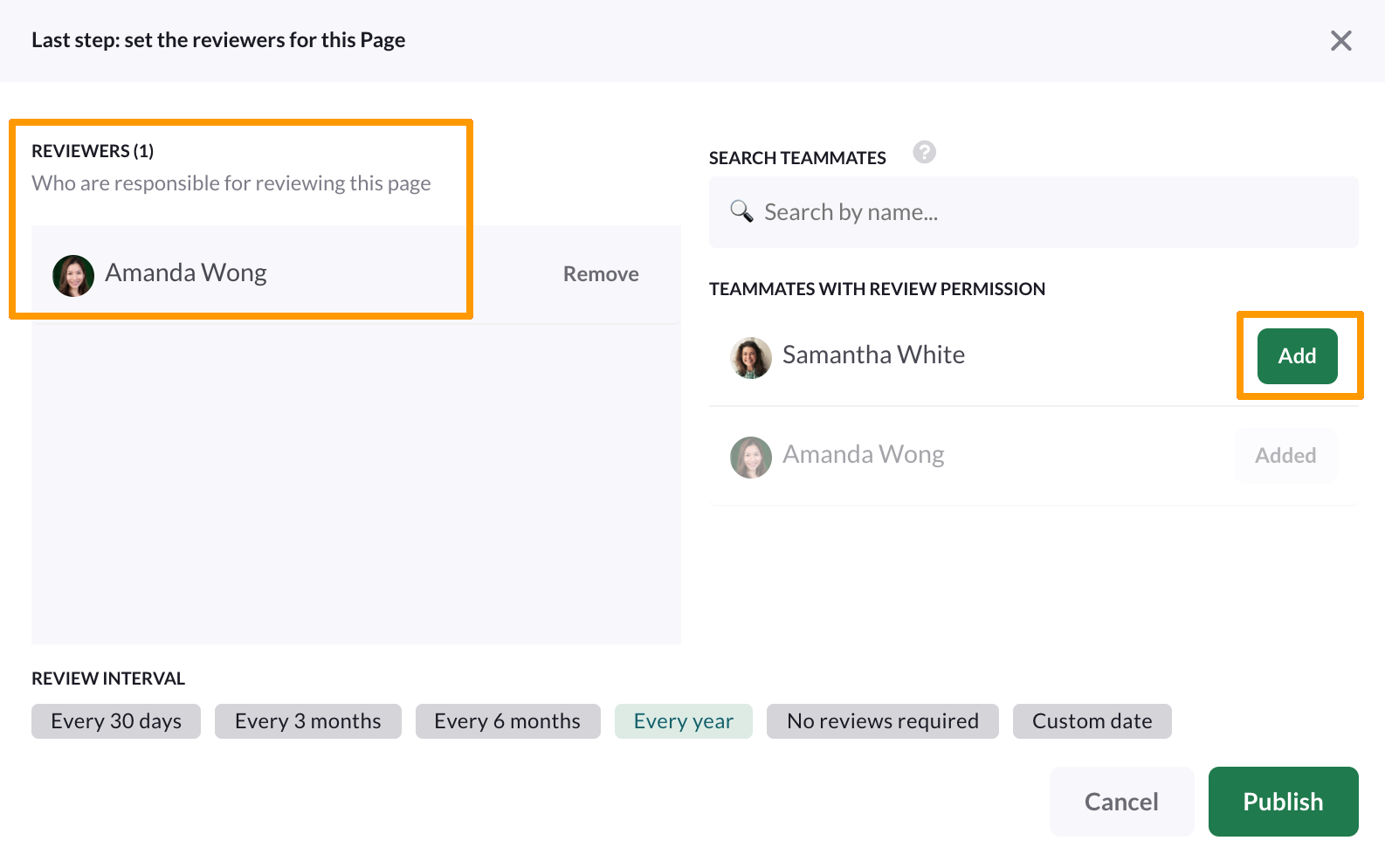
If the creator doesn't have review rights, they must select a reviewer from the pre-approved reviewer list before the Page can be published. The Page is also marked as “To be reviewed” automatically after it is published, so other teammates know the content is yet to be reviewed. This lets you grant edit rights to junior teammates to encourage collaboration, while managers still review the content for accuracy.
Remind reviewers automatically
You can set a review interval, and our system will automatically remind the designated reviewer to review the content. For example, when you set the review interval to 6 months and the Page has not been reviewed for 6 months, the designated reviewer receives a notification on Slack.

Keep every page's reviewer, but set intervals only on the pages your team relies on, such as onboarding docs and pricing, and match the interval to how fast the page changes: a pricing page can be wrong within a month, a company history page rarely is. Kipwise's guide to the content review flow makes the same point: reminders on every page become noise that people learn to ignore.
You can also see all the pages that need to be reviewed under the “To Review” section in the “To-Dos” tab.
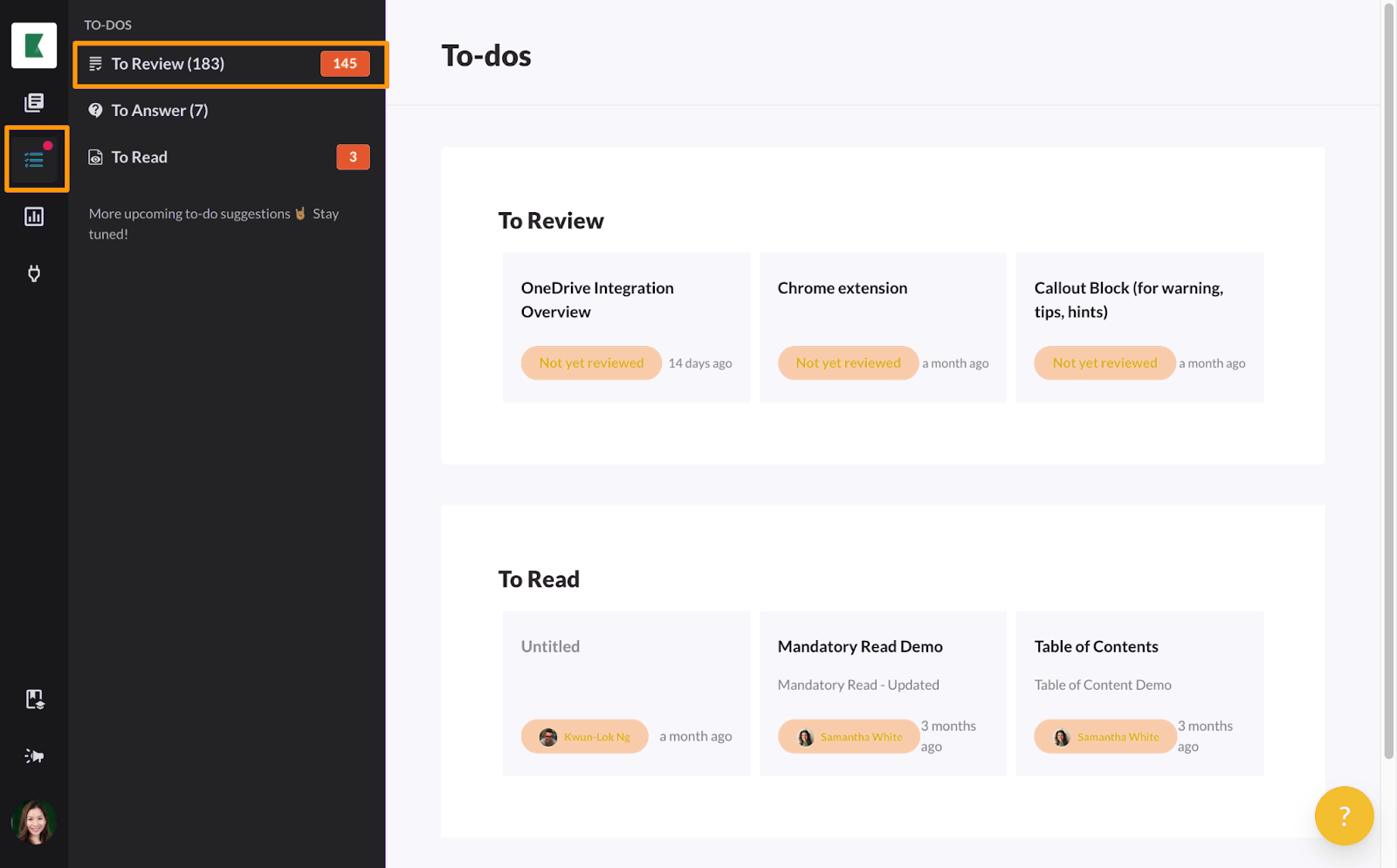
One thing to know before you turn this on: the Slack reminder fires once, when the interval lapses, and it is easy to miss in a busy channel. If nobody acts on it that day, the page just sits in the “To Review” list with no second nudge. We recommend treating that tab as a queue and clearing it in a standing five-minute pass every Monday, instead of trusting a single Slack ping to get noticed.
When you open a page from the queue, check what goes stale first: names and owners, prices, links, screenshots, and steps that depend on a tool's current screens. Skip the parts that rarely change. Fix what is wrong, or confirm the page is still correct.
Highlight the content and request review when you have doubts
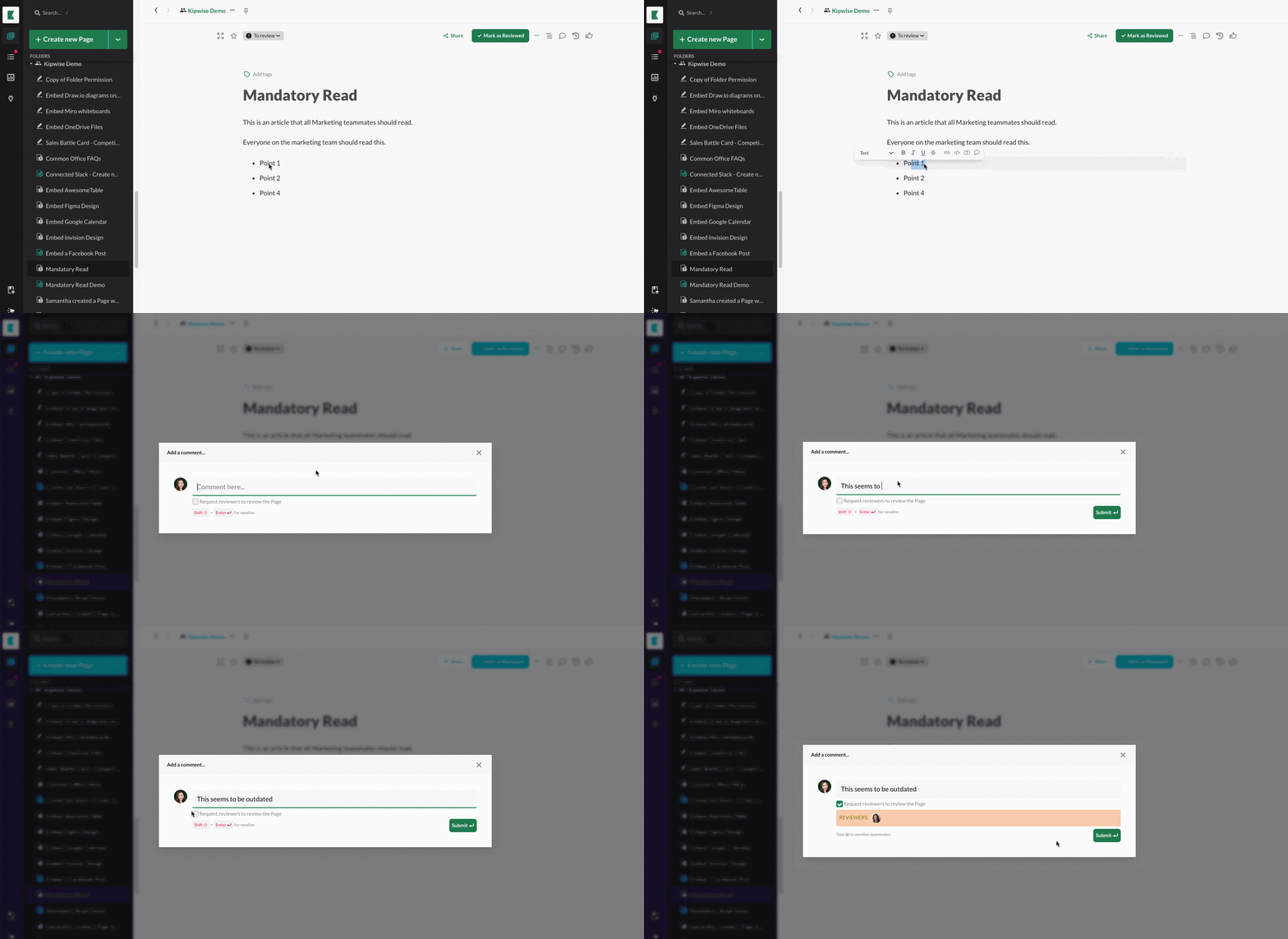
Besides the automatic reminder, teammates can request a review at any time when something looks wrong. Highlight the content you want reviewed, click the comment icon and select the request review option.
Create a question when you can’t search for the information you need
Besides the content review flow, Kipwise has a Q&A flow to grow your knowledge base collaboratively. When teammates can't find what they need through search, they create a question and assign it to a teammate or Slack channel. The question and answer are then saved to Kipwise automatically, so you never have to answer the same question twice. Watch a video on how our Q&A feature works.