Competitive Intelligence for a Small Team: One Owner, a Log That Changes Decisions, and a Weekly Slack Digest
You find out a rival cut its price when a prospect mentions it on a call. The alert that would have told you is sitting unread in someone's inbox, and the lost deal that hinted at it is a note in your CRM. Competitive intelligence at a small firm usually breaks down at one step: nobody owns the job of turning that information into a decision. This guide gives you a routine that takes about half an hour a week: one owner, a short log, a rule for sorting what comes in, and a digest your team reads in Slack. You need no analyst and no enterprise tool.
The short answer
Run this for a month before you buy anything:
- Name one owner and pick three to five rivals, chosen from the deals you actually lost.
- Write down the two or three decisions the work should inform, such as pricing or what the homepage says.
- Send alerts and rival newsletters to one mailbox, and tag lost deals with the rival's name.
- Once a week, gather everything into one digest in a Slack channel.
- Label each item act, watch or ignore, and record the act items in a log with a name and a date.
- After a quarter, cut every source that never produced an act item.
The rest of this article explains each step, and shows which parts can run by themselves and which parts stay with a person.
Why competitor tracking dies at small firms
Most guides are written for a team with a program. They cover defining needs, collecting, analyzing and distributing across six steps, and they are sensible. A firm of 20 people reads that list and then does what founders on Hacker News describe: Google Alerts and hope, or, in another thread from someone building a tool for this gap, the claim that bootstrapped firms have almost nothing outside enterprise products. Each is one person's report.
Three things break. First, nobody owns it. Unkover's advice to start with a single owner who cares is right, and it is also the step most small firms skip. Other guides list what to watch in detail and never say who reads it. Klixo's guide has a good test, that research with no action is not intelligence, but it leaves open who decides to act.
Second, signals arrive in separate places. Alerts go to one inbox, what a prospect said goes to the CRM, and a salesperson's aside goes to a Slack thread that scrolls away.
Third, the rhythm is too slow. A quarterly review misses a price cut by weeks. Crayon, which sells competitive intelligence software, reports from its own survey that cadence predicted revenue impact better than tooling or polish, and it advises weekly updates in the tools people already use. Treat that as a vendor's finding about larger teams. The reasoning still holds at your size: a short note every week gets read, and a long report every quarter gets filed.
Start with your own lost deals
Your own lost deals and sales calls are a better first source than any monitoring tool, because they show which rival moves actually cost you business. A rival's redesign feels important. Whether it matters depends on whether your buyers noticed, and only your own records can tell you.
This is a recommendation rather than a measured result, and it fits what practitioners say. Several contributors to a Forbes Business Council roundup point to customer and prospect conversations: why clients chose you, why they left a rival, and what nearly stopped them buying.
So do this first. Pull the last 20 lost deals from your CRM and write down who won each one and why. If your records are thin, ask whoever ran the calls. That list picks your three to five rivals for you, and it often removes the company you worry about most, because it never shows up in your deals. Then add one required field to your lost deal stage: the rival's name, or "no decision". From here on, the most valuable source updates itself.
What to watch, and how each signal reaches you
Keep the list short. Each row below has a different way of reaching you, and that decides how much of it you can automate.
| Signal | Why it matters | How it reaches you | Who does it |
|---|---|---|---|
| Lost deal reasons | Shows what actually cost you business | CRM field | Automatic once the field exists |
| News and press mentions | Funding, launches, leadership changes | Google Alerts email | Automatic |
| Rival newsletters | Offers, positioning, new features | Email, from a shared address | Automatic |
| Team sightings | What prospects and customers say | Slack channel | Everyone, one line each |
| Pricing page | Direct effect on your deals | You open it | Owner, weekly |
| Reviews and job posts | Weak spots and where they are hiring | You open them | Owner, monthly |
Unkover suggests checking pricing pages, reviews and job posts weekly. For most firms under 50 people, weekly on pricing and monthly on the rest is plenty. Open three pricing pages on Monday and move on.
Stay with public sources and what people choose to tell you. US trade secret law treats theft, bribery, misrepresentation and espionage as improper means, while lawful ways of learning something are excluded. In practice, do not pose as a customer you are not, and do not press a rival's former employee for confidential details. Ask a lawyer if you are unsure about a specific case. This is general information, not legal advice.
Sort everything: act, watch or ignore
Give every competitor signal one of three labels within a week, act, watch or ignore, because an unlabelled signal is what turns a competitor feed into noise nobody reads. This rule is our recommendation, and you should adjust the examples to your business.
- Act: it touches a decision you named, and it could change a deal or a plan within a quarter. A rival drops its entry price below yours. It gets a name and a date.
- Watch: it might matter if it happens again. A rival posts three sales roles in your region. It stays in the log, and the owner looks again next month.
- Ignore: it does not touch any decision you named. A rival wins an award. It gets dropped, with no guilt.
The owner applies the labels alone. Debating them in a meeting is how the routine gets to be too expensive to keep. An urgent item does not wait for the weekly digest: if a rival cuts its price mid-week, whoever sees it posts in the channel and tags the owner.
The log: five columns
A shared sheet is enough. Leave out summaries of what the rival does, because they go stale and nobody reads them.
| Date | Rival and signal | Source | Decision it touches | Label, owner, due date |
|---|---|---|---|---|
| Monday | Rival A's entry plan dropped | Pricing page | Pricing | Act, Sam, Friday |
| Monday | Rival B hiring in Texas | Job post | Where we sell | Watch, Sam, next month |
The rows above are made up. If you cannot fill in the fourth column, the item is an ignore. The last column puts a name and a date on every item you keep. When a pattern about one rival repeats, update your competitive battle card, so the people on sales calls get the result and not the log.
A weekly digest in Slack
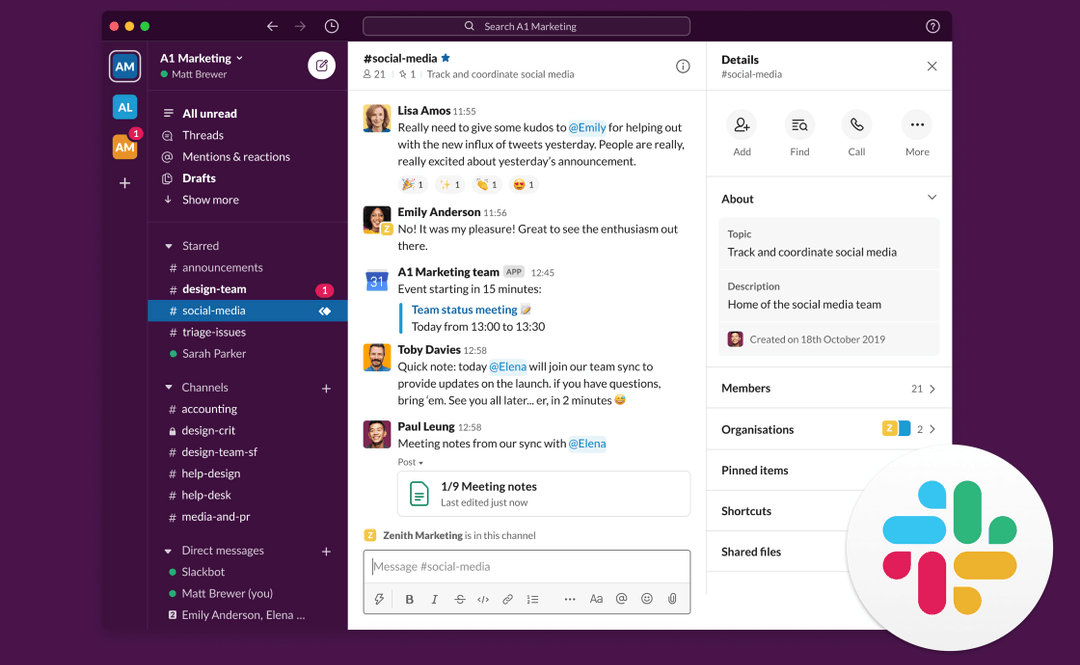
Create a channel with a plain name such as #competitors, and tell everyone one rule: if a prospect or customer mentions a rival, post one line. Unkover recommends the same kind of shared channel for this, and it costs nothing to start.
You can compile the digest by hand in about 20 minutes. If your team uses the Kipwise agent, you can hand over the gathering. It lives in your Slack threads, and you ask in plain language:
> @Kipwise every Monday at 9, read last week's Google Alerts and competitor newsletters in my Gmail, list HubSpot deals we lost last week with their lost reason, and check this channel for mentions of our rivals. Post one digest here grouped by rival, and link each item to where you found it.
Creating the scheduled job takes one approval, and later runs do not ask again. The agent reads with the connected person's own Gmail and CRM access, and it cites the sources it opened. A digest for this request might look like this, with made-up details:
> Rival A: Google Alert, new funding round reported. Two lost deals named Rival A, both citing price. > Rival B: newsletter announced a new integration. One mention in this channel from a customer call. > No items for Rival C.
The owner then reads it, opens the pricing pages and labels each item. When the owner asks in the thread, the agent adds the act and watch rows to the Google Sheet, and that write goes through an approval card first. A matching email can also start a job, so you could have an alert from one rival's name post straight to the channel. Start with the weekly digest, though, because a stream of single alerts recreates the noise you are trying to remove.
The agent reads what reaches your connected tools, and it does not watch competitor websites for changes, which is why pricing pages stay on the owner's list. If you need page-change alerts, a dedicated tool can send them by email, and they then flow into the same digest. The agent also cannot judge what a change means for your business. It saves the gathering and leaves the thinking to you. It costs $10 per user per month.
What goes wrong, and how to tell it works
- The digest gets long. Cut sources, not items. If Google Alerts sends you junk, adjust that alert's sources and frequency or narrow its search phrase.
- The owner is away. Name a backup. Skipping one week is fine, and two in a row usually means the routine has died.
- Sales stops posting. Thank people in the channel when a sighting leads to a change, and make sure they hear what was decided.
- A claim turns out to be wrong. Alerts and hearsay can be stale. Confirm anything marked act at its source before you change a price or a page.
- Rivals' activity starts steering you. Fold this into your wider picture. What your own customers ask for should still outweigh what a rival shipped.
Check the routine each quarter with three questions. How many items reached act, and how many of those were finished? Which sources produced none? Did your win rate against your top rival move? That last number, the usual starting metric for larger programs, will be noisy at your deal count, so read it as a direction only. Bring the answers to your monthly business review so that competitive intelligence sits beside your own numbers and does not become a separate project. Klixo's decision test applies here too: research that produces no action is not intelligence, so if a quarter changed nothing, change what you track.
What to do next
Today, pull your last 20 lost deals, write the winner beside each, and name one owner. That one hour gives you your rival list and your first log entries. Next Monday, run your first digest by hand. If it turns up one act item, keep going, and hand the gathering over once you know which sources earn their place.