AI Co-Founder in Slack: What to Hand Off Before You Hire a Right-Hand
Before you compare any AI co-founder, sort the job description you were about to post for a right-hand or online business manager into three columns: recurring coordination, drafts that leave the company, and founder judgment. Only the first column suits an agent in Slack, under your approval. The second needs a person to send, and the third stays with a person. The phrase "AI co-founder" covers three different products, so the column that dominates your list also tells you which product type to look at.
Founders, owners and ops generalists at Slack-first firms of about 5 to 100 people reach this choice when every status check, follow-up and weekly operating picture still routes through them: hire a right-hand, or buy an AI co-founder.
Three different products use the same name
Comparison posts map the category into research and planning tools, messaging-first specialist teams, agent orchestration platforms such as Cofounder.co, general chatbots and execution teams that wait for founder approval. Pancake's own list of AI co-founder tools and third-party reviews such as HokAI's Pancake write-up and Kingy AI's Slack cofounder review add Slack-native "run the company" agents to the same shelf. Gusto's launch puts a payroll and HR teammate on that shelf too.
Decide which of the three product types you need before comparing any. Idea and planning tools help you choose what to build, Slack company-running agents claim to operate the business, and payroll and HR agents such as Gusto Cofounder cover a different stack than a right-hand hire. The split follows how these vendors and comparison posts describe themselves.
| Type | What it optimizes for | Typical surface | Fit for a Slack right-hand hire |
|---|---|---|---|
| Idea and planning | Validate the product, research the market, write a plan | Web app, chat | Weak: you still do the operating work |
| Slack company-running agent | Status, outreach, ops busywork, sometimes engineering | Slack, connected tools | Partial: only the recurring, rule-based part |
| Payroll and HR agent | Payroll, timesheets, benefits, compliance | SMS, Slack, payroll system | Different job: not CRM follow-ups or thread ownership |
If your real problem is that you have not validated the idea, an idea tool helps and an ops agent will not. If your problem is that open loops die in Slack, a planning canvas will not close them. If your problem is payroll inputs and compliance calendars, buy the payroll teammate, not a general Slack agent.
Gusto Cofounder covers payroll and HR
Treat Gusto Cofounder as a payroll and HR teammate with Slack, SMS or the web as a channel, not as a substitute for the Slack ops right-hand you were about to hire. The PR Newswire launch says Cofounder starts with context from Gusto and the tools you authorize, such as the team, payroll schedule, benefits and compliance calendar, and lists prompts like running payroll with approval, weekly labor cost reports, expense approvals and flagging time-off that leaves the team short. Gusto's pitch is the preparation before payroll submits: collecting data across systems and chasing missing inputs.
That is real relief for owners who live in Gusto. It is not the job of the right-hand posts, which ask someone to close loops in Slack, keep the CRM current and keep work moving when the founder is unavailable. If you already pay for Gusto, try Cofounder for payroll and HR loops first. It will not own your client threads.
What the right-hand hire involves
Kipwise read public Upwork job posts that hire a person to work inside the client's own Slack. Several used right-hand or online business manager language. One asked for someone who would close loops on their own so that work did not slip through the cracks, and listed ClickUp, WordPress and WhatsApp among the things an agent could not cover. Another, for an online business manager and team lead, wanted work that could move forward without the founder. Kipwise's agent-share estimates for those posts sat around 20% to 30%. These are Kipwise estimates from post text, not measurements of any team, but they show that most of the hire stays human even when the repetitive part moves.
A founder on Hacker News described the same load from the inside. In a comment about where a founder's time goes, they list administrative follow-up and prep as the work that pulls them away from customers. That is one person's account, but it matches the posts.
Slack's AI for small business post frames operations AI as reducing coordination work such as managing task lists and routing requests. Slack's agent-design docs say an agent that acts with someone's identity should be visible and reviewable, and should not access what the invoking user could not. Those rules are the baseline any Slack agent, including Kipwise Agent, has to meet.
Sort the job description before you post it
Take the right-hand or online business manager job description you would post and sort every line into one of three columns.
| Column | Typical lines | Who runs it |
|---|---|---|
| Recurring coordination | Open loops by owner, overdue follow-ups, weekly operating brief, CRM fields with no next step, inbox triage that has a rule | An agent on a schedule, with your approval on writes |
| Drafts that leave the company | Client updates, follow-up emails, proposal drafts | An agent drafts, a person approves and sends |
| Founder judgment | Equity, fundraising, hiring decisions, pricing exceptions, accountability conversations | A person |
Start the agent on recurring coordination under approval, and only later expand what it may draft or write, because the right-hand and online business manager posts in Kipwise's review describe closing loops and moving work without the founder chasing more than they describe equity, fundraising or judgment calls. If the first column is most of the list, you may not need the hire yet. If the third column is most of it, you need a person, and no AI co-founder product will replace that. Either way, move the recurring column into Slack first, then hire for the judgment and relationship work that remains.
How the Slack workflow looks in practice
This is a made-up example of the pattern, not a customer story. The founder of a 12-person agency that runs on Slack, HubSpot and Linear is about to post a right-hand job because client follow-ups and the Monday brief still sit with the founder. The founder keeps one #ops thread and asks the agent once to schedule a weekday check. Each morning it posts deals with no next step, Linear issues with no owner update in seven days, and Slack threads the founder starred as open loops, grouped by owner, with links. When the founder replies "nudge the account lead about Acme and log that we sent the scope", the agent shows an Approve or Deny card for the HubSpot note and the draft nudge. Only the founder can approve it, and the card expires after 30 minutes. The pricing call and the hiring interview stay with the founder.
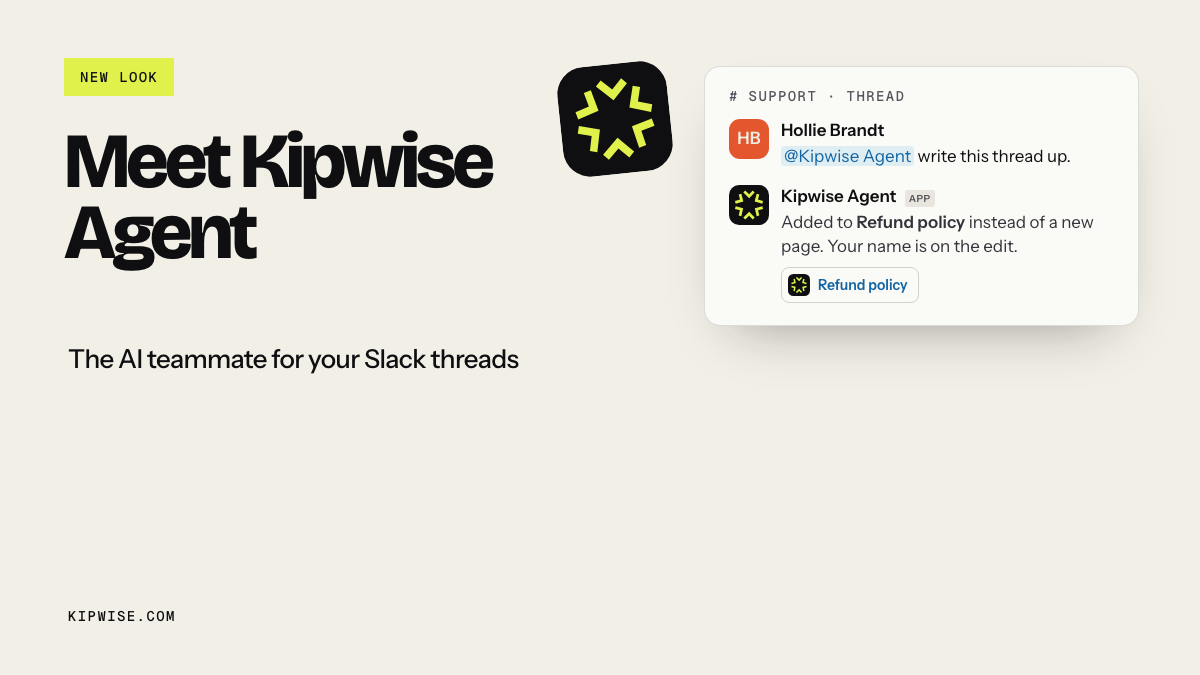
That pattern matches what Kipwise Agent states: mention once, continue in the thread, act with the asking person's permissions, cite sources, and keep sensitive writes behind Approve or Deny. Scheduled requests are approved once. It does not claim to be your equity co-founder, raise money, or hold people accountable in the way a manager does.
Mio and Pancake sell related Slack-native "AI employee" or "AI cofounder" framing with schedules and approvals. Compare them on the same checklist: whose permissions does it use, which tools can it write to, what needs approval, where it keeps what it learns about your company, and which lines of your job description it still cannot touch.
A separate company memory layer is not a starting requirement. An agent that runs your Monday brief reads the CRM, the tracker and Slack where the facts already live, and a second store of company knowledge is one more thing to keep current. Add one when questions depend on knowledge that lives in no system, such as how you handle a refund or why a client was priced as they were, and make sure people can read and correct what the agent has stored.
Cost, with labels
Human right-hand and OBM posts in Kipwise's review often quoted hourly midpoints in the low teens to mid thirties, with hours from a few per week to thirty or more. Those are post listings, not offers you will get. Vendor AI cofounder prices vary by product type: Pancake reviews cite subscription plus model credits, and orchestration platforms publish their own plans. Kipwise Agent is $10 per user per month with a 3-user minimum. Compare monthly cost only after you have sorted the job description, or you will compare a planning canvas to a payroll agent to a Slack ops seat.
An AI co-founder does not take equity, sign the lease, or replace founder judgment. When a vendor page claims full replacement, read the exclusions for tool gaps, approval gates, and work that still needs a person.
Check the product, then trial it for four weeks
Check for these before you rely on any product:
- The agent posts a brief from stale CRM data. Fix the data first; do not add autonomous outreach on top.
- A write goes out under your name without a reviewable card. That breaks Slack's agent-design baseline. Reject the product.
- Your team lives in a task tool the agent cannot reach. Asana, ClickUp and monday.com connect; Trello does not. Without a connection the agent only sees what was said in Slack, so board updates stay with a person.
- You expected equity-partner behavior. No agent takes the legal and relationship risk of a human co-founder.
- You bought a payroll teammate for a Slack ops problem, or a Slack agent for a payroll problem. Re-read the three-type table.
Then run the pilot:
- Week 1: paste the draft job description into a Kipwise page and sort it into the three columns with the agent in a thread.
- Week 2: run a scheduled operating brief with read-only checks. Count open loops closed without you chasing.
- Week 3: allow approved writes for CRM notes and internal nudges only. Count cards you approve unchanged versus edit or deny.
- Week 4: decide. If the first column is mostly gone and the third column is still full, hire a person for judgment and relationships, not for status chasing. If the first column barely moved, fix tools and permissions before you hire or buy more.
Two related guides: the AI teammate launch post announces the product, and AI chief of staff in Slack covers a different hire title.
Open a Slack thread today, paste the job description you would have posted, and ask your agent (or a teammate) to sort it into recurring coordination, drafts that leave the company, and founder judgment. Buy or hire only after that list is honest. If you want the recurring column in Slack with approvals, install Kipwise Agent and run the four-week pilot before you post the role.