Internal Newsletter for a Small Firm: One Editor, One Slack Thread, a Draft Every Other Week
A small firm keeps an internal newsletter alive by naming one editor, opening one standing thread where anyone drops a line and a link when something is worth including, and publishing every other week from a draft built out of those posts. Xecute the Vision says the owner or office manager usually puts a small business's newsletter together, and that is where it breaks: the editor rewrites Slack posts by hand until the first busy fortnight, then the issue is skipped.
The material is rarely missing. The launch, the customer thank-you and the win are already in Slack, and they stay there because nobody has the hour it takes to find them, reread them and turn them into an issue. This guide gives you the one-page sheet that fixes who does what by which day, the thread that collects the material, and a Slack request that has the Kipwise agent assemble the draft while a person decides what goes out.
What goes on the one-page issue sheet?
Write the sheet once, pin it in the thread, and change it only when a rule stops working. The idea lists from the US Chamber of Commerce cover content types and recommend a monthly content calendar that tracks the person responsible for each piece, but they stop before the part that decides whether an issue ships: who collects what by which day. The sheet answers that.
| Field | What to write | Example for a 20 person firm |
|---|---|---|
| Cadence | Every other week to start | Every other Thursday |
| Editor | One named person, plus a backup | Operations lead, backup is the office manager |
| Standing thread | Where one-line submissions go | A pinned thread in #wins |
| Cut-off day | The day the draft is requested | Wednesday at 4 pm, the day before send |
| Send day | When the issue goes out | Thursday at 9 am |
| Sections | Three or four, kept fixed | From the owner, Wins, Customer notes, Coming up |
| Section owner | One person who answers for each section | Owner writes From the owner; editor owns the rest |
| Where it is published | One place | A post in #general |
The sections are borrowed. Xecute's template uses a note from the owner, how the business is doing, shout-outs, what is coming up, a welcome, a tip and a question of the month, and says an issue should read in about three minutes. A weekly founder newsletter written by a startup CEO uses three: company updates, a wall of customer praise, and reads and listens collected from a Slack channel. Pick three or four and keep them. A fixed shape is what lets a draft be assembled by a rule instead of by taste.
Who should be the editor, and what should they not do?
The editor is one person with a backup, and the editor's job is to decide, correct and write one human paragraph, not to collect. Kick Point describes its newsletter starting as one person summarizing Slack conversations and work updates and growing into something everyone contributes to. That is an agency's own account of its own newsletter, so treat it as one example, not a law. What carries over is the direction: the single editor stops being the bottleneck once contributors send material in.
Two things belong to the owner, not the editor. The first is the commitment that contributing is part of the job. Kick Point reports that without it the newsletter feels optional and slides into something like the bystander effect, where everyone assumes someone else will write. Its team is not required to submit every issue, but the editors nudge anyone who has not contributed in a while or when an edition looks thin. The second is the "From the owner" paragraph. It is the one section nobody else can write, and it is the one a short-staffed firm cuts first.
Xecute suggests asking each manager for one shout-out and one update by a set day, keeping a running list of ideas through the month and capping assembly at 30 minutes. The set day is your cut-off, the running list is the standing thread, and the time cap tests whether the draft step works.
How do you collect submissions in one standing thread?
Open one thread, pin the issue sheet at its top, and ask for one line and one link. Xecute lists a team chat thread as one of the ways to collect shout-outs, next to a form or a box by the time clock. The thread beats the alternatives for a Slack-based firm for a simple reason: the people who would write a submission are already in Slack, and a one-line post costs them ten seconds.
- Create a #wins channel (or use #team-news) and start a thread titled with the issue date.
- Pin the sheet and one example line: "Closed the Hartley renewal, link to the thread" is enough.
- Ask for a line and a link, not a paragraph. Kick Point warns against too many submission rules, because the goal is to make it easy to submit.
- Post a reminder two days before the cut-off. Kick Point sends a Slack reminder to the whole team on the Monday of a newsletter week and reports getting the most contributions when it reminds people to contribute.
- Let people keep posting where they already do. A launch in #launches or a thank-you in #customers need not be re-posted, because the draft request names those channels too.
- Start the next thread the day the issue goes out.
The agent can send the reminder. You can ask it in plain language to run a request later or on a schedule, using your Slack timezone, and it posts the result in the channel with the same permissions as a live request from you. A scheduled task needs approval once, and its later runs do not ask again. The guide to scheduling recurring agent jobs covers how to check that such a job actually delivered.
Try Kipwise Agent free in Slack: mention it once in a thread and it does the repetitive work, with your permissions.
How often can a small firm really publish?
Start every other week and let the volume of the thread tell you when to change.
Choose the cadence from how many posts the standing thread collected, starting every other week and moving to weekly only when a fortnight overflows, instead of copying an idea list's schedule.
Kick Point chose a two-week rhythm because weekly was too often for its team, which would struggle to get enough content, and monthly was too long. It adds that a shorter interval makes the newsletter easier to start and easier to remember, since something that happened a month ago already feels like old news. Xecute lists weekly for fast-moving businesses with many schedule or policy updates, every other week for most small businesses, and monthly for smaller or steadier teams, and says consistency matters more than frequency: a monthly issue that always arrives on the first Monday beats a weekly one that appears whenever someone remembers.
Turn that into a rule you can check:
- If the thread holds fewer than about six usable posts at the cut-off, you are publishing too often or asking too little. Move to monthly, or lengthen the interval.
- If a fortnight regularly produces more posts than fit in three minutes of reading, move to weekly.
- If the editor has to chase people for most of the items, fix the collection step before touching the cadence.
The six-post figure is my recommendation for a firm this size, not a published benchmark. Adjust it after three issues.
What can the agent draft, and what only the editor writes?
The agent drafts from what people already posted. The editor decides what matters and writes the one paragraph that needs a human.
Have the agent draft only from posts people already made, with a link beside every item, so the editor checks and cuts instead of hunting for material, and the choice of what is newsworthy stays with a person.
A link beside each item makes the draft checkable in seconds: the editor clicks, confirms the post says what the line says, and keeps or cuts it. Newsworthiness, meanwhile, is a judgment about your firm. Monoxer's editor, writing about sixteen months of a Slack internal newsletter, says the newsletter began as a way for members to keep track of the large flow of information exchanged daily as the company grew, and that the editor chose to avoid content that only conveys facts, preferring the reasons and background behind a decision. That is a machine-translated author report from one company, so read it as a perspective. It does show what a drafting step cannot supply: the reason a decision was made, which only a person who was in the room can add.
So the split looks like this:
| The agent may | Only a person does |
|---|---|
| Find the posts in the channels you name from the last two weeks | Decide which items are worth including |
| Group them under your fixed sections | Write "From the owner" |
| Put a link beside every item | Check that each link says what the line says |
| Answer follow-ups in the thread | Cut anything private, premature or awkward |
| Say where an item came from ("which of these were customer-facing?") | Approve the final text and publish it |
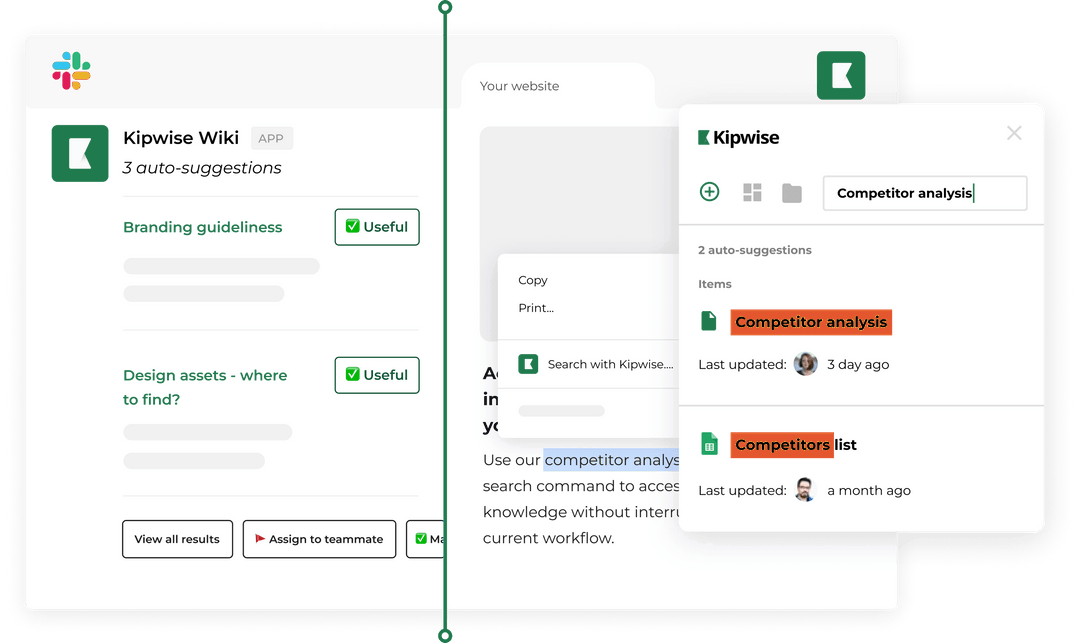
The Kipwise agent has memory on by default, which keeps short facts from Slack messages with the source channel and a link to the original message; facts from private channels are shown only to people who can still read the source. With memory off, it searches Slack live for past discussions through the asking person's own Slack connection. It does not promise that a search reads every channel, and it has no newsletter template of its own, which is why the sheet and the fixed sections matter. Treat what it returns as candidates, never as the issue.
What does the whole thing look like in a Slack thread?
The example below is made up to show the sequence. The firm, the names and the posts are illustrative. The editor asks once, in a private #newsletter-editors channel, and the agent replies in the thread.
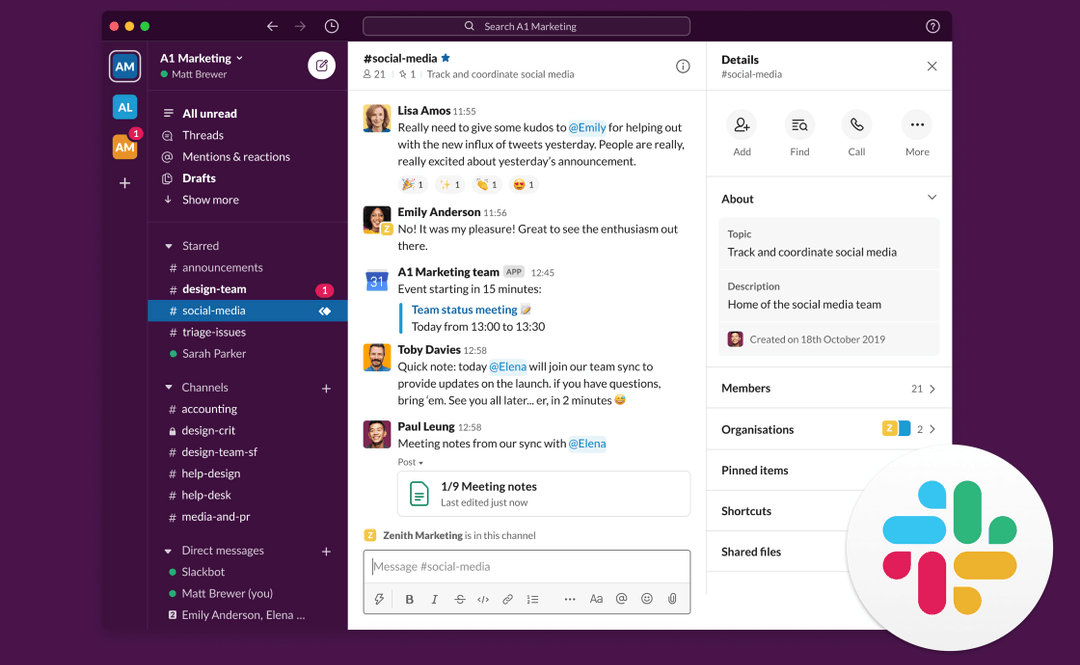
> Editor: @Kipwise every other Thursday at 9, find the posts in #wins, #launches and #customers from the last two weeks that I can read, and draft the newsletter in this thread using the sections on the pinned sheet. Put a link to the original post beside every item. > > Agent: I will run this every other Thursday at 9 in your timezone and post here. Please approve it once. Its later runs will not ask again.
On the first Thursday, the agent posts a draft in the thread: a Wins section with four lines, a Customer notes section with two, a Coming up section with three dates, and each line ends with a link to the post it came from. The "From the owner" section is left as a heading with a note saying only a person can write it.
> Editor: Which of these were customer-facing? > > Agent: The second Wins line and both Customer notes came from #customers. The other Wins lines came from #wins and #launches. > > Editor: Cut the second Wins line, it was a draft price. Keep the rest. Moving the Coming up dates to the top.
The editor then writes the owner's paragraph with the owner, reads every line once more, and publishes. There are two routes. The editor can paste the final text into #general or the email tool. Or the editor can ask the agent in #general to post it, which makes the agent show an Approve card before it posts. The agent posts only in the channel where it was asked, and a person reads every line before anything reaches the whole firm.
Why should you run the request as the editor, in a private channel?
Because the search runs on the asker's own access, and that decides what can appear in the draft. A mistake here can put private material in front of the whole firm.
Run the draft request as the editor in a private channel, because the search uses the editor's own Slack access, and check each item's source channel before anything is published to everyone.
A scheduled request runs with the same permissions as a live request from the person who set it up. If the editor sits in a private #leadership channel or a #hr-private channel, a "find the posts from the last two weeks" request can pull from places the rest of the firm cannot read. The agent links each item to its source, and that link is the control: before publishing, scan the source channel of every line, and cut anything that came from a channel the whole firm is not in. Name the channels in the request instead of asking the agent to search everywhere, because the search runs on the editor's own access and a private channel then appears only if someone put it there on purpose. The example does this with #wins, #launches and #customers.
Keep the request in a private channel such as #newsletter-editors too. The draft holds half-decided items and cuts, and a public channel would publish the argument along with the issue.
What goes wrong, and how do you handle it?
These are the failures to expect.
- Nobody posts in the thread. Check the reminder first, then the example line. If the thread is still empty after two issues, the firm does not have two weeks of newsworthy material, and the answer is a monthly cadence, not a harder push. Monoxer's editor recruited writers through 30 minute one-to-one meetings and reports 77 articles by 81 people over 16 months, with about 57 percent of employees taking part by the May 2024 issue. It is a company's own account, but it shows participation being built person by person.
- The draft is thin. Do not pad it. Kick Point's fallback for a thin edition is sharing an interesting article or a recommendation. A short issue that arrives on time beats a long one that arrives late.
- The draft includes something it should not. This is the private-channel case above. Cut it, tell the editor which channel it came from, and check whether that channel should be on the request at all.
- The editor is away. The backup runs the same request in the same thread. The pinned sheet means they need nothing else.
- The scheduled job does not post. Check that the agent is in the channel and that the schedule was approved. The scheduling guide above lists what to check.
How do you know the newsletter is working?
Judge it on process measures for the first six issues, because opens and clicks mean little in a firm where you can ask people.
- Issues shipped on the send day. Six of six is the target. One miss means fix the cut-off, not the content.
- Posts per fortnight in the thread. This is the number that drives the cadence rule above.
- Distinct contributors per issue. Monoxer's participation figure is a useful reference for what a long-running effort can reach, but a 20 person firm should watch the trend, not the target. If the same two people supply every line, the collection step is not working.
- Editor time. Xecute suggests capping assembly at 30 minutes. If the draft step is working, correcting and publishing should fit that cap.
Each measure maps to one sheet field: the cut-off, the cadence, the thread or the sections. Change one field per issue so you can tell what helped.
What to do next
Write the one-page issue sheet today: name the editor and a backup, choose every other week, pick a cut-off day and three sections. Pin it in a new thread in #wins, ask people for one line and one link, and set the first cut-off two weeks out.
When the cut-off arrives, ask the Kipwise agent for the draft in one message in a private editors channel, naming the channels it should read. The Kipwise agent is a $10 per user per month seat with a $5 personal credit each month and a minimum of three users, and a new install starts on a short trial, so you can try one issue before deciding. If the draft saves the editor the hour of hunting, keep the schedule. If it does not, keep the sheet and the thread anyway.