How to Stop Client Requests from Disappearing into Slack Without Hiring a Coordinator
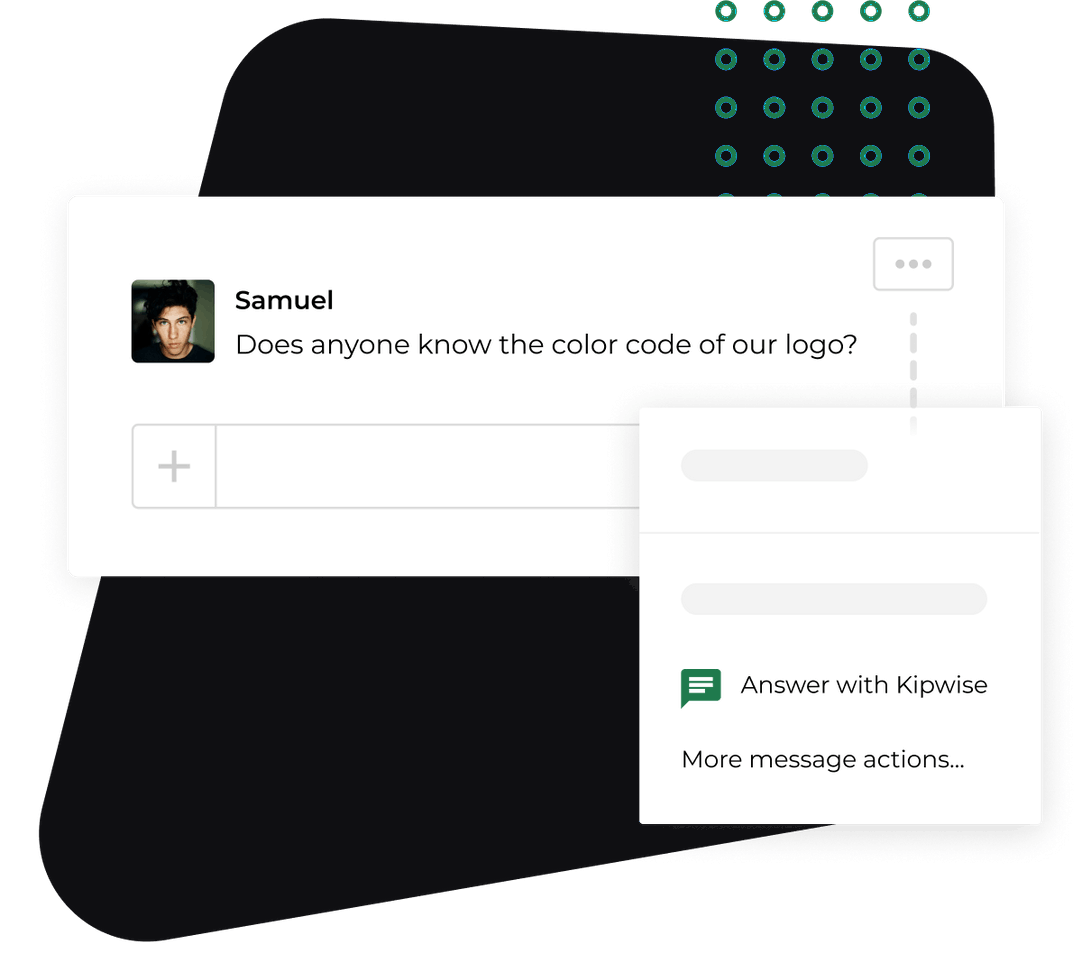
A client posts in the shared Slack channel. Three people read it. Nobody owns it. A week later the client follows up, and the team discovers that everyone assumed someone else had it. Slack-first firms hire a virtual assistant, ops coordinator, or client-communications assistant for that gap. In their words, they want client requests not to disappear into Slack, and they want work that keeps moving without the founder chasing it.
If you run operations in a Slack-first company of roughly 5 to 100 people, use this guide before you hire someone whose main job is watching client channels. It covers why shared channels create bystander failure, how Slack Connect and Workflow Builder help without finishing the job, how to design a capture-assign-digest loop, and how a thread-native agent such as Kipwise Agent can take the repetitive slice with your permissions and explicit approval. Stay inside client-channel ownership in Slack. Leave founder personal inbox triage, CRM logging loops, team status digests, and helpdesk ticket products for their own posts.
Why founders hire people to watch client Slack channels
Creating tasks, following up, and chasing shows up in more than half of Slack team-chat hire posts in Kipwise's review. The drop language is blunt: client requests should not disappear into Slack, nothing should fall through the cracks, and the founder should not constantly remember who needs a follow-up. Those phrases sit next to roles posters actually buy: virtual assistant, operations coordinator, executive assistant, and online secretary.
Before you hire, put the repetitive part in Slack. That includes turning client asks into owned work, not only answering wiki questions. Pure "answers from your wiki" matches about 2% of the task mix in those posts.
Competitor and practitioner pages sell into the same gap from different angles. ClearFeed's agency client-communication guide argues that Slack is where client requests appear and that actionable messages need a single operating view with owner, status, priority, reply deadline, and the original channel. Chaser's agency Slack project-management guide sells one-click tasks with assignees and due dates so client approvals get chased. Treat vendor savings claims as vendor reports. Use them as proof the job exists.
Leaving ownership manual costs trust and founder hours. Every unread client ask is a relationship risk. Every "sorry we missed this" is coordination tax. A part-time coordinator at common freelance rates can cost on the order of hundreds of dollars a month. Automating the repetitive capture-and-digest loop will not replace phone calls, WhatsApp, or outsider judgment. It can remove the bridge between a shared channel and a short owned-request list.
Slack Connect gives you a shared room, not shared ownership
Slack Connect and Slack's shared channels help make it easy to work with external organizations in one channel. For many agencies and service firms, Slack Connect is the right front door. Ownership still dies there unless you add a named card for every actionable ask.
Visibility in a Slack Connect channel is not ownership; more readers can increase bystander failure unless every actionable ask becomes one named card. Visibility is not accountability. When a client message lands in a channel with eight internal members, responsibility diffuses. Each person can honestly say they saw it. None of them has a named card with a due date. Consultevo's ops handoff framing puts the same idea in process language: fix the handoff path first. Define how a request becomes the next action with an owner, status, deadline, and system of record.
Workflow automation can route requests, collect forms, and send approvals without code. That helps for structured intake. It does not, by itself, give a non-technical founder a daily digest of unowned client asks across five Slack Connect channels with refuse-to-guess assignment when the owner map is ambiguous. You still need an operating loop on top of the shared room.
Shared-channel bystander failure is not the same as inbox triage
Founder personal inbox triage is a different job. That job is sorting DMs, mentions, and priority-channel noise into reply-needed, review, and noise. Client-request ownership is the shared-channel failure mode: several teammates can see the ask, and still nobody owns it.
Support triage channels are a third job. Support triage inboxes solve CS ticket queues; client-channel ownership is an ops coordinator job. Products that turn Slack into a helpdesk queue are strong when the user is a support or CS team filing tickets into Zendesk, Intercom, or Jira. Intercom and Zendesk already sell find-and-draft copilots inside the helpdesk.
This guide is for an ops lead or founder who will not build a bot, who already works in Slack, and who is about to hire a coordinator so client asks stop disappearing. Buy a support triage inbox for that job and you will overfit to tickets while under-serving ownership across mixed client channels. Build the ownership loop for Slack Connect client homes. Leave helpdesk products for helpdesk queues.
What "owned" means when you refuse theater
Define ownership with fields a coordinator could audit at 09:00:
- Request: the client ask in one line.
- Client and channel: which Slack Connect home it came from.
- Owner: one named internal person, not a group.
- Status: new, waiting on us, waiting on client, or done.
- Deadline: first response or next update time.
- Source: a permalink a reader can open.
A blue unread badge fails that bar. So does a long thread with three emoji reactions and no owner. A personal inbox digest about DMs is a different job. A CRM note log is a different job. A chase cadence after an open loop is already known sits nearby, and it still is not first capture of ownership across client channels.
Write the owner map into a short internal SOP: primary owner and backup per client channel. For Kipwise-centered teams, keep that SOP in Kipwise knowledge so the agent can cite it.
Build the capture-assign-digest loop
Keep the loop boring. Reliability comes from repetition.
1. Capture every actionable client ask
Scan configured Slack Connect client channels on a schedule the team will actually keep, such as morning and mid-afternoon. Capture only asks that need action, ownership, or follow-up. Acknowledgments, thanks, and pure FYI posts can stay as noise counts. ClearFeed's guide makes the same split: Slack is the front desk; complex work needs formal tracking. Slack is the front desk for client asks; complex execution still needs an approved handoff into a system of record with the Slack permalink attached.
Every captured item needs the original thread link. If you cannot open the source later, you do not have an audit trail.
2. Assign one owner without guessing
Use the channel owner map first. If the map names a primary owner and that person is available, assign them. If the map is missing, conflicting, or the ask clearly belongs to a specialist role the map does not cover, refuse to guess. Post an ambiguity card for a human to pick the owner. Wrong automatic assignment trains the team to ignore the digest.
Do not assign to a user group. Groups recreate the bystander effect inside the card.
3. Digest open requests where work already happens
Post a citation-backed open-request digest in an internal ops channel or thread. Include client, summary, owner, status, deadline, and source links. Slack's agent design guidance favors clear progress, next steps, and confirmation before consequential actions. Match that shape: the digest should make the next human action obvious.
Keep client-visible auto-replies off by default. Draft acknowledgments for human approval when you want speed without brand risk. A confident wrong reply in a client channel is worse than a ten-minute delay.
4. Close or escalate in the same place
When work is done, mark the card done with the source thread still attached. When the owner is silent past the deadline, escalate to the backup owner with an explicit human-approved nudge. Do not silently reassign. Do not invent status from emoji alone.
If the ask needs ClickUp, Asana, Jira, or another system of record, create or update that record only with explicit approval, and keep the Slack permalink on the card. Slack remains the conversation layer. The tracker remains the work layer.
A worked Slack Connect example
Imagine a five-person web studio with six Slack Connect client channels. At 09:05 the digest posts internally:
- Acme / #ext-acme: "Please pause the Friday deploy." Proposed owner: Maya (channel primary). Deadline: first response in one business hour. Status: new. Source: permalink.
- Northwind / #ext-northwind: "Can we get the September report early?" Proposed owner: Sam. Deadline: same-day update. Status: new. Source: permalink.
- Ambiguous: a vendor ping in #ext-globex about invoice terms with no channel owner map. Status: needs human owner pick. No guess.
Maya approves the Acme card, sends a short human-approved acknowledgment in the client thread, and creates the deploy-pause task in the studio tracker with the Slack link attached. Sam asks for a one-line clarification before promising an early report. The ambiguous Globex item waits until the founder picks finance as owner. Nothing customer-visible was auto-sent. Nothing depended on three people "seeing" a message.
Where agents help, and where they must stop
A thread-native agent helps when it can read the channels the requesting user can already see, draft ownership cards with citations, post scheduled digests, and wait for explicit approval before client-visible sends or tracker writes. Kipwise Agent is built for that pattern: mention once, continue in the thread, act with the requester's permissions where applicable, cite sources, refuse to guess, and keep consequential actions explicit.
Agents must stop at outsider judgment, phone calls, WhatsApp, and any send the brand cannot reverse. They must also stop when the owner map is ambiguous. A wrong owner looks like helpful automation and still creates a silent miss with a confident UI.
If your team still needs a person for relationship nuance, hiring can still make sense. Put the repetitive capture and digest slice in Slack before you hire.
Failure modes to design for
- Bystander diffusion: many readers, no owner. Fix with one named owner per card and a backup.
- Support-tool misfit: buying a helpdesk inbox for an ops coordinator job. Fix by keeping client-channel ownership separate from CS ticket queues.
- Auto-reply brand risk: sending client-visible text without approval. Fix with draft-only defaults.
- Ambiguous owner maps: agent invents an assignee. Fix with refuse-to-guess cards.
- Phone and WhatsApp blockers: hire posts often require calls the agent cannot place. Fix by listing those as human-only in the SOP.
- Tracker drift: Slack thread becomes the only record for multi-step work. Fix by requiring an approved handoff into the system of record when execution starts.
Pilot checklist for one week
- List every Slack Connect client channel and name a primary owner plus backup.
- Write a one-page SOP for what counts as an actionable ask.
- Turn off client-visible auto-replies for the pilot.
- Run a morning open-request digest for five business days.
- Measure unowned asks older than your first-response SLA.
- Measure how many digest items needed a human owner pick.
- Measure founder minutes spent chasing "who has this?"
- Decide what still needs a hire after the repetitive slice is gone.
Before you hire the coordinator
Hire when the remaining work is judgment, relationships, calls, or coverage hours an agent cannot honestly take. Do not hire only to scroll shared channels and rebuild a spreadsheet of open threads every evening. Put that repetitive spreadsheet work in Slack first.
If the pilot shows digests posting on time, unowned asks falling, and client-visible sends staying approved, you have removed a real slice of coordinator labor. If the pilot shows constant ambiguity cards, fix the owner map before you buy headcount. Headcount on a broken owner map reproduces the same misses at a higher monthly cost.
References
- Slack: Slack Connect
- Slack Help: Shared channels and Slack Connect
- Slack: Workflow automation
- Slack Developer Docs: Agent design
- ClearFeed: Slack for Client Communication Guide
- Chaser: Project Management for Agencies in Slack
- Founder's Best Friend: How to Hire Your First Operations Person
- Consultevo: What Operations Managers Should Fix First When Communication Slows Growth
- Kipwise Agent