How to Onboard Sales Reps with an AI Company Brain
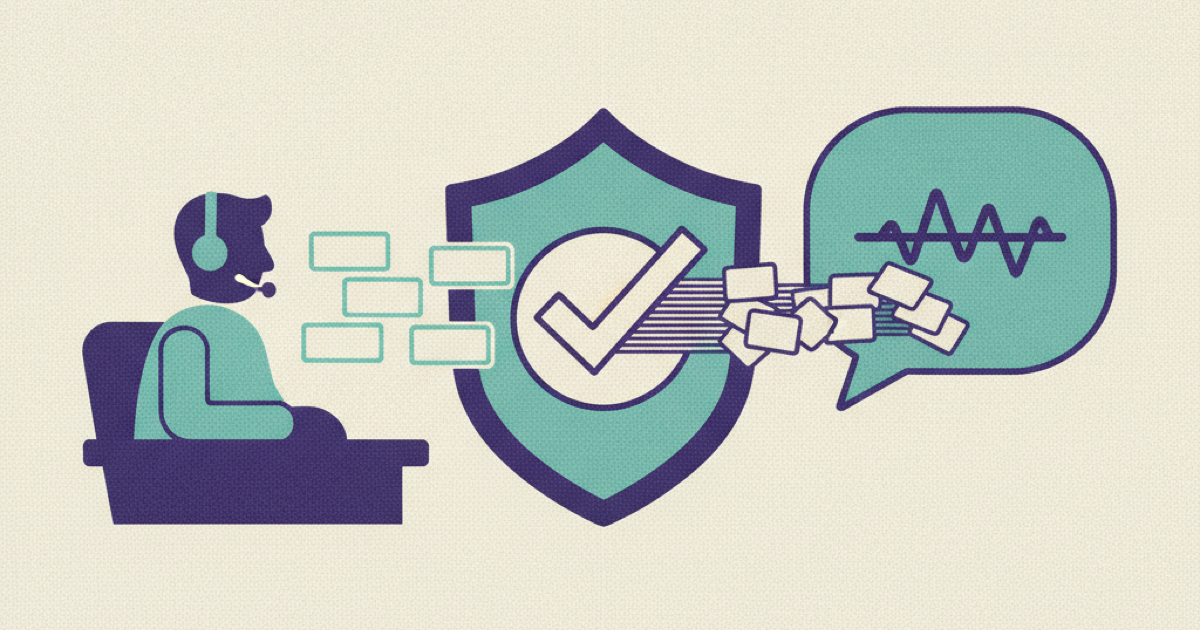
Sales onboarding fails when a new rep can find an answer but cannot tell whether it is current, approved, or safe to use with a customer. A generic chatbot makes that failure faster. It can surface an old discount rule, expose a restricted account note, or turn a rough internal opinion into a confident claim. An AI company brain should do something stricter: retrieve approved sales knowledge, respect account permissions, support realistic practice, and release the rep to live selling only after a manager verifies readiness.
This guide shows how to build that system from the source layer through the manager release gate. The operating path runs from a rep's question to a source-backed action that sales leadership can test and improve.
Why ordinary sales onboarding breaks
Most sales onboarding programs combine a calendar, a document folder, recorded calls, product training, and manager shadowing. Each component can be useful. The failure appears in the handoffs between them.
A rep reads a pricing page, but the page does not say which segment or contract term it covers. A call recording shows a strong objection response, but the rep cannot tell whether legal approved that wording. A CRM note contains useful account context, but it belongs to a territory the new hire should not inspect. A manager signs off on course completion even though the rep has not handled a realistic discovery call.
The HubSpot guide to onboarding new sales reps treats onboarding as a staged process with training material, practice, and continued reinforcement. The Gong sales onboarding guide also treats ramping as more than handing a rep a manual. Both cover the enablement program, but neither defines how an AI retrieval layer should choose evidence, enforce account boundaries, or stop an unverified rep from treating a generated answer as sales approval. A company brain has to supply those controls.
Define readiness before choosing tools
Do not begin with a chatbot vendor or a folder migration. Begin with the customer conversations a rep must handle safely. Write a readiness contract for each conversation type.
For a first discovery call, the contract might require the rep to:
- Identify the prospect's problem without promising an unsupported feature.
- Use the current qualification framework.
- Find the approved product and security sources.
- Separate public claims from account-restricted evidence.
- Escalate pricing, legal, or roadmap questions to the correct owner.
- Record the outcome in the CRM using the current process.
Each requirement needs an observable test. "Read the product guide" is an assignment, not evidence of readiness. "Given this prospect scenario, choose the governing source, explain the next action, and name the escalation owner" is testable.
The company brain should support the readiness contract rather than define it. Sales leadership remains accountable for what a rep may say and do.
Split knowledge into four controlled lanes
A useful sales company brain does not put every document into one index. Divide material by its purpose and access boundary.
Approved customer-facing knowledge
This lane contains current product descriptions, supported integrations, security statements, approved customer stories, and messaging guidance. Every source needs an owner, an effective date, an audience, and a review state.
Generated answers in this lane should cite the exact source passage. Retrieval-augmented generation grounds output in external knowledge rather than relying only on model parameters, as the AWS explanation of RAG describes. Grounding alone does not make an answer safe. The source must also be approved for the rep's use and applicable to the current deal context.
Internal process knowledge
This lane covers qualification rules, CRM stages, handoff steps, forecasting definitions, approval routes, and internal operating procedures. A rep can use it to decide what to do next, but should not quote it to a customer as a contractual promise.
Label that distinction in metadata. The answer interface should display "internal process" rather than leaving the rep to infer the source's purpose.
Restricted account evidence
CRM records, call notes, commercial terms, and customer-specific security material belong here. Access must follow the current employee identity, team, territory, and account relationship.
Use retrieval-time filtering rather than asking the language model to hide documents after retrieval. Microsoft's document-level access control patterns show how user or group permissions can constrain searchable documents. The safe order is authenticate, authorize, retrieve, then generate.
Practice material
Use synthetic prospects, approved objection scenarios, and sanitized examples for rehearsal. Do not copy a live customer's sensitive record into a training prompt merely because the example is realistic. Practice scenarios need an owner and a reset path, just like a software test fixture.
Build the source and answer contract
A compact metadata contract prevents the company brain from treating all text as interchangeable. Start with fields the system can enforce.
source_id: pricing-enterprise-annual
source_type: approved_customer_facing
owner: revenue-operations
status: approved
effective_from: 2026-08-01
review_by: 2026-11-01
audience_roles:
 - account-executive
segments:
 - enterprise
regions:
 - us
account_scope: none
allowed_actions:
 - explain
 - link
requires_human_approval:
 - custom_discount
At answer time, return an evidence object rather than plain prose:
{
 "answer": "The annual enterprise option follows the current approved pricing guide.",
 "source_id": "pricing-enterprise-annual",
 "source_passage": "Enterprise annual terms...",
 "effective_from": "2026-08-01",
 "scope_match": true,
 "permitted_action": "explain",
 "next_owner": "revenue-operations"
}
The interface should withhold an instruction when the source is expired, outside the rep's segment, inaccessible, or missing an owner. It should then route the question rather than filling the gap with a plausible answer.
This approach also follows the governance principle that context, accountability, measurement, and risk controls belong throughout the system lifecycle, not in a final policy document. The NIST AI Risk Management Framework provides a useful structure for that work.
Implement the onboarding workflow in seven steps
1. Inventory live sales decisions
Interview frontline managers, revenue operations, product marketing, and security. List the questions new reps must answer during discovery, qualification, demo preparation, pricing, security review, and handoff.
For each question, record the governing source and owner. If no approved source exists, create a knowledge-gap ticket. Do not ask the AI to reconcile an unresolved business decision.
2. Classify and clean the sources
Assign every retained source to one of the four lanes. Remove duplicates, label drafts, set effective dates, and identify superseded guidance. Keep historical material outside ordinary retrieval unless a specific workflow needs it.
The GitLab onboarding handbook demonstrates the value of explicit tasks, owners, access requests, buddies, and support routes. Borrow the operating discipline, not the exact checklist.
3. Connect employee identity to retrieval
Read the rep's current role, region, segment, team, and territory from authoritative systems. Convert those attributes into retrieval filters. Recalculate the filters when the employee changes team or territory.
Test denial cases before happy paths. A commercial rep should not retrieve enterprise-only terms merely because both documents mention pricing. A new rep should not see another team's confidential account notes through semantic similarity.
4. Put evidence beside each answer
Show the source title, relevant passage, owner, effective date, and scope. Add a visible route for "this does not answer my question" and "this guidance looks wrong."
The rep should be able to inspect the evidence before using it. A bare hyperlink is weaker because it forces the new hire to locate the supporting passage and determine applicability alone.
5. Turn questions into practice scenarios
Use the readiness contract to generate bounded exercises. A scenario should include a synthetic prospect, the available evidence, a customer question, and a clear scoring guide.
Score source choice, reasoning, scope awareness, and escalation behavior. Do not score whether the rep reproduced the model's wording. Strong selling requires judgment within approved boundaries, not memorizing generated sentences.
6. Add a manager release gate
The company brain can collect evidence, but it should not approve a rep for unsupervised customer work. Give the manager a short review pack containing completed scenarios, cited sources, unresolved gaps, observed escalation choices, and any required remediation.
The manager then approves, limits, or rejects the next capability. For example, a rep may be cleared for discovery calls while pricing exceptions still require live supervision.
7. Feed failures back to source owners
Aggregate unanswered questions and failed scope checks by topic. Route them to the named source owner. Fix the source or metadata, then rerun the affected scenario.
Kipwise's new-hire onboarding workflow connects assigned reading, searchable company knowledge, and onboarding progress. The company-brain layer should extend that loop by linking each sales answer and readiness check to maintained evidence.
Work through a realistic pricing example
A new account executive asks, "Can I offer a 15 percent discount if the customer signs this month?"
A weak assistant retrieves a call transcript where a senior rep mentioned that discount and answers yes. A safer flow works differently:
- Authenticate the employee and read current segment and region.
- Retrieve only approved pricing and approval sources for that scope.
- Detect that custom discounting is an approval action, not an explanation action.
- Return the standard pricing rule with its effective date and supporting passage.
- Create an approval request for the named revenue operations owner.
- Tell the rep not to promise the discount until the request is approved.
- Record the unresolved question as a scenario for manager review.
A fast yes is the wrong output in this case. The system should return a defensible next action that protects the customer conversation and teaches the rep how the company makes the decision.
Handle predictable failure modes
The answer cites an obsolete source
Stop serving the source when its review date passes or an owner marks it superseded. Route the question to the owner and keep the previous answer out of rehearsal material until verified.
The rep lacks access to the best evidence
Do not reveal the title or a summary of a restricted account document. Return the approved general guidance and name the access or escalation process. Log the denied retrieval as a control event, not as proof that the employee needs broader access.
The model gives advice beyond the source
Compare material instructions with the cited passage. If the passage does not support the instruction, suppress it and return the source plus a human handoff. The system should fail closed for pricing, legal, security, roadmap, and contractual claims.
Managers approve by completion percentage
Replace course completion with scenario evidence. Require the manager to review the rep's source choice, scope reasoning, escalation behavior, and first live-call plan.
Reps stop using the company brain
Inspect the unresolved-question queue before blaming adoption. Slow retrieval, weak sources, and generic answers are product failures. Fix the highest-frequency blocked task and test it with a new rep.
Verify the system before release
Run a fixed acceptance set for every role and region. Include valid questions, expired sources, cross-territory account requests, ambiguous pricing, unsupported roadmap claims, and missing-source cases.
For each test, verify:
- the correct identity and scope filters ran before retrieval;
- every material answer has an applicable supporting passage;
- restricted evidence stays undisclosed;
- expired or draft sources cannot authorize an action;
- the escalation reaches the named owner;
- the practice result appears in the manager review pack;
- manager approval changes only the intended capability;
- a source correction changes the next answer and scenario result.
Track false approvals and unsupported claims separately from ordinary answer quality. One unsafe pricing answer matters more than several stylistic misses.
Start with one conversation, not the whole sales cycle
Choose a recurring, bounded conversation such as first-call qualification. Define its readiness contract, approve the small source set, apply identity filters, create three synthetic scenarios, and require a manager release decision. Run it with one incoming rep and one manager.
Do not expand until the rep can inspect every material claim, restricted evidence stays hidden, uncertain questions reach an owner, and the manager can explain why the rep is ready. That verified path is the foundation for broader sales onboarding. A larger chatbot without it only scales ambiguity.
References
- HubSpot sales-rep onboarding guide: sales onboarding stages, training material, practice, and reinforcement.
- Gong sales onboarding guide: practitioner guidance on ramping new sales representatives.
- AWS explanation of retrieval-augmented generation: grounding generated answers in external knowledge.
- Microsoft document-level access control: retrieval-time filtering by user and group access.
- NIST AI Risk Management Framework: lifecycle governance, measurement, accountability, and risk management.
- GitLab onboarding handbook: explicit onboarding tasks, owners, access requests, and support paths.
- Kipwise new-hire onboarding: assigned reading, searchable knowledge, and onboarding progress.