Best Intranet Software Platforms & Solution Providers - Top 10 Picks

Most internal knowledge ends up scattered across email threads, chat channels, and shared drives, which is the gap intranet software is built to close. An intranet gives teams one place for news, documents and tools instead of five different apps.
We recommend choosing by the problem you want to fix, because the word intranet covers two different jobs. Confluence, Notion and Kipwise are built around pages people search when they need an answer: policies, how-tos, runbooks. Workvivo, LumApps and Appspace are built around publishing to people: news, recognition, targeted messages. The rest mix both. If people cannot find the leave policy, a livelier feed will not fix it, and if staff never see company news, a wiki will not either. A desk-based team already on Microsoft 365 or Google Workspace can skip the dedicated platforms until it hits a gap such as reaching staff who have no company email.
The ten platforms below are compared on functionality, user experience and integrations.
What is an Intranet Software Platform?
An intranet software platform is a private internal site where employees find company news, documents, tools and each other. It should be the single source of truth for your company's internal knowledge.
Key Features of Intranet Software Platforms:
- Document Management: Store, find, and share files and documents.
- Communication Tools: Messaging, forums, and announcements.
- Collaboration Spaces: Spaces where teams work on projects, share updates, and give feedback.
- Search Functionality: Search across everything on the platform.
- Integration: Connections to other business tools, such as CRM systems and project management applications.
- Customization: Options to tailor the interface and features.
Best Intranet Software Solutions - Top 10 Picks
#1 Microsoft SharePoint
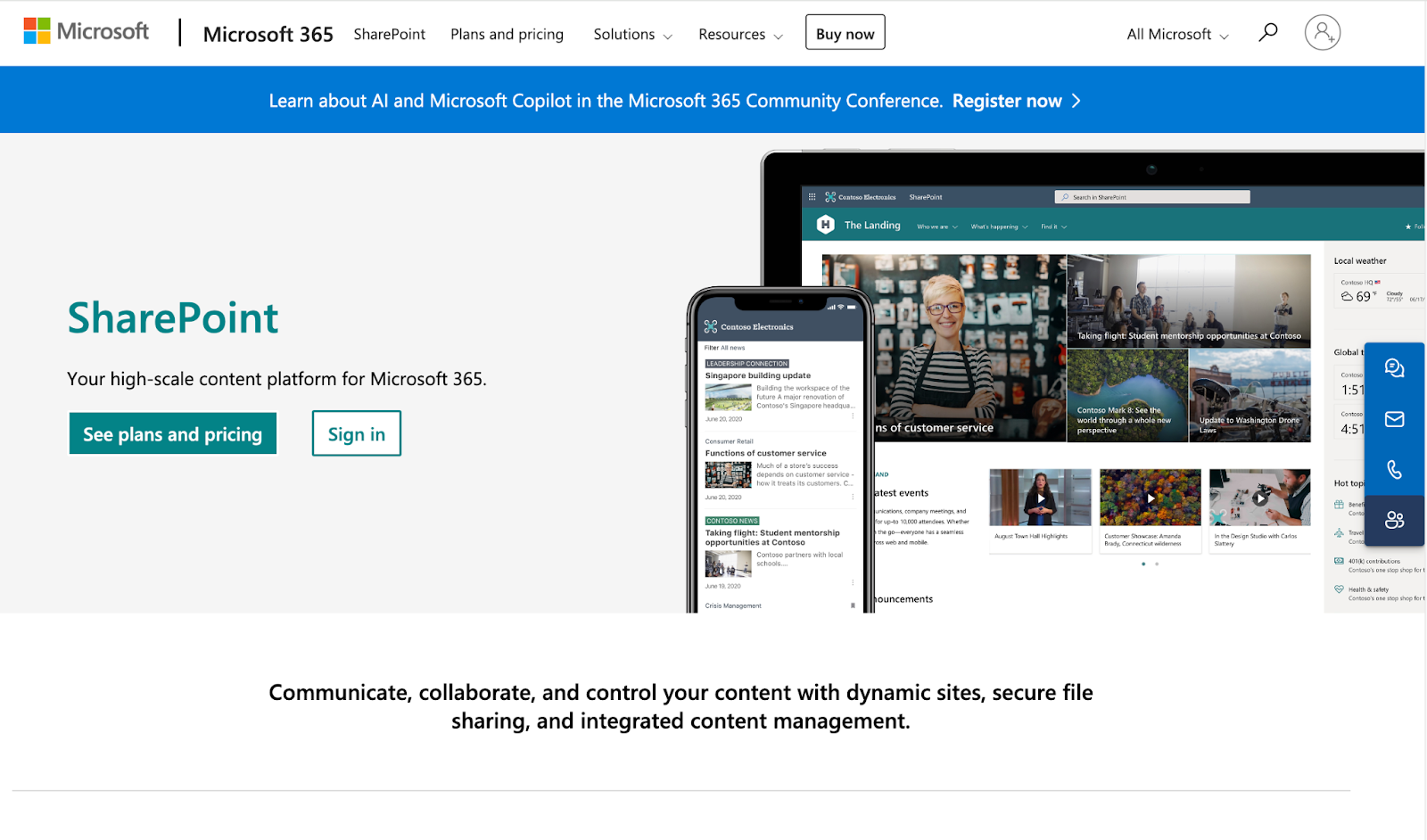
Microsoft SharePoint is part of Microsoft 365 and works as an intranet through team sites and document libraries.
Key Features:
- Document Management: Securely store, share, and collaborate on files with version control and access permissions.
- Team Sites: Create sites for different departments or projects.
- Integration with Microsoft 365: Connect with tools like Teams, Outlook, and OneDrive.
- Search Functionality: Find documents and information across the intranet.
- Collaboration Tools: Discussion boards, calendars, and real-time editing of documents.
- Workflows and Automation: Automate routine processes.
- Security and Compliance: Permission controls and compliance features for sensitive information.
SharePoint’s strength is depth: if your company already runs on Microsoft 365, the intranet layer comes essentially built in, using the same permissions your files already have.
#2 Kipwise
Already on SharePoint or Confluence? See how Kipwise compares as a SharePoint alternative and a Confluence alternative.
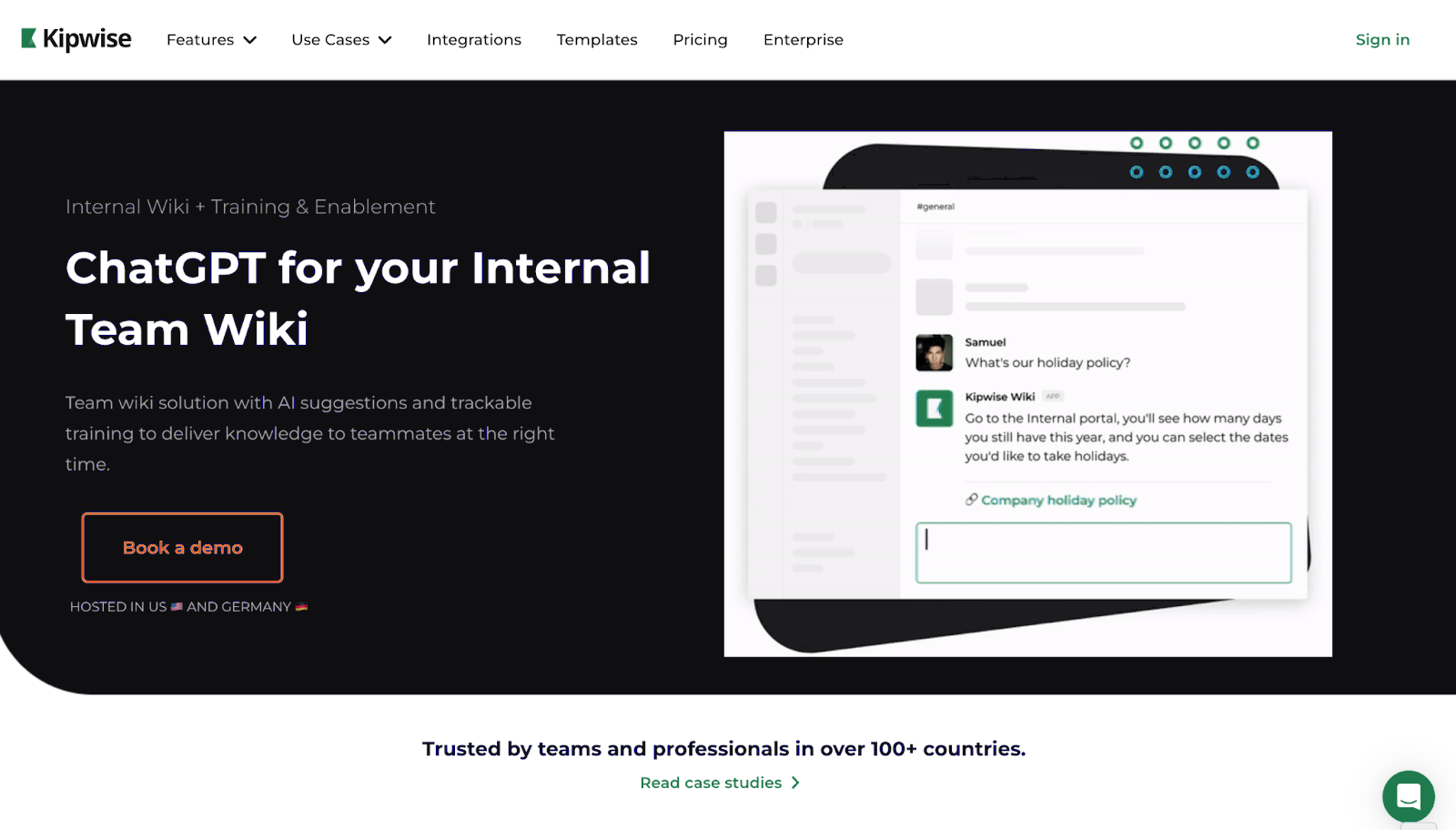
Kipwise serves as an effective intranet solution by centralizing company knowledge and enhancing team collaboration. It allows organizations to create a structured team knowledge base that is both accessible and easy to use.
Key Features:
- Team Wiki: Build a centralized team wiki for internal knowledge, making it easy for employees to find and share information.
- AI Knowledge Suggestions: Automatically deliver relevant knowledge based on user queries, reducing the need for manual searches.
- Built-in Workflows: Encourage collaboration through processes like content reviews, internal Q&A, and mandatory reads to keep information up-to-date.
- Integrations: Connect with tools like Slack, Google Drive, and Dropbox.
- Real-Time Collaboration: Teams can edit documents simultaneously, enhancing teamwork and efficiency.
- Templates: Utilize predefined templates for standard operating procedures, onboarding, and more to save time and ensure consistency.
- Unified Search: Access all company content from a single search across various sources.
Kipwise leans toward the knowledge-base side of intranet software: less social feed, more a searchable wiki that surfaces the right page before someone has to ask in Slack.
#3 Confluence
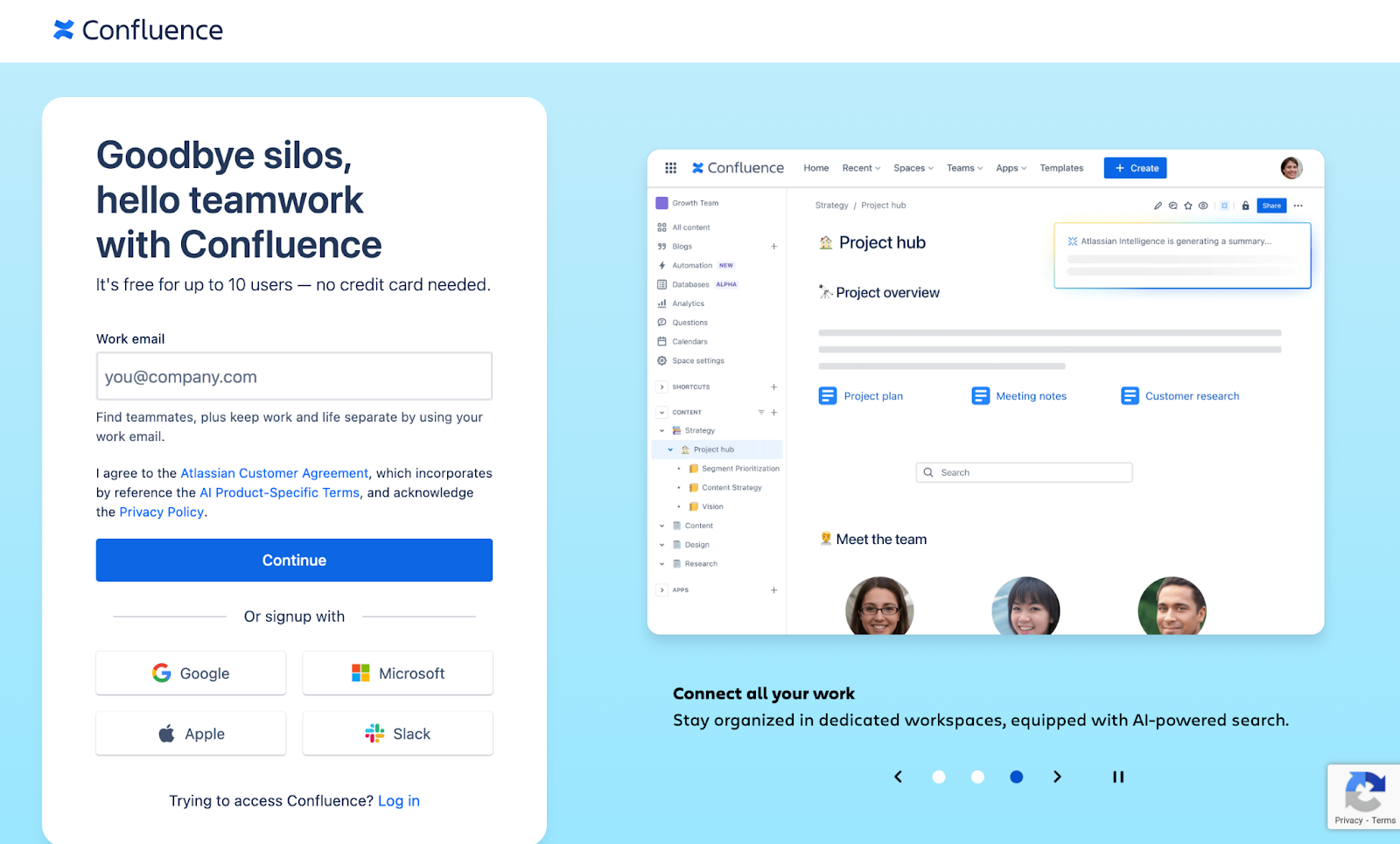
Confluence is Atlassian’s team wiki. Teams write documentation, meeting notes and project plans on pages that live in shared spaces.
Key Features:
- Collaborative Spaces: Create dedicated spaces for different teams or projects.
- Rich Content Creation: Create and format documents, including text, images, and multimedia, with a built-in editor.
- Templates: Access templates for meeting notes, project plans, and documentation.
- Integration with Other Tools: Connect with other Atlassian products, like Jira, and third-party apps.
- Version Control: Track changes and revert to previous versions.
- Search Functionality: Search across spaces and pages.
- Permissions and Security: Control access to spaces and pages.
Confluence’s edge shows up if your engineering team already lives in Jira: documentation and issues sit in the same place, with full version history on every page.
#4 Workvivo
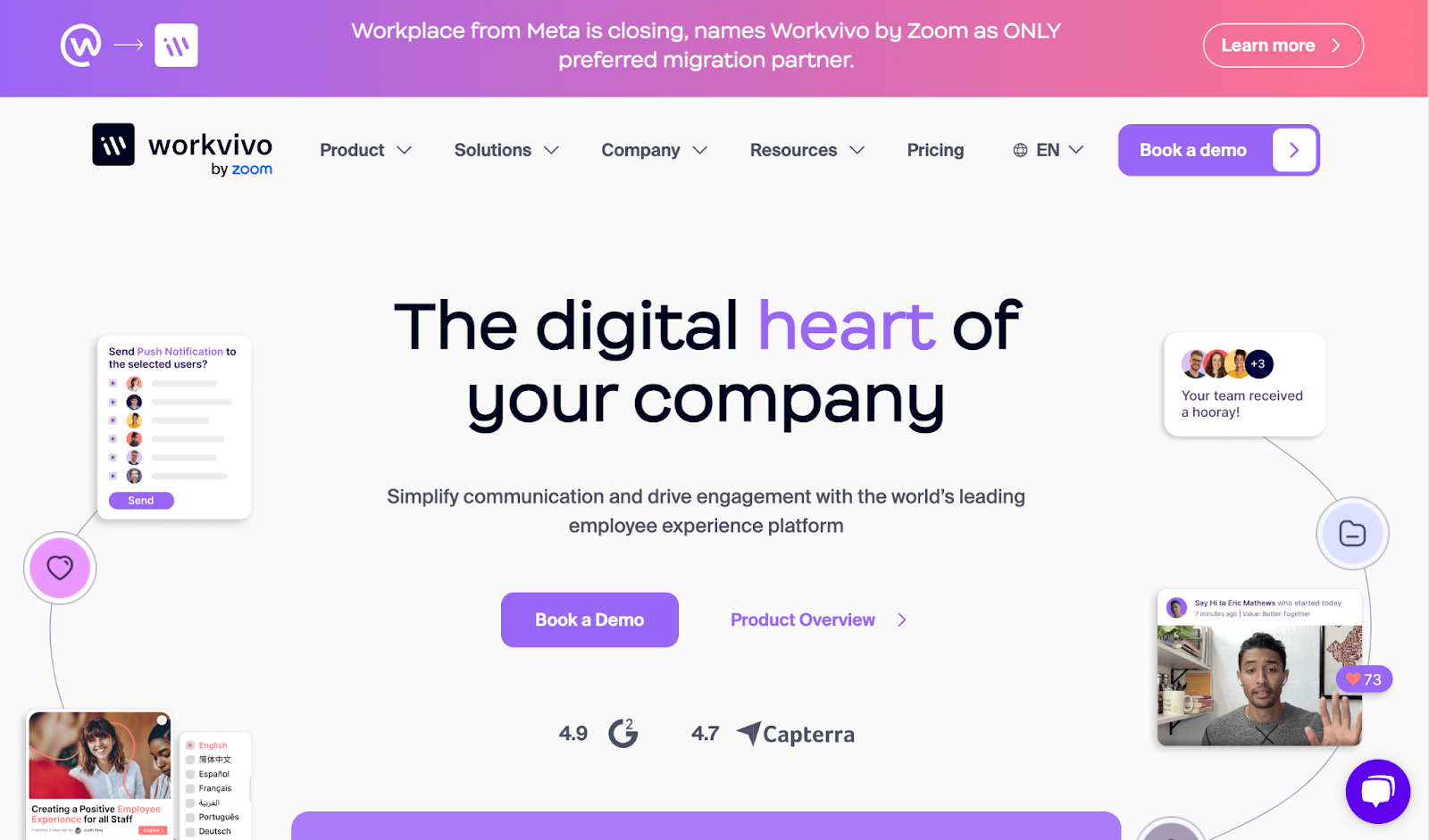
Workvivo, which Zoom owns, is an employee communication platform that combines an intranet, targeted messaging and a mobile app built for office and frontline staff.
Key Features:
- Social Collaboration: Social feeds, posts, and interactions that encourage employee engagement.
- Content Sharing: Share updates, news, and announcements across the organization.
- Integrated Tools: Connect with existing applications and tools, like HR systems and project management software.
- Employee Recognition: Features that let team members celebrate achievements and milestones.
- Mobile Accessibility: Access the intranet from any device.
- Knowledge Base: Centralize important resources and documents.
- Surveys and Feedback: Gather employee insights through surveys and polls.
Workvivo leads with communication and engagement, with pages, policies and Knowledge Hubs for company information alongside.
#5 Notion
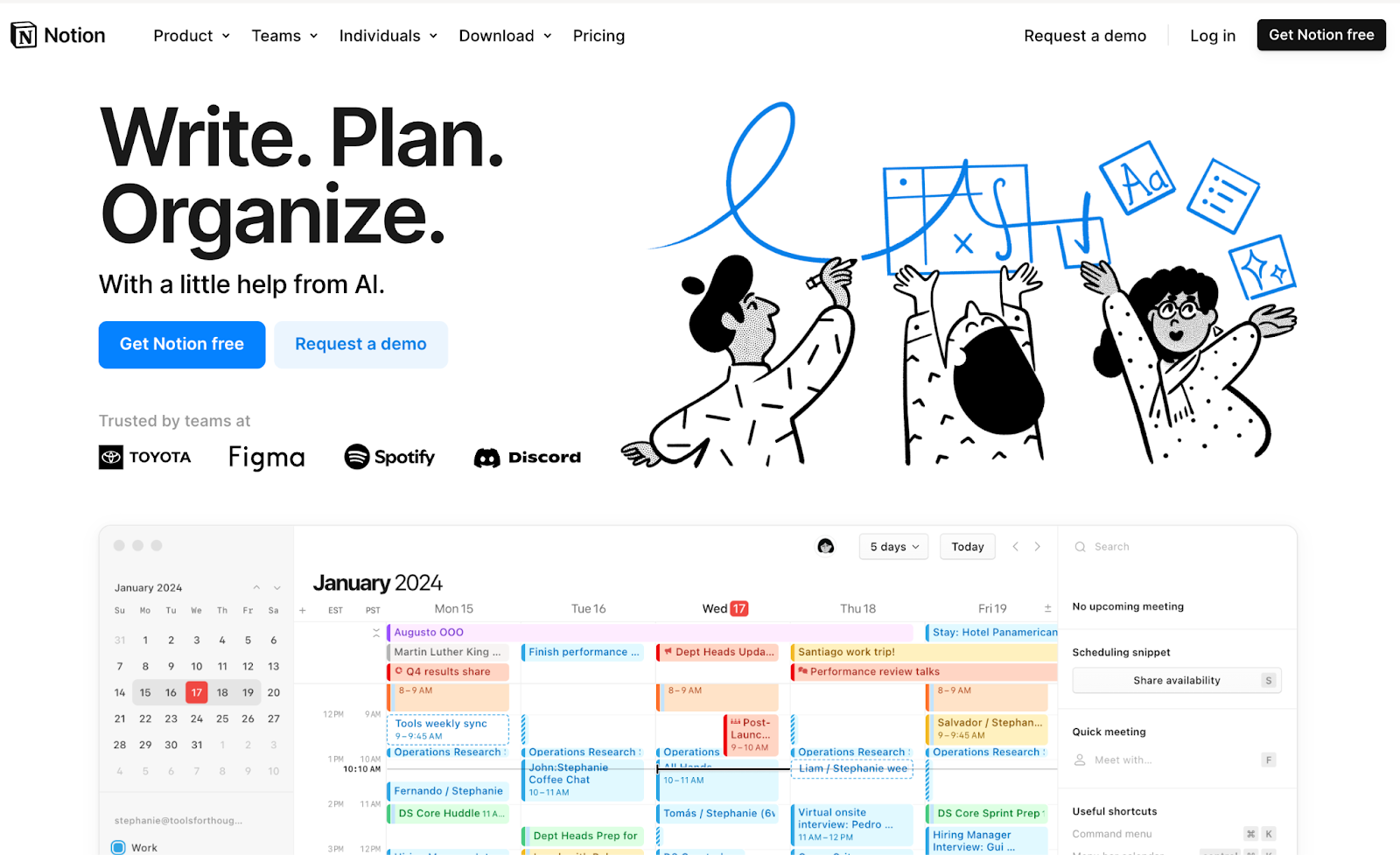
Notion is a workspace of pages and databases that teams can set up as a wiki-style intranet.
Key Features:
- Customizable Workspaces: Create pages and databases for teams, projects, or topics.
- Rich Content Creation: Use text, images, tables, and embedded media on one page.
- Templates: Pre-built templates for meeting notes, project management, and documentation.
- Real-Time Collaboration: Edit documents together, with real-time updates and comments.
- Database Functionality: Organize tasks, wikis, and knowledge bases in databases, with filtering and sorting.
- Integration Capabilities: Connect with other tools and apps.
- Search and Organization: Find content with search and a hierarchical page structure.
Notion’s tradeoff is flexibility for structure: it can become almost any kind of internal tool, but someone has to design that intranet rather than adopt one out of the box.
#6 Igloo (now part of Appspace)
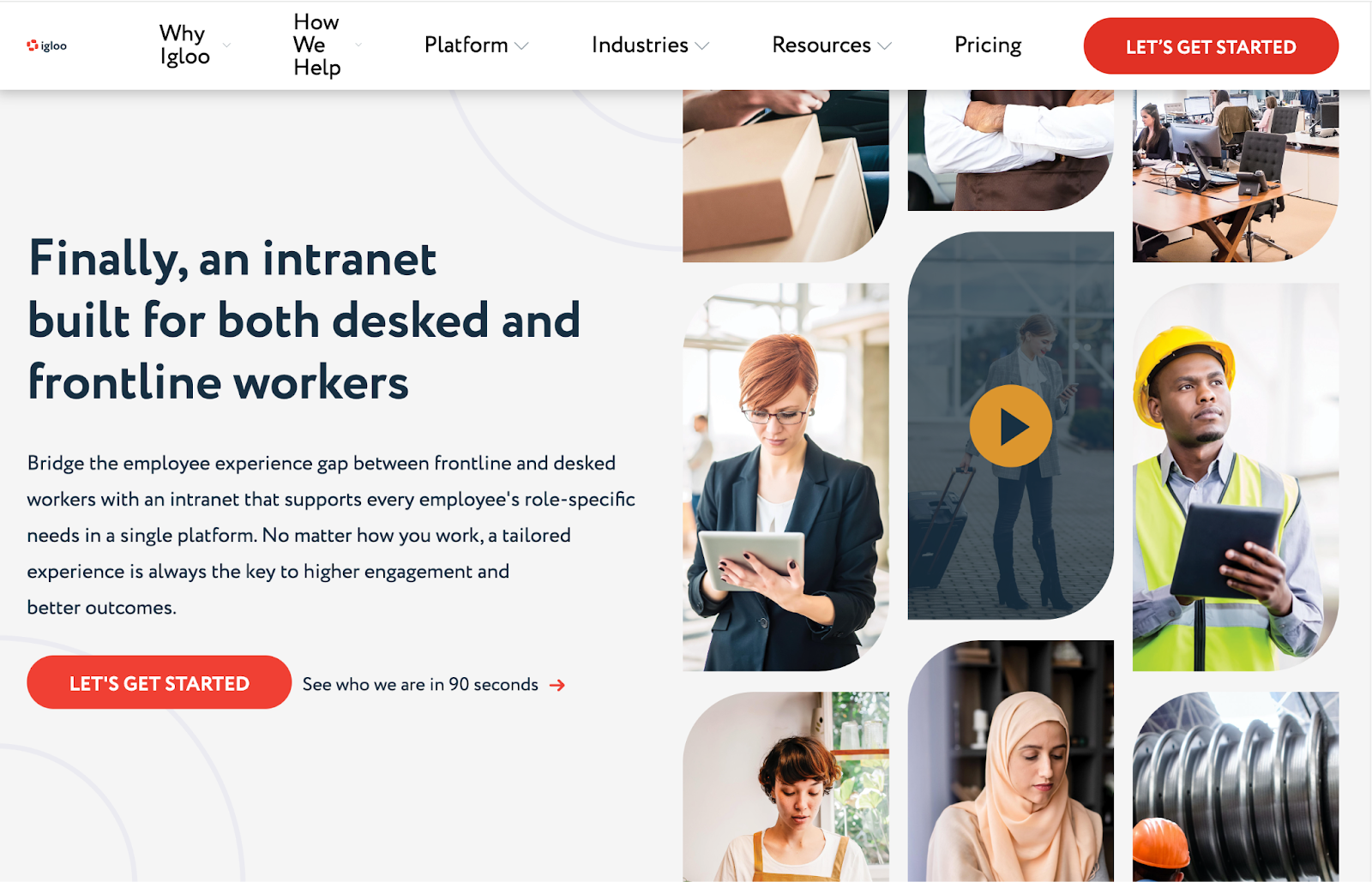
Igloo is now part of Appspace: igloosoftware.com redirects to appspace.com, and Appspace says existing Igloo customers keep their support. If you are buying today, evaluate Appspace Intranet.
Key Features:
- Personalized Newsfeeds: Content tailored by role, location, and interests.
- Multichannel Publishing: Publish to the intranet, email, chat, and digital signage from one workflow.
- Targeted Campaigns: Reach chosen audiences and track who has read each message.
- AI Tools: Built-in AI for writing, summarizing, translating, and narrating content, plus a conversational assistant.
- Search: A single search bar, AI-driven content tagging, and skill-based people search.
- Engagement: Groups, polls, praise, and comments.
- Integrations: Microsoft 365, Teams, and SharePoint, plus Google, Slack, Salesforce, Workday, and Jira.
Appspace suits mid-market and enterprise teams that need to reach distributed and frontline staff, including people without a company email address.
#7 Jive
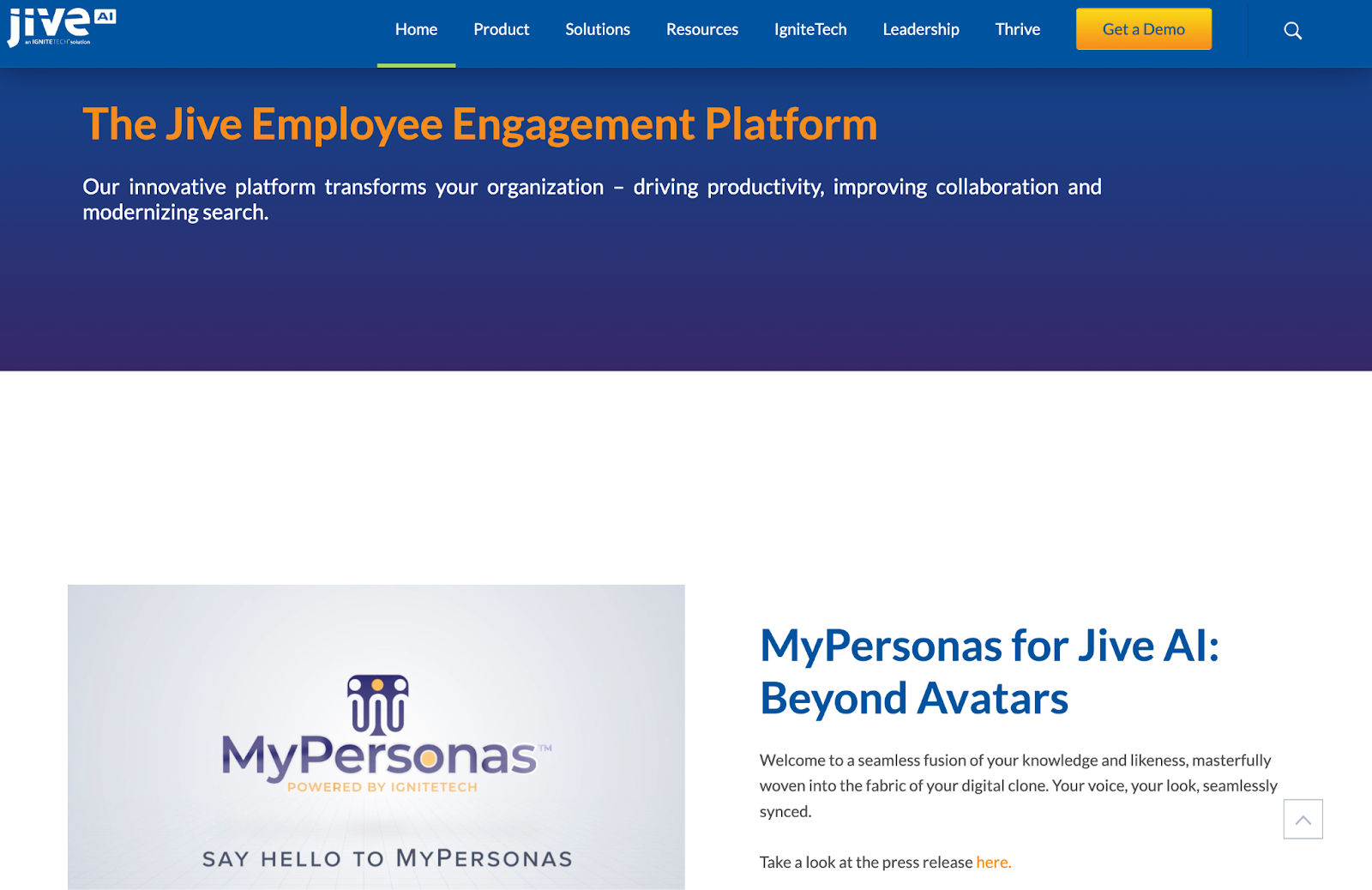
Jive is an enterprise collaboration platform that combines an intranet with communities and knowledge management. IgniteTech now sells it as Jive AI, through its sales team.
Key Features:
- Social Networking: Employees connect, share updates, and engage through discussions and comments.
- Content Management: Organize documents, resources, and project information in one repository.
- Customizable Workspaces: Set up spaces for different teams or projects.
- Advanced Search Functionality: Find content, people, and discussions.
- Integration with Tools: Connect with existing business applications, like CRM and project management tools.
- Analytics and Reporting: Track user engagement and content performance.
- Mobile Access: Mobile and desktop apps.
Jive combines a social layer with document management, aimed at organizations that want engagement metrics alongside the knowledge base itself.
#8 Happeo
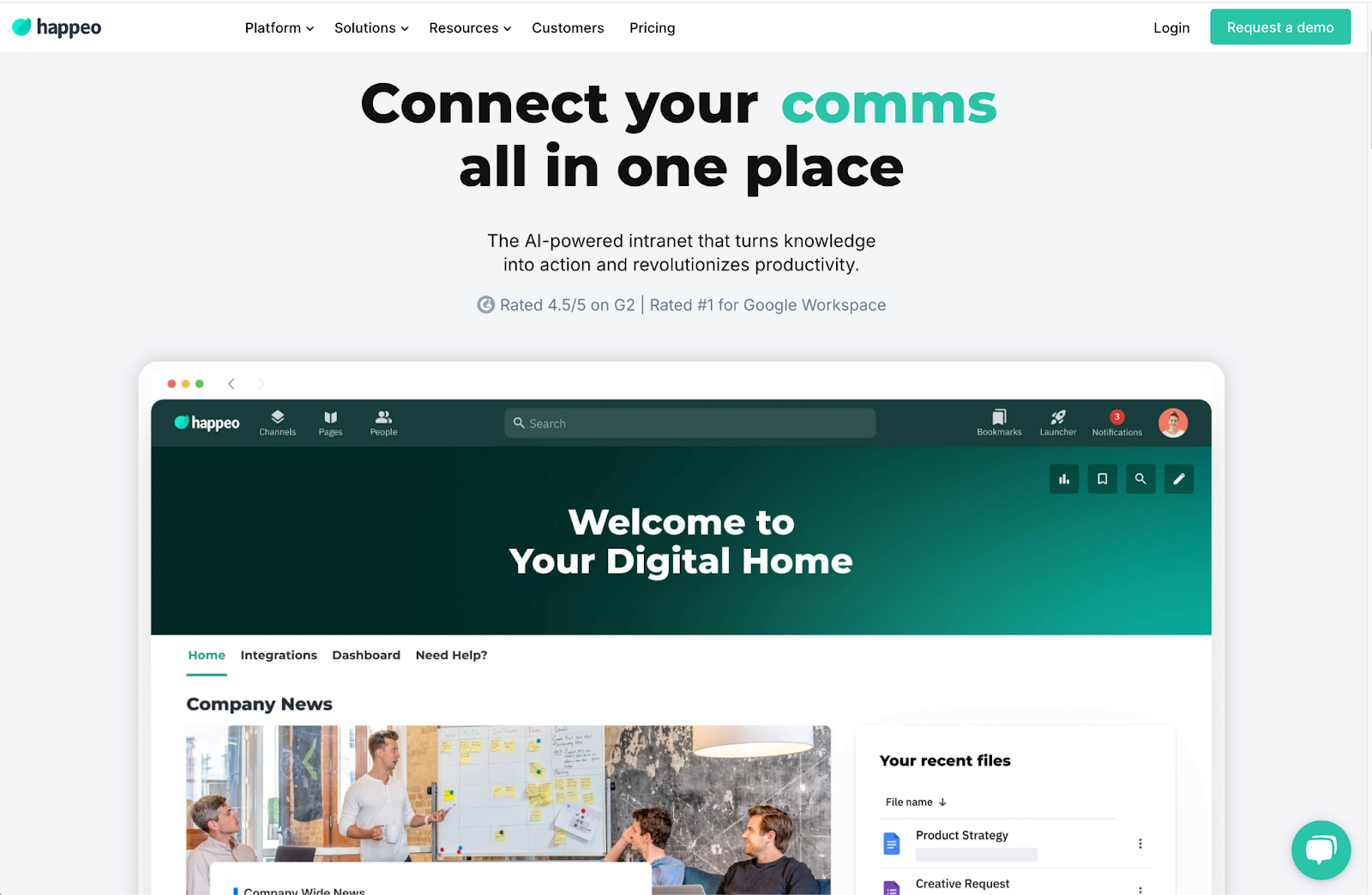
Happeo is an intranet that gives a company one official place for company information, with pages for HR, IT and onboarding content and channels for targeted announcements.
Key Features:
- Integrated Collaboration: Connects to Google Workspace, Microsoft 365, and Slack for sign-in, permissions, and files.
- Customizable Pages: Create landing pages and content hubs for teams or projects.
- Channels and Personalized Feeds: Targeted announcements with read tracking, and feeds that show relevant information by location or department.
- Knowledge Base: Centralize company resources, documents, and training materials.
- Search Functionality: One search bar across Happeo, Google Drive, Gmail, and Slack.
- Mobile Accessibility: A mobile app with the same pages.
- Analytics and Insights: Monitor user engagement and content effectiveness.
Happeo calls itself the top-rated intranet for Google Workspace, and it also connects to Microsoft 365 and Slack.
#9 Jostle
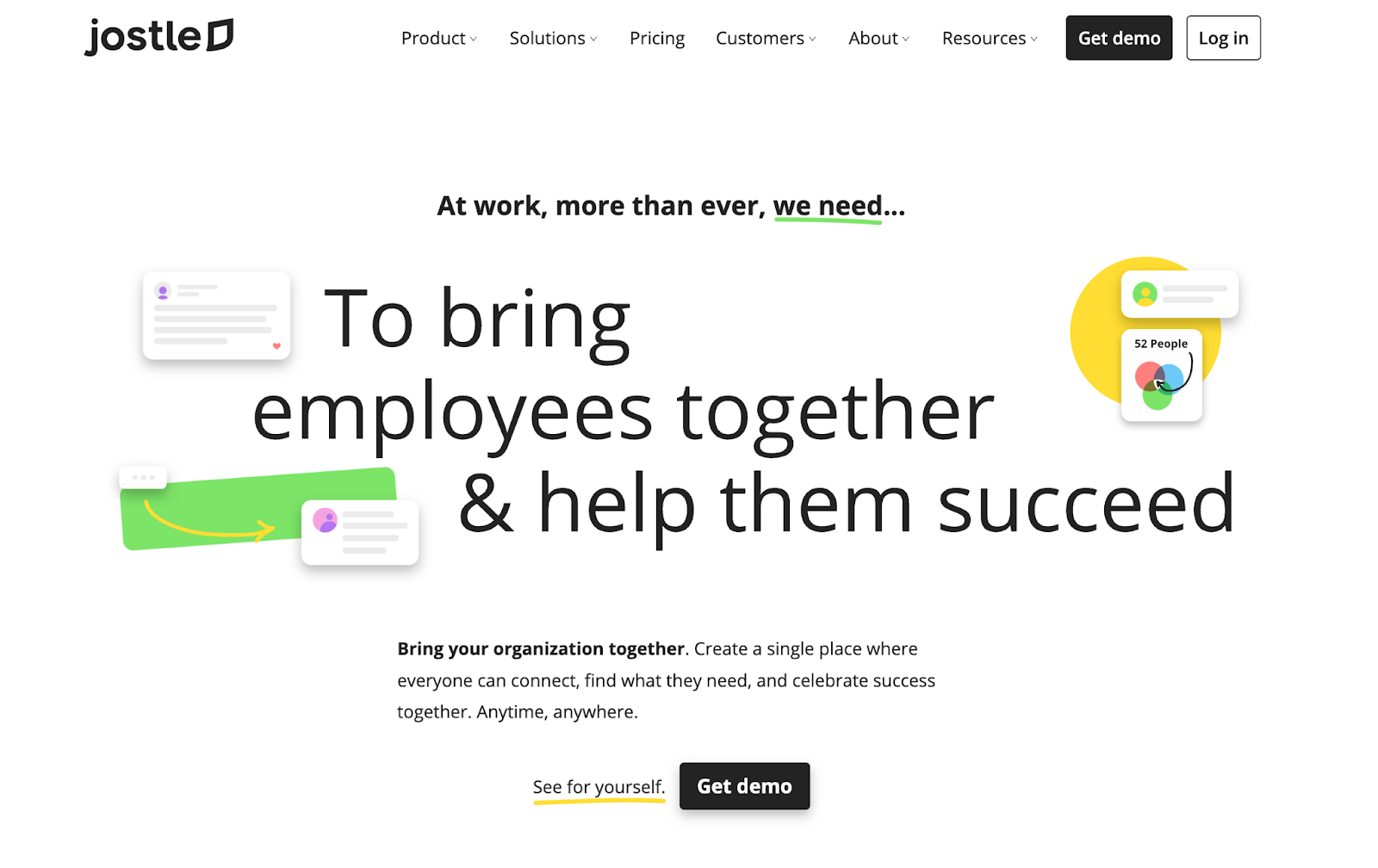
Jostle is an employee platform that combines company news, recognition, onboarding and an AI-powered knowledge hub, and it describes itself as a simpler alternative to a traditional intranet.
Key Features:
- Employee Directory: A searchable directory that helps employees find one another.
- News and Announcements: Company news and updates in a centralized feed.
- Content Management: Organize and share documents, policies, and resources.
- Recognition and Onboarding: Shout-outs for colleagues and onboarding for new hires.
- Collaboration Tools: Project spaces, discussion boards, and shared calendars.
- User-Friendly Interface: An intuitive design that makes navigation easy for all employees.
- Mobile Access: Access the intranet from any device.
- Analytics and Feedback: Track user engagement and gather feedback.
Jostle keeps the feature set simple: an employee directory and a news feed rather than a full document management system, which suits smaller teams that don’t need the extra complexity.
#10 LumApps
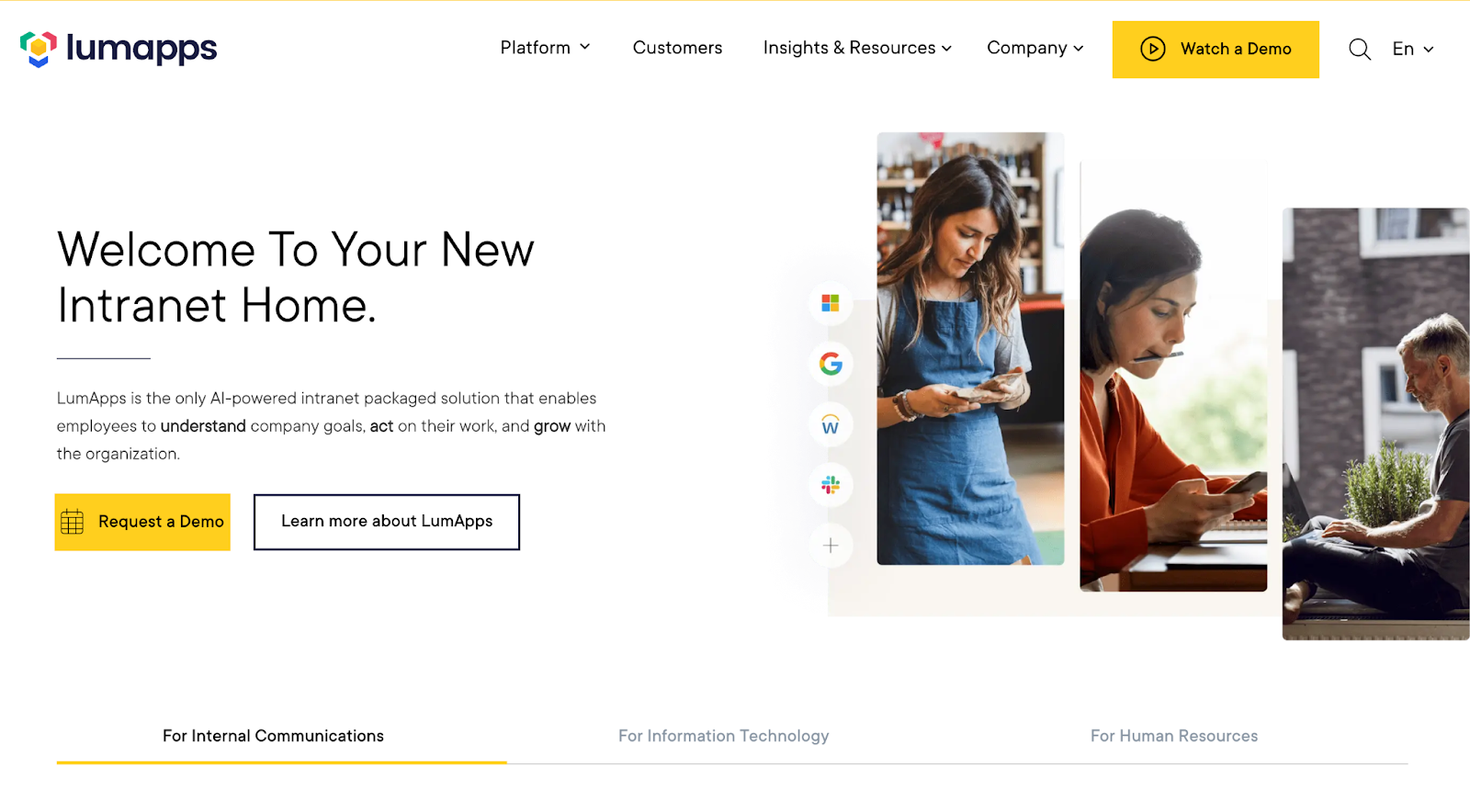
LumApps, which now includes the frontline platform Beekeeper, describes itself as an AI employee hub that connects communication, workflows and company tools.
Key Features:
- Targeted Content: Publish and personalize content for different audiences across desktop and mobile.
- Integrations: Connects with Microsoft, Google, ServiceNow, Workday, and more than 50 no-code app connectors.
- Content Management: Distribute company news, policies, and resources from one place.
- Engagement: Recognition, onboarding journeys, and microlearning.
- Advanced Search Functionality: Find information across the intranet and integrated tools.
- Mobile Accessibility: A mobile-first frontline app that does not require a corporate email address.
- Analytics and Insights: Analytics that measure how the content you publish performs.
LumApps stands out for targeting and frontline reach: you decide who sees each piece of content, and its mobile app works for staff without a company email.
What Factors to Consider When Choosing an Intranet Software Tool?
Use these eight checks to compare your shortlist:
1. User Experience
- Intuitive Interface: Ask three people outside IT to find the leave policy without help.
- Accessibility: Open the mobile app on a phone, and check that staff without a company email can sign in.
2. Features and Functionality
- Document Management: Check file storage, sharing, and version control.
- Collaboration Tools: Check whether forums, chat, and project tools replace tools you already pay for or only duplicate them.
3. Integration Capabilities
- Third-Party Integrations: List the systems you already use, such as CRM or HR software, and check that each one is supported.
- APIs: Look for a documented API if you will need custom integrations.
4. Customization and Flexibility
- Branding Options: Check that the platform can carry your organization’s branding.
- Scalability: Ask what changes in price and administration when your headcount doubles.
5. Security and Compliance
- Data Protection: Ask where your data is stored and who can see it, including the vendor’s staff.
- Compliance Features: Check that the tool meets the regulations your industry requires.
6. Cost and Budget
- Pricing Structure: Add up subscription fees, implementation costs, and add-ons. Many vendors price on request, so ask for a written quote.
- Value for Money: Check whether the features you will actually use justify the price.
7. Support and Training
- Customer Support: Check support hours and response times.
- Training Resources: Check for training materials or onboarding help.
8. Feedback and Reviews
- User Feedback: Read reviews from organizations of your size.
- Case Studies: Look for case studies from similar organizations.
Before you sign, run two tests. First, take ten questions your team asked in Slack last month and see whether each platform’s search finds the answer in your own documents, not in the vendor’s demo content. Second, name an owner for every section and put a review date on every page, because a platform with every feature above still turns into an abandoned homepage once nobody is responsible for updating it. If you cannot name the owners, pick the simpler tool.