How to Set Data Retention for an AI Onboarding Company Brain
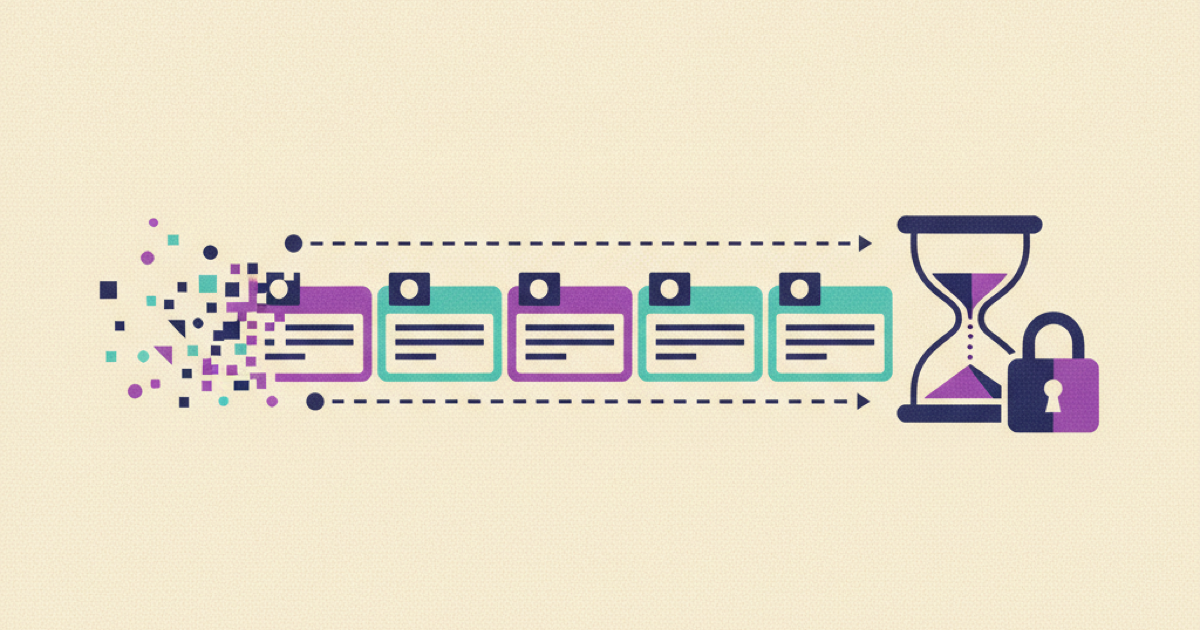
AI onboarding data retention becomes a privacy problem when a company brain keeps every new-hire question, retrieved passage, generated answer, feedback signal, and escalation note by default. A question about payroll, an accommodation, or a manager can remain in logs long after it served its purpose. Access control does not solve that problem. The practical fix is to classify each record by purpose, assign a retention trigger, delete copies across the full data path, and test the result. This guide gives People Operations and IT teams a concrete way to do that without deleting the evidence they genuinely need.
Why AI onboarding data retention needs a separate lifecycle
An onboarding company brain is more than a chat window. A typical request crosses several layers: the employee's prompt, identity context, retrieved source passages, a generated answer, citations, feedback, analytics, and perhaps a human escalation. AWS describes retrieval-augmented generation as a process that retrieves external information and adds it to a model request before the model produces an answer. Each layer can create its own record.
Those records do not all serve the same purpose. A policy acknowledgment may need to remain available as operational evidence. A raw question about a medical accommodation may need only enough lifetime to route it to the right person. A retrieval trace can help diagnose a wrong answer, but it does not need to become part of a permanent employee profile.
This is the gap between permissions and retention. Permissions decide who can read a record while it exists. Retention decides why the record still exists at all. Encryption, role-based access, and audit logging are useful controls, but none of them supplies an expiry date.
The NIST Privacy Framework treats privacy as a risk-management problem connected to systems, data processing, and organizational decisions. Apply that approach to the onboarding workflow itself. Start with the processing purpose and the effect on the employee, then choose the smallest record and shortest useful lifetime that still supports the task.
Inventory records before choosing a retention period
Do not begin with a blanket rule such as "keep chat for one year." First map what the system writes. A useful inventory covers the record, its purpose, its owner, its storage locations, its deletion trigger, and any reason to pause deletion.
Review at least these record types:
- Raw employee questions and attachments.
- Identity and role attributes sent with a request.
- Retrieved passages, source identifiers, and ranking scores.
- Generated answers and citations shown to the employee.
- Ratings, corrections, and free-text feedback.
- Human escalation messages and case notes.
- Completion events and required policy acknowledgments.
- Technical logs, security alerts, and aggregated analytics.
The inventory should name actual systems. "AI platform" is too vague if the prompt also appears in an application log, observability tool, support ticket, warehouse, backup, and vendor console. Ask the engineering owner to trace one test question from submission to expiry. That exercise often finds copies that an architecture diagram missed.
Keep source documents separate from conversation records. The handbook page about expense approval follows the knowledge-management lifecycle. The employee's question about a disputed expense follows a conversation and case lifecycle. Deleting one should not silently delete the other.
Assign purpose before duration
Write one primary purpose for every record type. If the team cannot state the purpose in a sentence, it cannot defend indefinite retention or verify when the record stops being useful.
Use narrow purposes such as:
- deliver the current answer;
- diagnose answer quality during a defined review window;
- complete a named onboarding task;
- preserve a required acknowledgment;
- investigate a security event;
- resolve a case handed to a human.
Avoid labels such as "analytics," "AI improvement," or "future use" without a bounded activity. They let every record survive every cleanup. If product analytics needs only counts, aggregate the event and remove the prompt. If quality review needs examples, sample a limited set, redact unnecessary identity fields, and give the review set its own expiry.
The Microsoft Purview retention overview distinguishes retaining content from deleting it and explains how retention policies and labels can govern lifecycle behavior. The exact tooling may differ in your stack, but the design rule transfers: retention and deletion are explicit actions with precedence, scope, and disposition behavior. They should not be accidental side effects of storage defaults.
Build a retention matrix that engineers can execute
Convert the inventory into an implementation matrix. Each row should answer these questions:
- What event starts the clock: record creation, task completion, onboarding completion, case closure, or employment termination?
- What event deletes the record?
- Which service owns that deletion?
- Which downstream copies receive the deletion event?
- Does an approved hold pause deletion?
- What evidence proves the deletion ran?
A practical starting model might keep transient retrieval context only for request processing, keep short-lived troubleshooting traces for a bounded quality-review window, and keep task completion records under the organization's approved HR records schedule. These are design categories, not universal durations. The privacy or records owner must approve the actual periods for the company and jurisdiction.
Separate content from evidence. For example, an acknowledgment record may need an employee identifier, policy identifier, policy version, timestamp, and completion result. It usually does not need the full preceding conversation. This smaller event can remain useful after the raw chat expires.
Treat human escalations as a new processing context. Once a question enters an HR, IT, or security case system, that system's owner and schedule apply. The chat service should store the case reference rather than copying every case note back into the onboarding transcript.
Minimize what enters the record
Deletion is easier when the system never stores unnecessary data. Reduce collection at the interface and the service boundary.
Tell employees what the assistant is for and where sensitive requests should go. Do not invite health, payroll, immigration, grievance, or performance details into a general onboarding chat when a protected workflow exists. Provide a direct human route beside the chat rather than after a disclosure occurs.
At request time, send only identity attributes needed for retrieval. A role and region may be necessary to select the right policy. A home address, birth date, or complete HR profile usually is not. Keep authorization decisions server-side so the prompt does not contain a readable bundle of employee attributes.
Redact or tokenize identifiers before quality logs when diagnosis does not require identity. Store source identifiers instead of full retrieved passages where an authorized reviewer can reproduce the retrieval safely. Disable body logging at gateways and error handlers unless a reviewed use case needs it. Error traces are a common place for prompts to survive outside the planned retention system.
The GitLab onboarding handbook shows how onboarding can be organized around explicit tasks, owners, access requests, and support roles. That structure helps retention because the system can tie records to a task or handoff instead of treating the whole onboarding period as one indefinite conversation.
Propagate deletion through the whole company brain
Deleting the primary chat row is not enough. The same content may remain in a search index, vector store, analytics export, cache, queue, ticket, model evaluation set, or backup catalog. Design deletion as a workflow with a stable record identifier and acknowledgments from every participating store.
Use this sequence:
- The system marks the record expired from its approved trigger and schedule.
- The primary store blocks normal reads and emits a deletion event.
- Each downstream service deletes or irreversibly de-identifies its copy.
- Search and vector indexes remove associated chunks and metadata.
- Caches expire and queued work referencing the record is cancelled.
- The workflow records service acknowledgments without retaining the deleted content.
- A verifier checks that the identifier no longer resolves in active systems.
Make the event idempotent. A retry should finish missing work without recreating data or failing because one service already deleted its copy. Set a deadline for acknowledgments and alert an owner when any service misses it.
Backups need a documented rule too. Immediate selective removal may not be available in every backup design. In that case, prevent expired content from returning to production during restoration, limit backup access, and enforce backup expiry under the approved schedule. Test the restore path, not only the live deletion path.
Handle holds without turning them into permanent exceptions
A legal, security, or employee-relations matter may require a temporary hold. Implement holds as explicit exceptions with an approver, reason code, scope, start date, review date, and release action. Do not let an informal message from a manager suspend an entire deletion job.
Scope the hold to the smallest relevant records. A case about one equipment request should not preserve every onboarding question from every employee. The deletion workflow can skip held identifiers while continuing to expire unrelated data.
Review active holds on a schedule. When a hold ends, the record should return to its original lifecycle and delete promptly if its normal period already elapsed. Keep evidence that a hold existed and was released, but avoid copying the held content into the hold registry.
Verify retention with lifecycle tests
Treat retention as behavior that can fail. A policy document and a scheduled job do not prove that copies disappear.
Create synthetic onboarding records with known identifiers and test these cases:
- normal expiry after the configured trigger;
- early deletion through an approved request workflow;
- propagation to the vector index, logs, analytics, and case integrations;
- a hold that pauses only the selected record;
- release of an expired held record;
- retries after one downstream service is unavailable;
- backup restoration without reviving expired active data;
- access attempts during the period between expiry and final deletion.
For each test, record the expected stores, deadline, and result. A successful check should prove absence by identifier in active systems and show deletion acknowledgments from downstream services. It should not preserve the original prompt as proof.
Also test the employee experience. After a transcript expires, the company brain should still answer from current source documents. It should not pretend to remember prior personal context. If continuity is needed for an open task, preserve a minimal task state with a separate purpose and expiry rather than retaining the entire conversation.
Common retention mistakes
The first mistake is copying the HR records schedule onto every AI artifact. A completion event and a raw prompt are different records. Give them separate purposes and lifetimes.
The second is relying on a vendor's default history setting. Product defaults can change, and they may not cover exports, observability data, or integrations. Record the configured setting and verify behavior through the API or administration surface available to your team.
The third is deleting visible chat while leaving embeddings and logs. Your deletion inventory must cover derived and replicated data, not only the interface the employee sees.
The fourth is retaining prompts for general model improvement without a defined review process. If the company needs quality evidence, use bounded sampling, restricted access, redaction, and an expiry specific to that dataset.
The fifth is measuring deletion by job success alone. A job can exit cleanly after skipping a disconnected service. Require per-store acknowledgments and test lookups after expiry.
Put the policy into operation
Assign one accountable owner for the retention matrix and one technical owner for the deletion workflow. People Operations should identify task and employee-record purposes. Privacy or compliance should approve schedules and holds. Engineering should map copies, implement triggers, and maintain tests. Knowledge managers should govern source documents separately from conversation data.
The Kipwise employee onboarding workflow centers onboarding on assigned reading and searchable company knowledge. That separation is useful here: preserve maintained knowledge as the source of future answers, while expiring personal conversation data according to its narrower purpose.
Start with one end-to-end test question. Trace every copy, assign its purpose, approve its deletion trigger, and run the expiry workflow in a non-production environment. Do not expand the assistant to more onboarding tasks until that test proves the prompt, answer, retrieval trace, analytics copy, and escalation link all follow the intended lifecycle.
References
- NIST Privacy Framework supports the risk-based approach to privacy decisions and data processing.
- Microsoft Purview retention overview supports the distinction between retention, deletion, labels, policies, and disposition behavior.
- AWS explanation of retrieval-augmented generation supports the description of retrieval sources and generated-answer layers.
- GitLab onboarding handbook supports the practitioner model of explicit onboarding tasks, owners, access requests, and support paths.
- Kipwise employee onboarding supports the product context of assigned reading and searchable onboarding knowledge.